
Kakheti, Georgia: Wine Country, Qvevri, and the Monasteries of the Alazani
Kakheti is the easternmost region of Georgia — the country in the South Caucasus — occupying the broad valley system between the Greater Caucasus to the north and the Gombori and Tsiv-Gombori ranges to the south and west, with the Alazani River running along the valley floor toward Azerbaijan. It is Georgia's primary wine region by a considerable margin, producing most of the country's commercial wine and maintaining a winemaking tradition that archaeological evidence dates back roughly 8,000 years — one of the oldest continuously practiced wine cultures on earth. For many travelers, Kakheti and Georgian wine are effectively synonymous, and the region has a wine-tourism infrastructure ranging from large commercial estates with organized visitor facilities to tiny family cellars where tasting is inseparable from being a guest in someone's home. Both ends of that spectrum, and everything between, are part of what Kakheti offers.
Wine is the lens through which the region is most often understood, but it isn't the only one. Kakheti holds some of the most significant medieval monasteries in Georgia, a landscape of real beauty that shifts between the spring green of the vine-covered valley and the golden harvest light of October, a set of small towns with distinct characters, and a tradition of hospitality — the Georgian supra, the tamada, the seemingly inexhaustible procession of food, wine, and toasts — expressed here with a directness and warmth that visitors consistently find hard to forget.
What is Kakheti known for?
Kakheti is Georgia's main wine region, producing the large majority of the country's wine and home to the ancient qvevri winemaking method (a UNESCO Intangible Cultural Heritage tradition). It's known for its amber (skin-contact) whites from Rkatsiteli and the deep reds of Saperavi, for the autumn grape harvest (Rtveli), and for major medieval monasteries — Alaverdi, Bodbe, Nekresi, and Ikalto. Its main towns are Telavi, the regional hub, and the ridgetop town of Sighnaghi. It's the most popular wine-tourism destination in Georgia, easily reached from Tbilisi.
Geography and landscape
The Alazani valley is the heart of Kakheti, and its geography helps explain why this became the center of Georgian wine. The valley is wide and flat along its southern extent, its floor covered in deep alluvial soils deposited over millennia by the rivers descending from the Caucasus. The combination of those soils, a warm continental climate (hot summers, mild autumns, moderate winters), and the steady drainage from the valley's slight southward slope creates conditions that several thousand years of empirical observation have judged exceptionally well suited to viticulture. The vineyards covering the valley floor are not a recent imposition on the landscape but a feature so long established that the cultural and the agricultural have become inseparable.
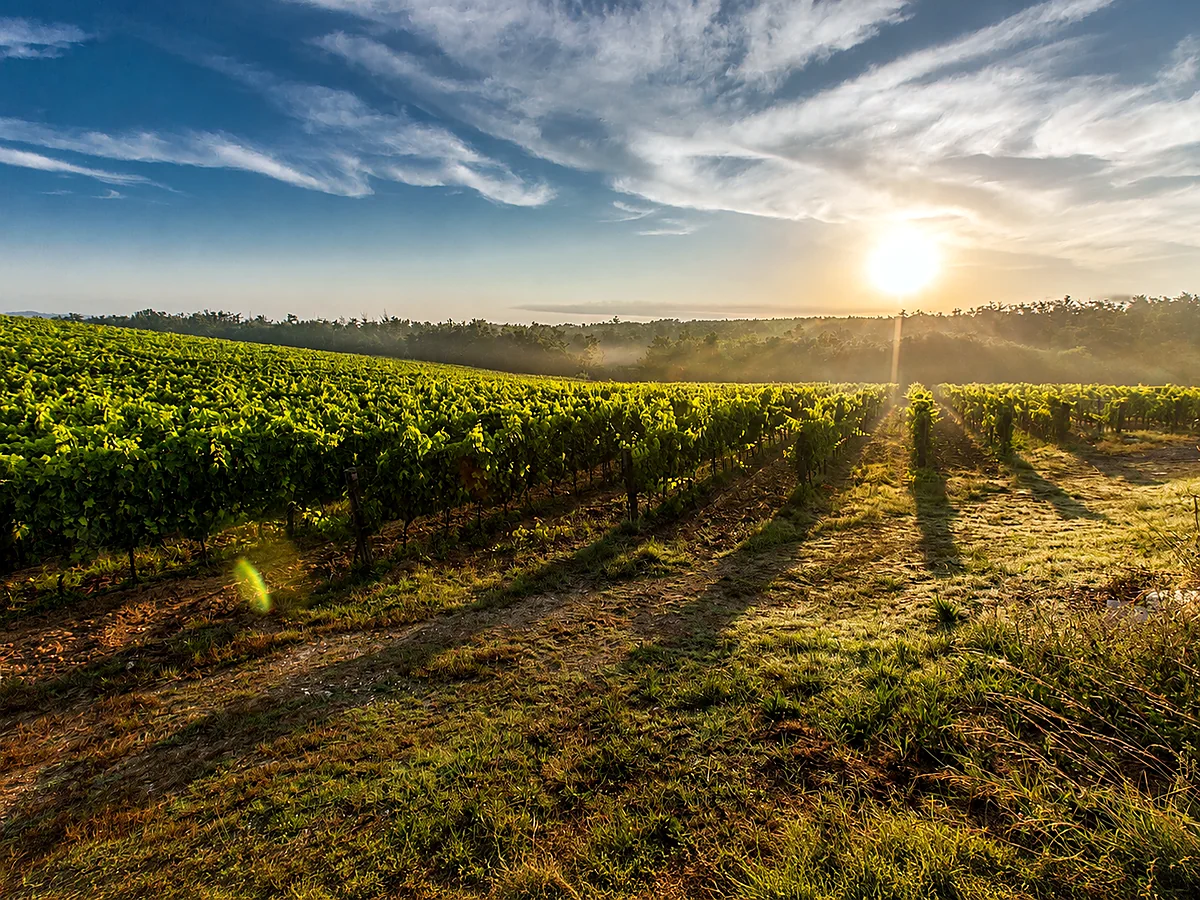
The northern edge of the valley is defined by the Greater Caucasus foothills, which rise steeply from the flat floor and carry dense forest up to higher elevations. The southern and western margins are the lower Gombori and Tsiv-Gombori ranges, which separate Kakheti from the rest of Georgia and are crossed by two main routes to Tbilisi — the Gombori Pass on the northern route and the lower southern route across the Kartli plains. The eastern end of the valley opens toward Azerbaijan, where the Alazani crosses the border and continues south to the Kura. This openness to the east historically made Kakheti both commercially connected and militarily vulnerable, and the repeated Persian and Safavid invasions that devastated the region through the 17th and 18th centuries were a direct consequence of its exposed eastern frontier.
History
Kakheti has been one of the most continuously and productively inhabited regions of Georgia since the earliest periods of settlement, and its recorded history as a distinct political entity begins in the early medieval period, when it functioned as an independent kingdom within the broader Georgian landscape. The Kingdom of Kakheti, centered on the Alazani valley and the surrounding highlands, kept a complicated relationship with the other Georgian kingdoms — sometimes unified with them, sometimes in conflict — before being absorbed into the unified Georgian kingdom under the Bagrationi dynasty.
The region's Golden Age coincided with the broader Georgian Golden Age of the 12th and early 13th centuries, when the building of the Alaverdi Cathedral, the Ikalto Academy, and other major monuments reflected the prosperity and cultural ambition of a region at the center of a powerful kingdom. The Mongol invasions of the 13th century ended this period, and the following centuries brought repeated fragmentation and military devastation. The most catastrophic episode was the 1616 campaign of the Persian Shah Abbas I, which according to Georgian chronicles killed or enslaved much of Kakheti's population and deliberately destroyed the agricultural infrastructure that sustained the region. Recovery was slow and partial, and the demographic and agricultural character of modern Kakheti was shaped significantly by the repopulation that followed.
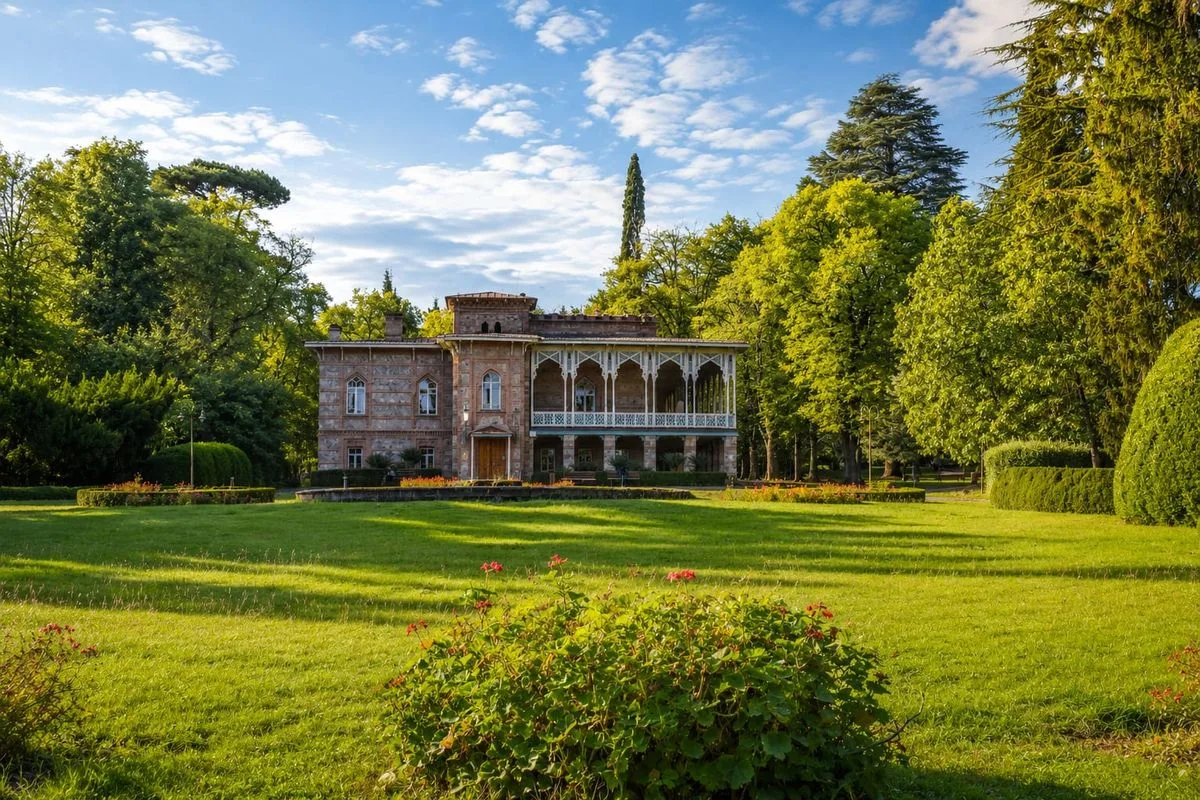
Russian annexation of eastern Georgia in 1801 brought Kakheti within the Russian imperial system, and the 19th century saw both the development of commercial winemaking — the Tsinandali Estate near Telavi established one of the first modernized Georgian wineries in the 1830s — and the reorganization of agricultural land under the new administration. The Soviet period industrialized wine production through state-run collectives and large processing facilities, expanding output enormously but at significant cost to quality and to the diversity of indigenous grape varieties and traditional methods that had characterized the region. The post-independence years have gradually reversed this, with the revival of traditional qvevri winemaking, the rediscovery of neglected indigenous varieties, and the growth of a wine-tourism economy that has brought significant outside attention to Kakheti.
Wine: tradition, method, and variety
The core of Kakheti's wine identity is the qvevri — the large clay vessel, typically holding between 200 and 2,000 liters, sealed and buried in the cellar floor for the fermentation and aging of wine. The method ferments the harvest with its skins, seeds, and sometimes stems in contact with the juice for an extended period — usually several months for whites made in the traditional Kakhetian style. That extended skin contact produces wines of a fundamentally different character from conventional whites: deep amber or orange in color, with a tannin structure normally associated with reds, and a complexity drawn from the slow extraction of compounds from the grape solids. These amber wines have drawn considerable international attention over the past fifteen years and are now sought out by wine professionals worldwide — but they've been made in Kakheti by essentially the same method for thousands of years. The qvevri tradition is recognized on UNESCO's list of Intangible Cultural Heritage.
The dominant white grape is Rkatsiteli, which covers more vineyard area in the region than any other and produces everything from fresh, conventionally made styles to the deeply complex amber wines of extended qvevri maceration. Mtsvane Kakhuri, a white grown mainly in the central and eastern parts of the region, has a distinctive aromatic character and is often blended with Rkatsiteli in traditional productions. Kisi, another indigenous white, has drawn particular attention in recent years for its performance in qvevri winemaking, producing amber wines of considerable depth and aging potential.
Saperavi is the undisputed red grape of Kakheti and one of the most important Georgian varieties internationally. Deeply pigmented — the name means “dye” or “painter” in Georgian, a reference to its colored flesh as well as skin — and naturally high in both tannin and acidity, it makes reds of considerable structure and aging potential, ranging from full-extraction qvevri styles to more polished versions made in stainless steel and oak. The Kindzmarauli and Akhasheni appellations, producing naturally semi-sweet Saperavi wines from specific microclimates in the eastern Alazani valley, are among the most commercially successful Georgian wine categories internationally and have given Saperavi its widest recognition.
Georgia has over 500 documented indigenous grape varieties — the large majority found in Kakheti and the surrounding regions — and a significant revival of interest in minor and neglected varieties has been underway since the 2000s. Producers working with grapes like Tavkveri, Shavkapito, Chinuri, and others have expanded the palette of what Kakhetian wine can be, and the most adventurous tastings now go well beyond the established Rkatsiteli-and-Saperavi framework.
The Rtveli (grape harvest)
The grape harvest — the Rtveli — runs through September into October depending on the variety and the year's weather, and it's the single most important event in the Kakhetian agricultural and cultural calendar. It's a communal effort involving extended family networks, neighbors, and often willing visitors who take part in exchange for food, wine, and an experience no organized tour can fully replicate. During harvest the vineyards are alive from early morning, the air carries the smell of fresh juice and fermenting grape from the processing underway in every village, and the energy of the season is palpable throughout the region in a way that's simply absent at other times.
Taking part in the Rtveli — picking grapes alongside a family, carrying the harvest to the cellar, watching the juice flow into the qvevri — gives a physical, sensory understanding of the winemaking tradition that no tasting or tour can match. Many guesthouses and wine estates offer harvest participation as part of their autumn programming, and the period from the third week of September through the second week of October is consistently the most rewarding time to visit for anyone whose primary interest is wine and its culture. (Dates shift year to year with the weather, so it's worth confirming timing close to your trip.)
Telavi and the regional towns
Telavi, the administrative center of Kakheti, is the practical hub of the region and has its own detailed guide in this series. As a base for wine tourism and for the major monuments of the Alazani valley — Alaverdi Cathedral, Tsinandali Estate, Ikalto Monastery, and Gremi — it's unmatched for accommodation range, restaurant quality, and convenience. The city itself has genuine historical character, centered on the Batonis Tsikhe fortress that served as the royal residence of the Kakhetian kings in the 18th century.
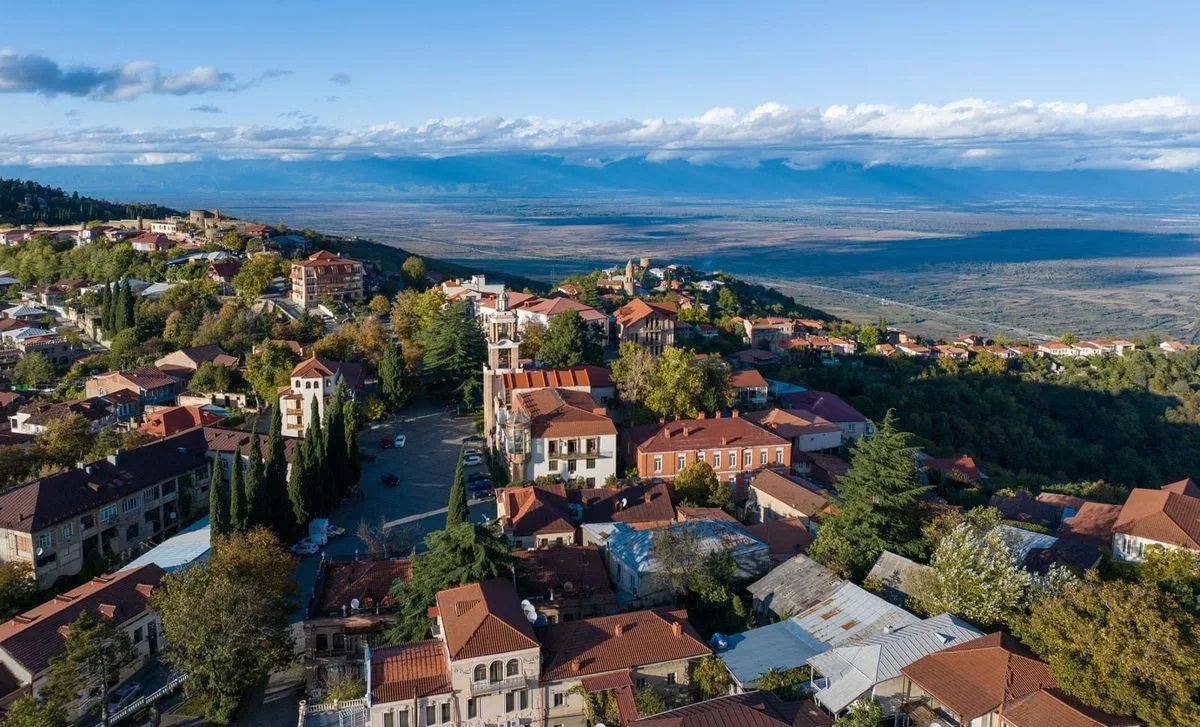
Sighnaghi, on its ridge above the western Alazani valley with 18th-century defensive walls and panoramic views, is the most visually distinctive of the smaller towns and the one that has most successfully built a tourism economy around its architecture and setting. Kvareli, at the eastern end of the valley nearest the Caucasus foothills, gives access to the Kindzmarauli appellation and the Nekresi Monastery. Gurjaani, in the central valley, is less visited than either Telavi or Sighnaghi but offers a more direct engagement with the everyday agricultural life of the region, alongside its own architectural monument, the unusual twin-domed Kvelatsminda Church. (Sighnaghi, Kvareli, and Gurjaani each have their own detailed guides in this series.)
The monasteries
The concentration of significant medieval monasteries in Kakheti is among the highest of any region in Georgia, and visiting them adds a historical dimension that the wine culture alone can't provide.
Alaverdi Cathedral, rising from the flat Alazani valley floor about 20 kilometers east of Telavi, is one of the tallest and most impressive medieval religious buildings in Georgia — its 11th-century structure visible across the vineyards from a considerable distance, its interior holding frescoes and architectural details of the highest quality. The monastery is active, and the combination of the monastic community, the agricultural setting, and the medieval architecture gives it a completeness that purely architectural monuments lack. Bodbe Convent, just below Sighnaghi, is the burial place of St. Nino and one of the most important pilgrimage destinations in Georgia. Nekresi Monastery, on a forested hillside above the eastern valley, preserves buildings from the earliest centuries of Georgian Christianity in a setting of considerable natural beauty. Ikalto Monastery near Telavi combines religious architecture with the remains of the medieval academy that made it one of the most significant intellectual institutions in the Georgian world.
Food and the supra
Kakhetian cuisine rests on the same foundations as Georgian cooking generally — walnut-based sauces, herb-rich salads, freshly baked breads, slow-cooked meat dishes — but with the specific character of an agricultural region where the raw ingredients are excellent and the link between food production and consumption is direct. The local cheese, a fresh cow's-milk variety of clean, slightly tangy flavor, differs from the sulguni of western Georgia and the Imeretian cheese made across the ridge. The bread baked in the tone oven — the elongated shotis puri of eastern Georgia — is among the best in the country. Mtsvadi, meat grilled over vine cuttings whose aromatic smoke flavors the fat, is the characteristic Kakhetian preparation for special occasions and the dish most associated with the outdoor feasting of the harvest season.
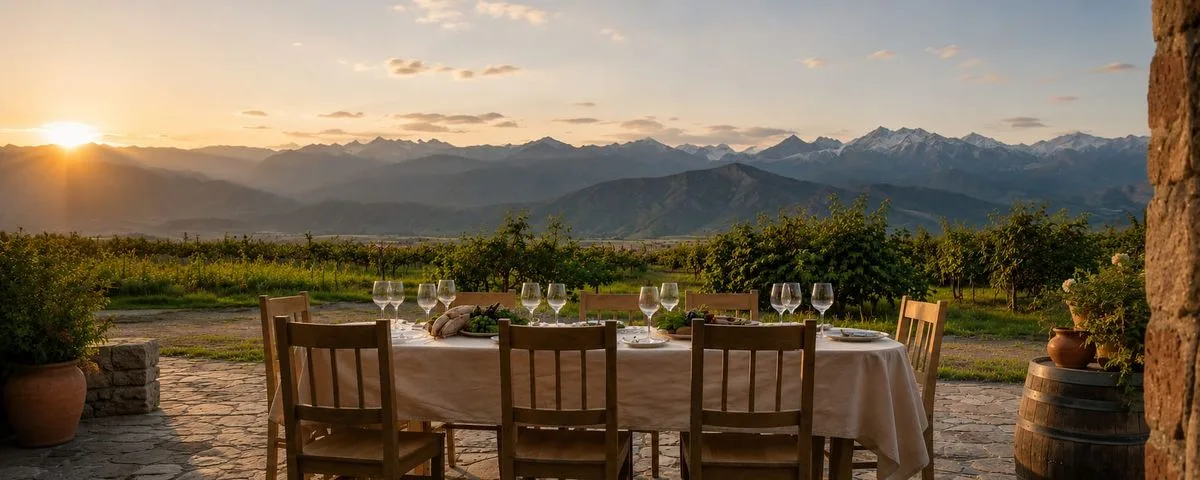
The supra — the traditional Georgian feast presided over by a tamada who leads the table through a sequence of toasts — is experienced throughout Georgia, but in Kakheti it has a particular character shaped by the closeness of the wine and the directness of the agricultural setting. A supra at a family winery, with the qvevri visible in the cellar floor beneath the table and the vineyards outside the door, connects the ritual of the feast to the physical reality of its production in a way that urban restaurant versions can't replicate.
Getting there and around
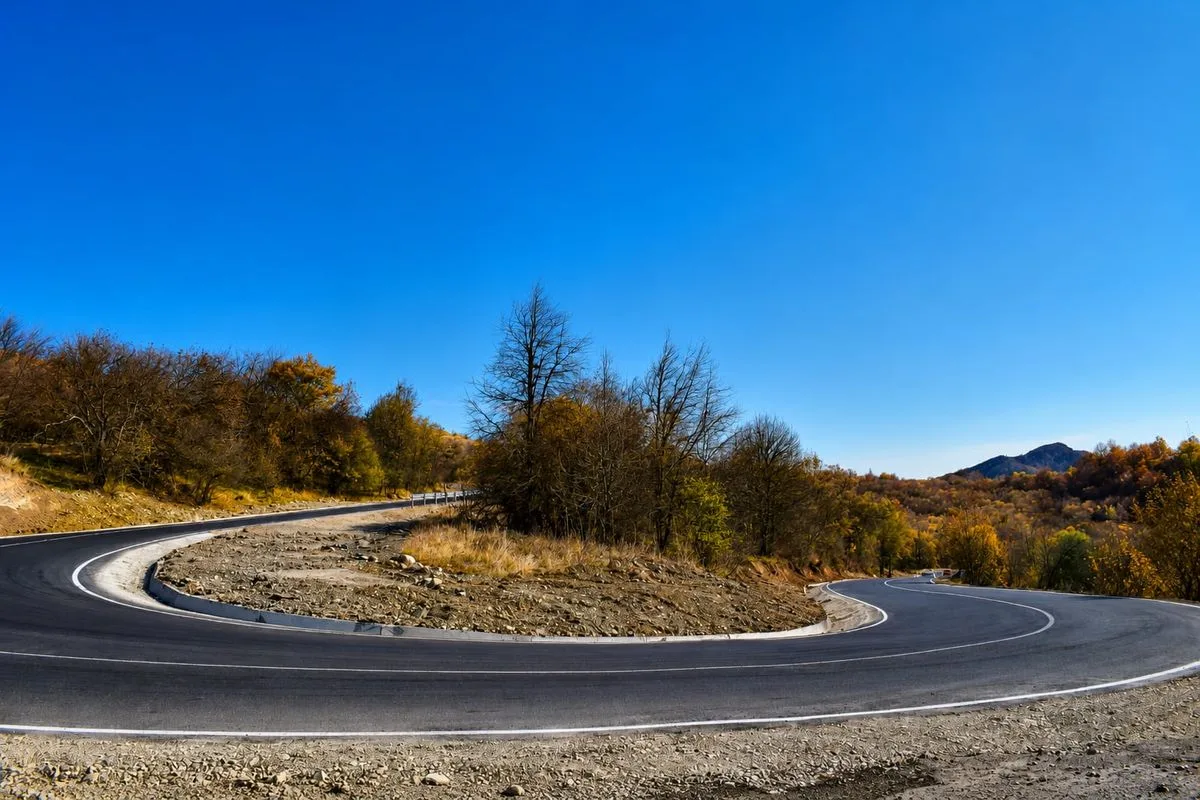
Kakheti is roughly 90 to 140 kilometers from Tbilisi depending on the destination within the region, the journey taking between one and a half and two and a half hours by road. Two main routes connect the capital with the Alazani valley: the northern route via the Gombori Pass, scenic and forested, descending into Kakheti through Telavi; and the more direct southern route across the Kartli plains and through the Iori valley, faster and less dramatic. Marshrutkas run from Tbilisi's Samgori metro station to Telavi, Sighnaghi, Kvareli, and other towns with reasonable frequency. A car gives significantly more flexibility for reaching the villages, family wineries, and monastery sites off the main public-transport routes — and for the harvest in particular, independent transport transforms the range of experiences available. Many Tbilisi-based operators run day trips and multi-day wine tours to Kakheti, a practical option for those without a vehicle.
When to visit
September and October — the harvest season — are the peak of the Kakhetian year and the most rewarding time to visit for anyone interested in wine culture. The combination of the active harvest, the fermenting wine, the clear autumn light over the valley, and the general intensity of the season gives the region a character at this time that's simply unavailable otherwise. Spring (April through early June) brings green vineyards, wildflowers on the Caucasus foothills, and comfortable temperatures well suited to driving and walking the valley. Summer is warm and productive — the vines in full growth, the landscape fully alive — but July and August can be genuinely hot in the valley, and the harvest hasn't yet begun, which removes the element most specific to Kakheti. Winter brings cold temperatures and bare vineyards; the stripped-down austerity has its own appeal for some, but most family wineries and smaller guesthouses run reduced schedules outside the main season.
Caucasus Travel FAQ
Kakheti is the easternmost region of Georgia, in the Alazani valley between the Greater Caucasus and the Gombori ranges. It's Georgia's main wine region, producing most of the country's wine and home to the ancient qvevri winemaking tradition. Beyond wine, it's known for major medieval monasteries (Alaverdi, Bodbe, Nekresi, Ikalto), the autumn Rtveli harvest, and the towns of Telavi and Sighnaghi.
Qvevri wine is made in large clay vessels buried in the cellar floor, where the grapes ferment and age — for whites, in extended contact with their skins for several months. This produces deep amber (or “orange”) wines with a tannic structure more like red wine and a distinctive complexity. The method is around 8,000 years old in Georgia and is recognized as UNESCO Intangible Cultural Heritage. Rkatsiteli is the classic white grape for it; Saperavi is the great red.
The grape harvest, or Rtveli — roughly late September through the second week of October — is the most rewarding time, when the vineyards are being picked, the wine is fermenting, and many estates and guesthouses offer harvest participation. Spring (April–June) is also lovely for the green valley and comfortable weather. Exact harvest dates shift year to year with the weather, so confirm timing close to your trip.
The standouts are Alaverdi Cathedral (a towering 11th-century church rising from the vineyards east of Telavi), Bodbe Convent below Sighnaghi (the burial place of St. Nino and a major pilgrimage site), Nekresi (with buildings from the earliest centuries of Georgian Christianity), and Ikalto near Telavi (a monastery with the remains of a famous medieval academy). Together they give Kakheti a strong historical dimension beyond its wine.
It's about 90–140 km depending on where you're going, roughly 1.5–2.5 hours by road. Two routes connect them: the scenic northern route over the Gombori Pass to Telavi, and the faster, less dramatic southern route across the Kartli plains. Marshrutkas run from Tbilisi's Samgori station to the main towns, but a car (or an organized tour) gives far more flexibility for reaching family wineries and monasteries off the main routes.