
Chiatura
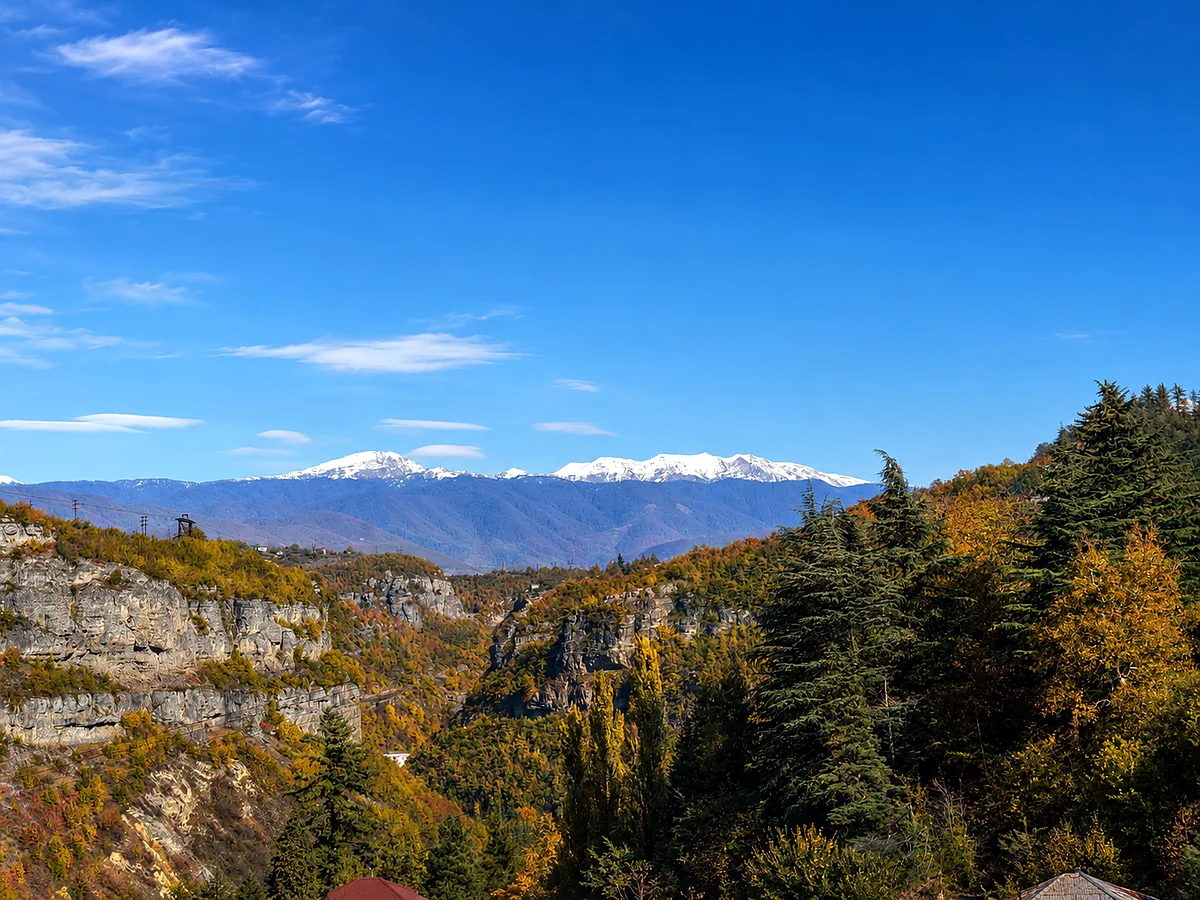
Chiatura is a mining town in the Imereti region of western Georgia — the country in the South Caucasus — in a narrow canyon cut by the Kvirila River about 70 kilometers northeast of Kutaisi. Around 12,000 people live here, and it looks unlike almost anywhere else in Georgia: steep canyon walls on both sides of the river, Soviet apartment blocks and industrial facilities clinging to the slopes, and a network of cable cars strung between the canyon rim and the valley floor. It isn't a conventional tourist destination — no medieval old town, no wine culture, no beach. What it has is a raw, industrial, visually dramatic atmosphere that has made it a real point of interest for travelers looking beyond the standard Georgian itinerary.
Why visit Chiatura?
The main reasons to visit Chiatura are its Soviet-era urban cable cars, a near-unaltered Soviet industrial townscape, and the nearby Katskhi Pillar — a medieval church on top of a 40-meter limestone monolith. The cliffside Mghvimevi Monastery adds a medieval contrast to the industrial setting. This is a destination for travelers interested in Soviet history, unusual landscapes, and photography, not for classic sightseeing or comfort. Most people visit as a day trip from Kutaisi.
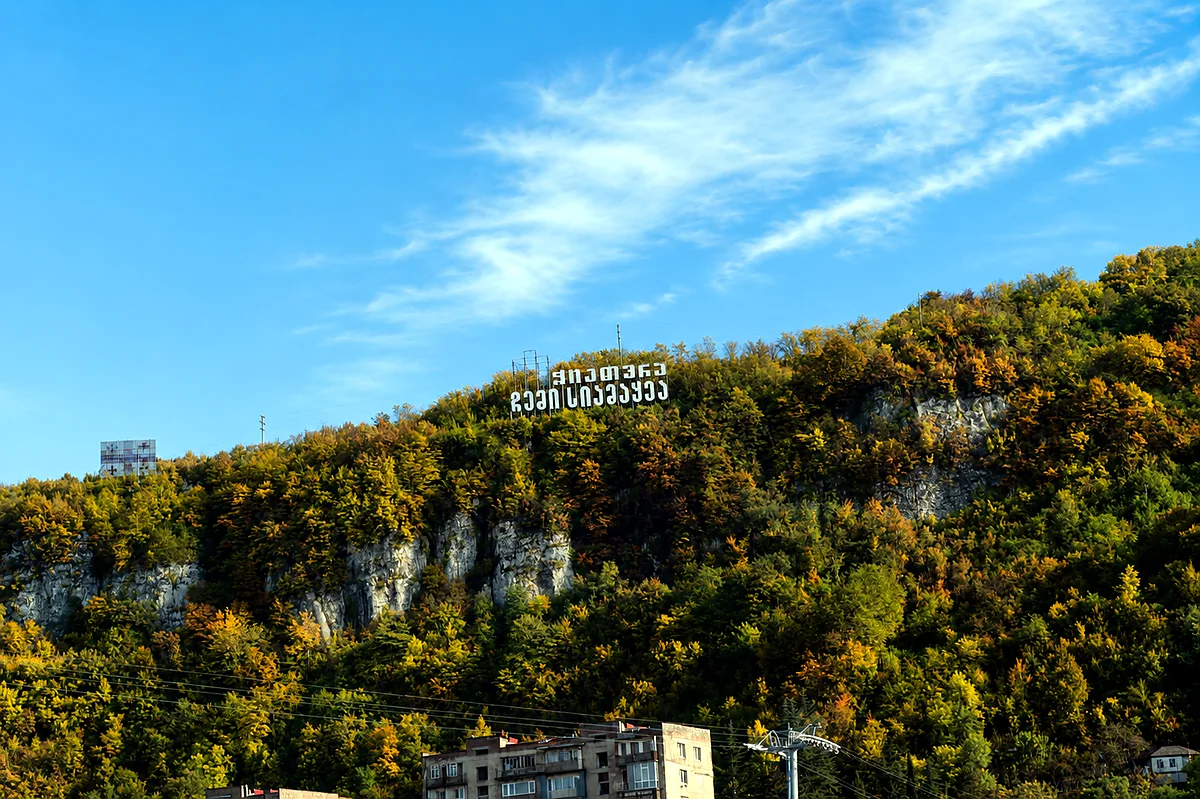
The canyon and the cable cars
Chiatura's geography created a transport problem from the start. The canyon is deep and steep-walled, the manganese deposits lie mainly in the hills above, and the town developed both on the rim and along the river below. Moving workers, equipment, and ore between those levels was a constant challenge, and the Soviet solution was ambitious: a comprehensive urban cable car network linking the valley floor to the neighborhoods and mining areas on the plateau.
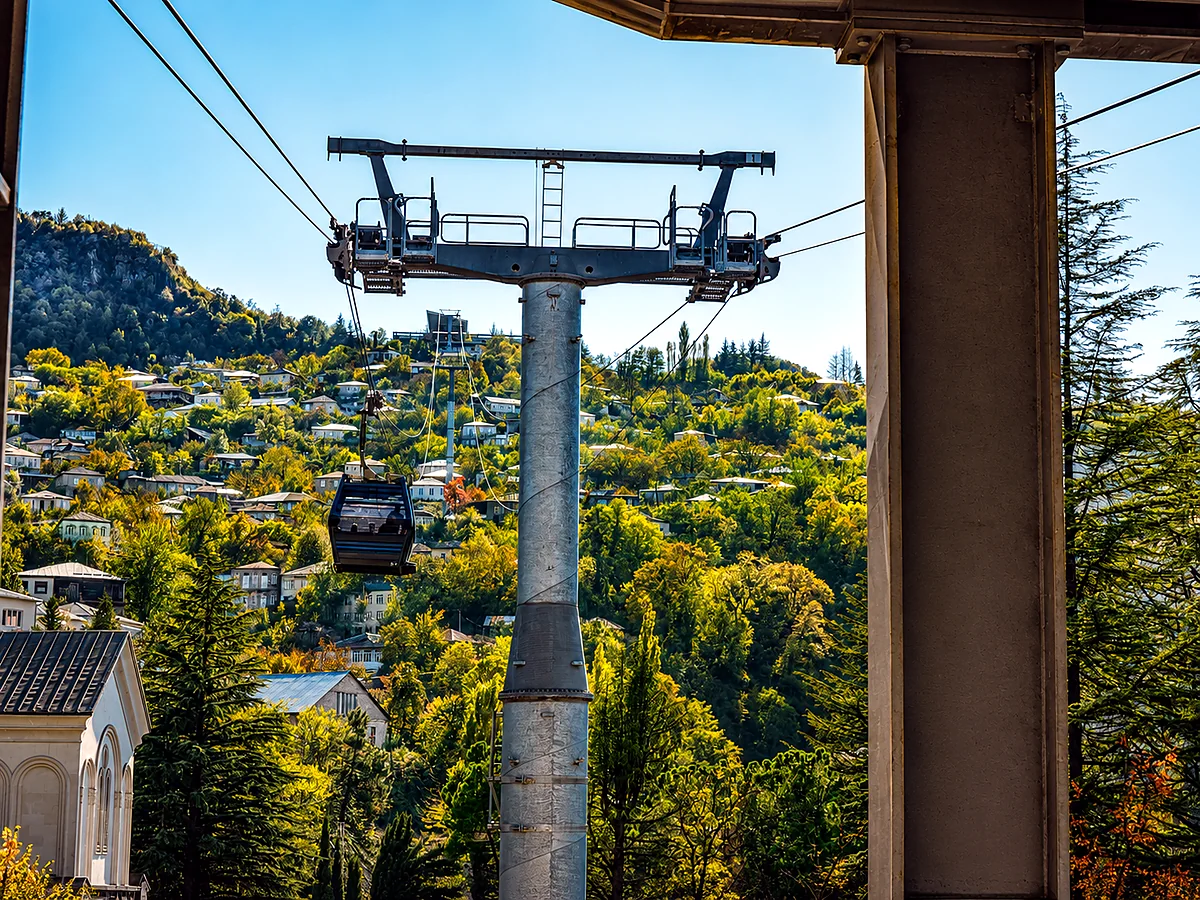
Construction began in the 1950s and continued through the 1960s, eventually producing one of the most extensive urban cable car systems in the Soviet Union, with multiple lines. The original cabins were functional Soviet industrial equipment — small metal boxes built for utility, which earned the local nickname "metal coffins." For decades they were simply how Chiatura's residents got around, as ordinary as a bus.
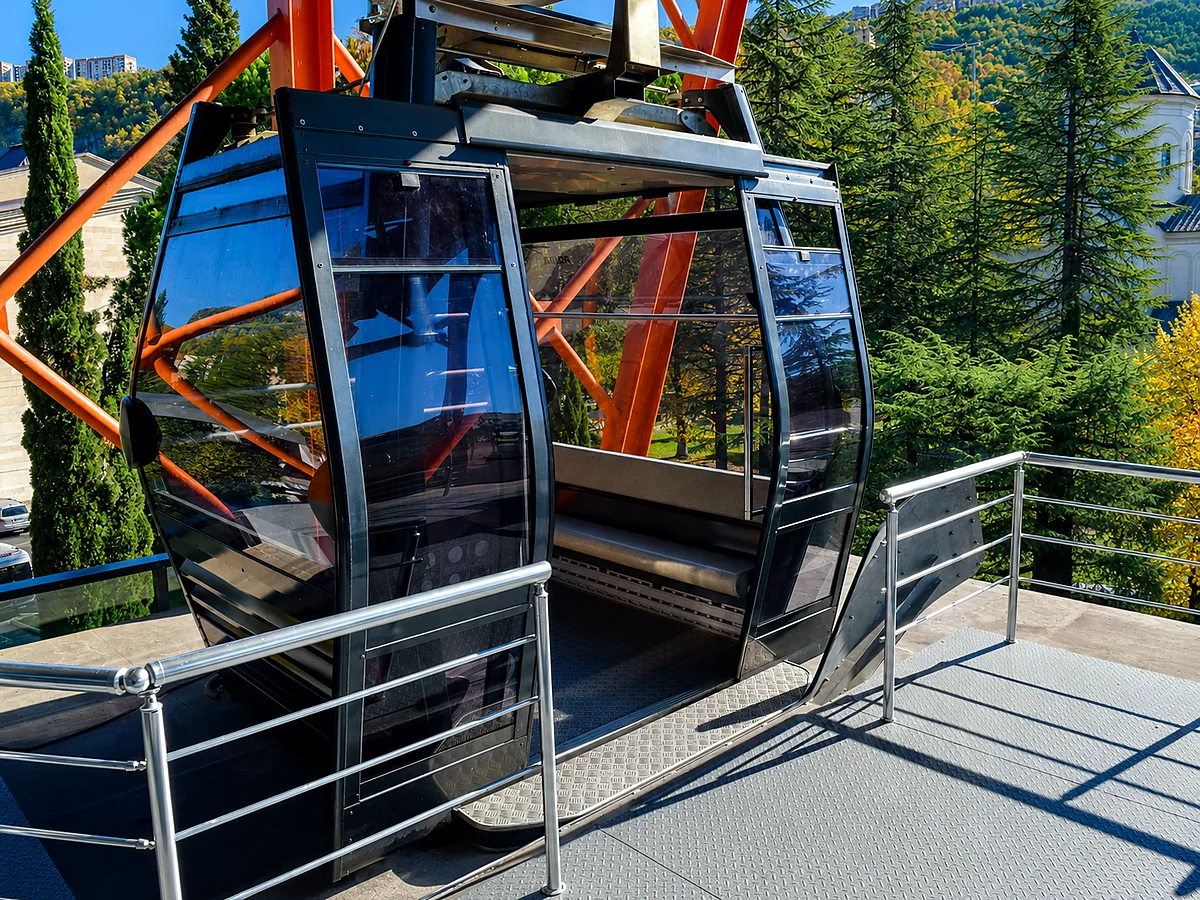
The system fell into disrepair after the Soviet collapse, and most lines stopped during the 1990s. A restoration project in the 2010s brought several lines back with upgraded cabins and infrastructure, and they now work as both local transport and tourist attraction. Riding them is the central experience of a visit: the views over the canyon, the river, the industrial landscape, and the forested hills beyond are unlike anything else in Georgia. One practical caveat — schedules and operating hours can be irregular, so check locally before planning around them.
Soviet architecture and urban atmosphere
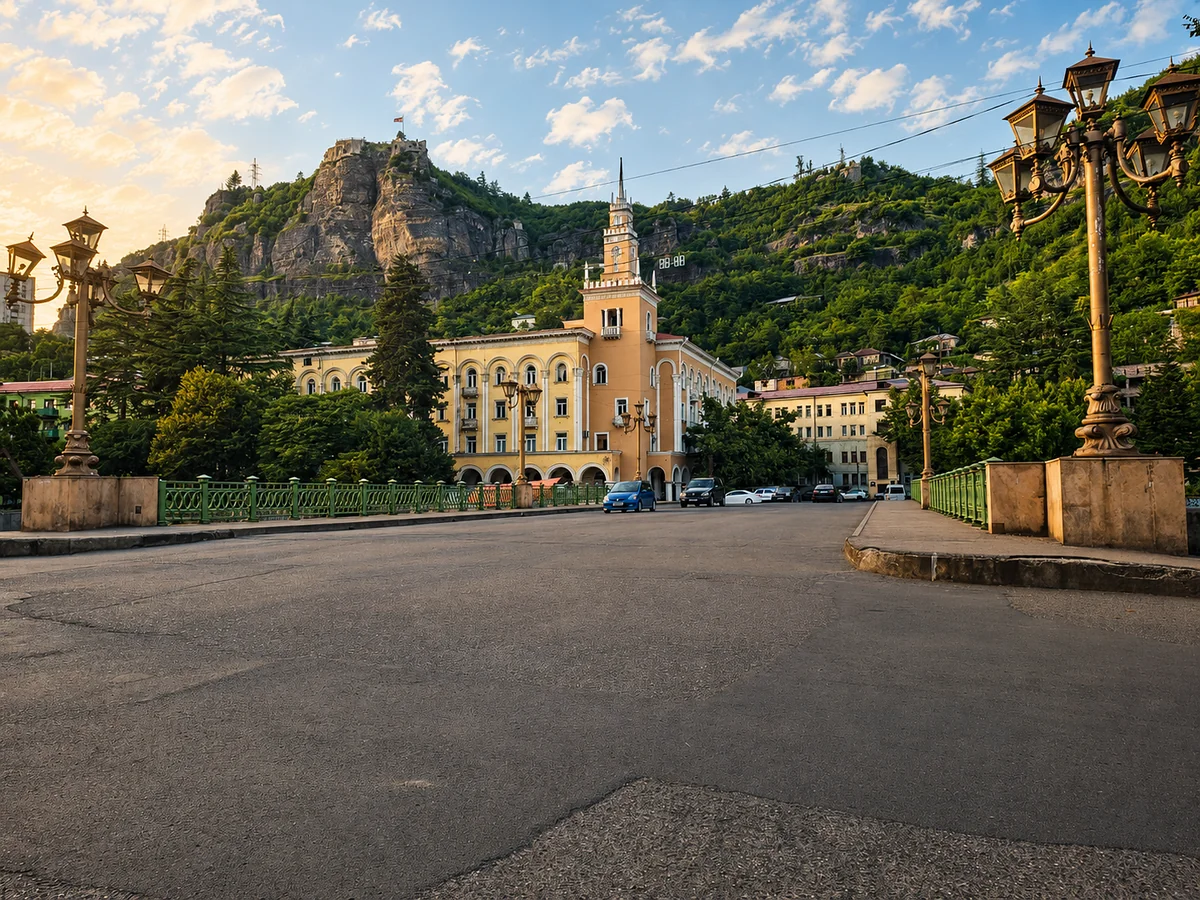
Beyond the cable cars, Chiatura offers something increasingly rare in Georgia and the wider post-Soviet world: a Soviet industrial townscape that hasn't been significantly modernized, demolished, or cosmetically tidied up. The concrete apartment blocks, the workers' cultural centers, the administrative buildings with their heavy Soviet decoration, and the mining infrastructure on the hillsides all remain largely as built — weathered and worn but intact. For travelers interested in 20th-century history, Soviet architecture, or urban landscapes that are vanishing fast elsewhere, Chiatura is a significant place.
This isn't a theme-park version of Soviet history. Chiatura is a functioning town where people live and work, and the Soviet buildings are simply the buildings that exist here, not preserved exhibits. That ordinariness is exactly what gives the place its power. Walking the residential districts on the canyon rim, or riding a cable car to a neighborhood that feels untouched by the past thirty years of Georgian change, gives a more immediate sense of the Soviet period than any museum could.
Katskhi Pillar
About 10 kilometers from Chiatura, and almost always part of a visit, the Katskhi Pillar is one of the most visually arresting sites in Georgia. It's a natural limestone monolith rising roughly 40 meters above the valley floor on a sheer, effectively unclimbable face. On its flat summit — barely large enough for a small building — sit the remains of a medieval church and hermitage, built and inhabited at various points by monks who made the ascent by rope ladder.
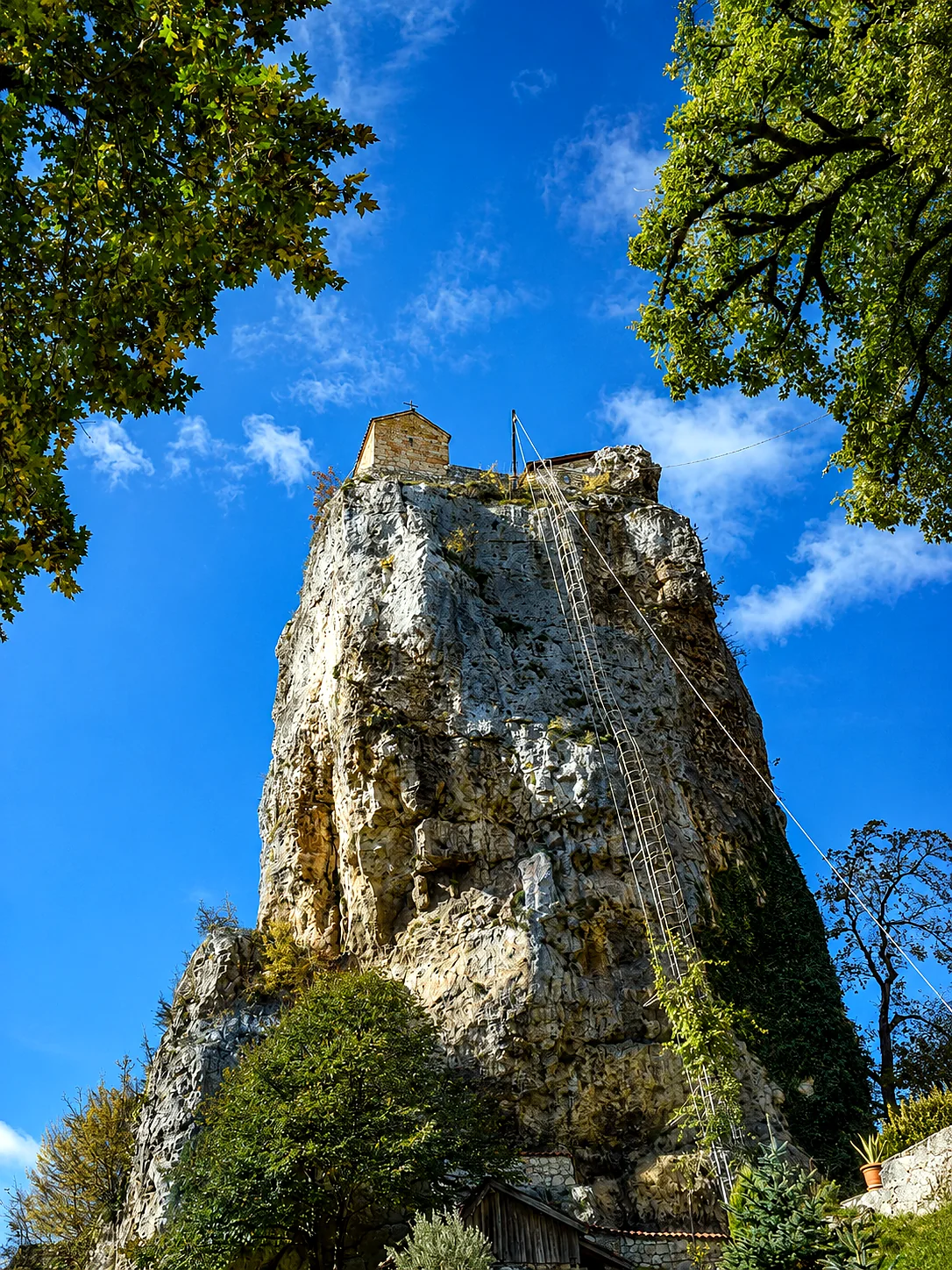
The pillar was largely inaccessible and little known outside the area for much of the 20th century. A mountaineering expedition in 1944 made the first documented modern ascent and confirmed the medieval structures at the top; later archaeology dated the church to roughly the 9th–10th century, with earlier occupation likely. A monk named Maxime Qavtaradze famously lived at the summit in relative isolation for an extended period, which brought the pillar wider attention.
A metal ladder and climbing route now allows access to the summit, but it requires reasonable fitness and a tolerance for exposed heights — and access to the top is often restricted, particularly for women, since it's an active monastic site. The view from the base alone — the sheer rock face with the tiny church at the top — justifies the detour, and on clear days the surrounding forested valleys and limestone outcrops are exceptionally photogenic.
Mghvimevi Monastery
A short distance from the town center, carved into a cliff above the Kvirila River, Mghvimevi Monastery is a striking contrast to the industrial landscape around it. The monastery dates to the medieval period and works natural cave formations into its architecture — the main church occupies a large natural cavity in the rock, with built elements added around and in front. The site is active and well maintained, with a small monastic community in residence.
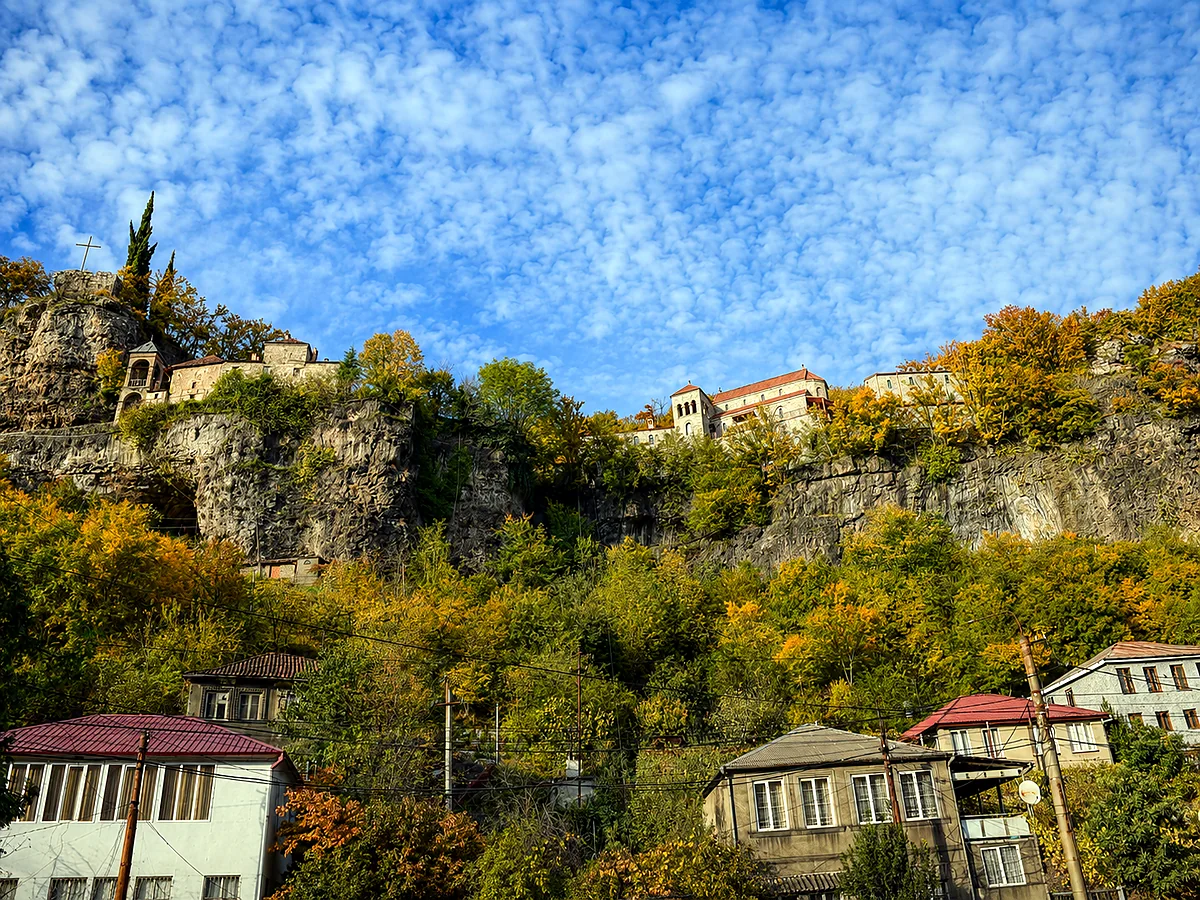
The approach involves a steep climb up stone steps cut into the cliff, rewarded with some of the better views over the river and canyon in the immediate area. The pairing of medieval religious architecture and dramatic natural setting — typical of Georgian monasteries, which consistently favored cliff faces and ridges — makes a sharp contrast with the Soviet town in the valley below.
Manganese and the making of the town
Chiatura exists because of geology. The hills around the Kvirila canyon hold some of the largest manganese deposits ever found, and once they were identified in the late 19th century the town's trajectory was set. Commercial mining began in earnest in the 1870s and expanded rapidly, drawing European capital — including the Nobel and Rothschild interests then developing the Baku oil fields — and workers from across the Caucasus. By the early 20th century Chiatura produced a substantial share of the world's manganese, a mineral essential to steelmaking and therefore strategically valuable.
The town also has a place in revolutionary history. In 1905, during the first Russian Revolution, Chiatura's miners established one of the most complete examples of Bolshevik control over a Georgian settlement, effectively running the town as a revolutionary commune for several months. The young Bolshevik organizer Joseph Stalin was directly involved and spent time here — a connection that later brought Chiatura particular attention and investment in the Soviet decades. Under Soviet rule the mining was nationalized and expanded to industrial scale, and the town was rebuilt with workers' housing, cultural institutions, and administrative buildings. The industry, though much reduced from its Soviet peak, still operates and remains central to the local economy.
How to get to Chiatura and get around
Chiatura is most easily reached from Kutaisi, about one and a half hours by road through the Imereti hills, with marshrutkas (minibuses) running between the two with reasonable frequency. From Tbilisi it's longer, around three hours, but the road passes through attractive countryside and can be broken along the way. Within town, the cable cars serve several neighborhoods and are the most interesting way to get around, though hours can be irregular. Taxis are available for Mghvimevi Monastery and the trip to Katskhi Pillar.
Accommodation is limited to small guesthouses, and Chiatura is most commonly visited as a day trip from Kutaisi. Staying overnight makes for a much quieter evening, which has its own appeal.
Best time to visit Chiatura
Spring and autumn offer the most comfortable conditions and the best light — a real consideration given how much of Chiatura's appeal is visual. The canyon and industrial landscape photograph particularly well in overcast conditions, when flat light emphasizes texture and form over color. Summer is warm and the hills are fully green, sharpening the contrast between the natural landscape and the industrial town. Winter brings occasional snow to the canyon, which transforms the atmosphere and produces some of the most dramatic conditions the town offers, though cable car operations may be reduced.
Caucasus Travel FAQ
Chiatura is known for its Soviet-era urban cable cars and an almost unaltered Soviet industrial townscape in a dramatic river canyon. It's also the base for the Katskhi Pillar, a medieval church atop a 40-meter limestone monolith, and the cliffside Mghvimevi Monastery.
Yes. Several lines were restored in the 2010s and run as both local transport and a tourist attraction, with views over the canyon and industrial landscape. Hours and which lines operate can be irregular, so check locally before planning around them.
The Katskhi Pillar is a natural limestone monolith about 10 km from Chiatura, rising roughly 40 meters, with the remains of a medieval church and hermitage on its flat summit. The church dates to around the 9th–10th century. The view from the base is dramatic; summit access is restricted as it's an active monastic site.
Spring and autumn for comfortable conditions and good light. Overcast days actually suit the canyon and industrial scenery for photography. Summer sharpens the green-versus-industrial contrast; winter snow is dramatic but may reduce cable car operations.