
Things to Do in Chiatura, Georgia: Cable Cars and the Katskhi Pillar
Chiatura is one of the most unusual destinations in Georgia — the country in the South Caucasus. Set in a deep valley in the Imereti region of the west, the town is known for its dramatic canyon landscape, Soviet industrial heritage, and historic cable car system. This isn't a polished or traditional tourist destination, and that's the point: Chiatura offers a raw, authentic look at a lesser-seen side of Georgia, where history, industry, and daily life are still closely tied together. Visiting is less about classic sightseeing and more about taking in the atmosphere and the place's particular identity.
What is there to do in Chiatura?
The main things to do in Chiatura are riding the Soviet-era cable cars for the views over the canyon, seeing the nearby Katskhi Pillar (a medieval monastery atop a tall limestone rock), exploring the industrial townscape on foot, and visiting the cliffside Mghvimevi Monastery. It's usually done as a day trip from Kutaisi, about 1–1.5 hours away. Come for the atmosphere and the unusual landscape rather than comfort or polished attractions.
Ride the Chiatura cable cars
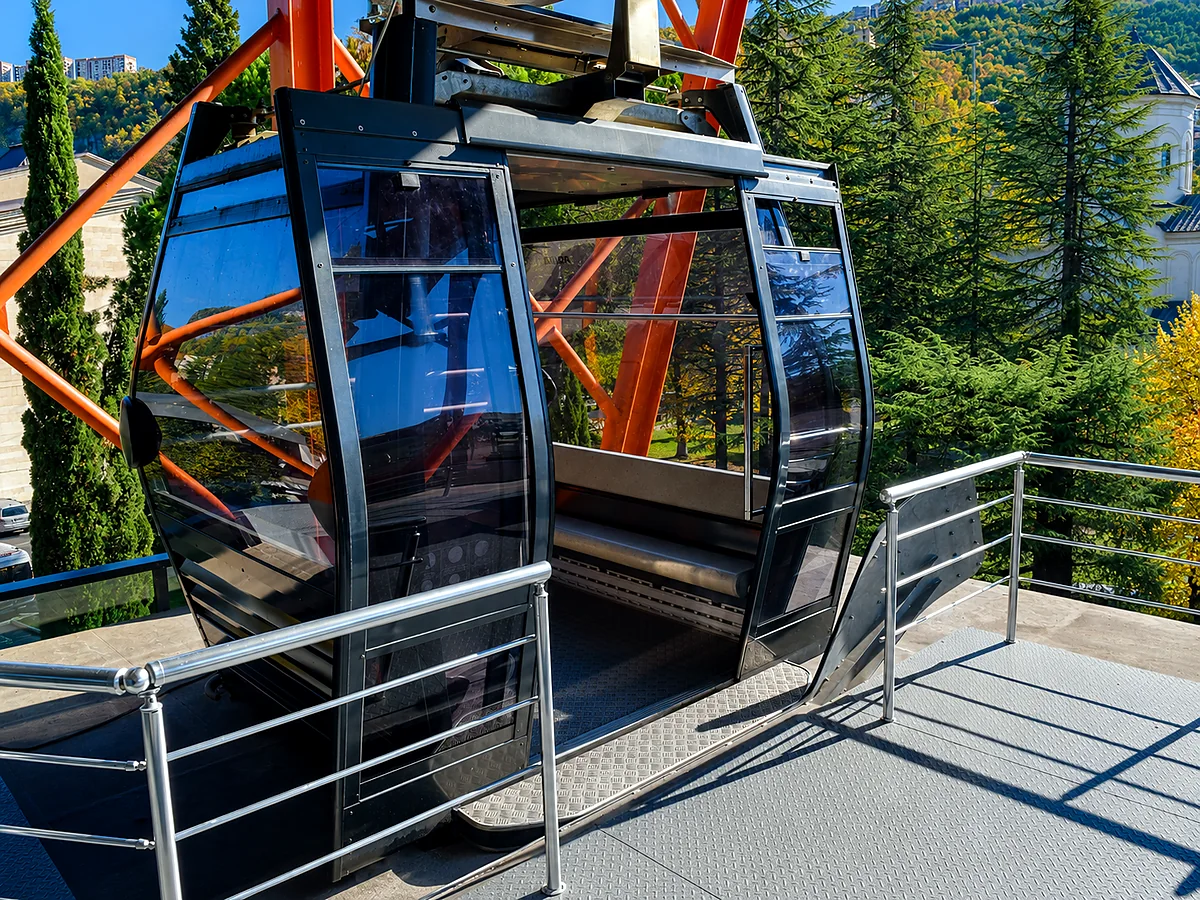
The cable car system is one of the main reasons to visit Chiatura. Originally built in the Soviet period to move workers across the steep valley, the cars became an essential part of daily life. Today some lines have been replaced with upgraded cabins while others remain closer to their original form, and riding them is both practical transport and a piece of living history. From above you get a clear view of the town's layout — houses built into the cliffs, industrial sites, and the narrow valley below — one of the most distinctive perspectives in Georgia. One practical note: operating hours and which lines run can be irregular, so check locally before building your day around them.
Visit the Katskhi Pillar
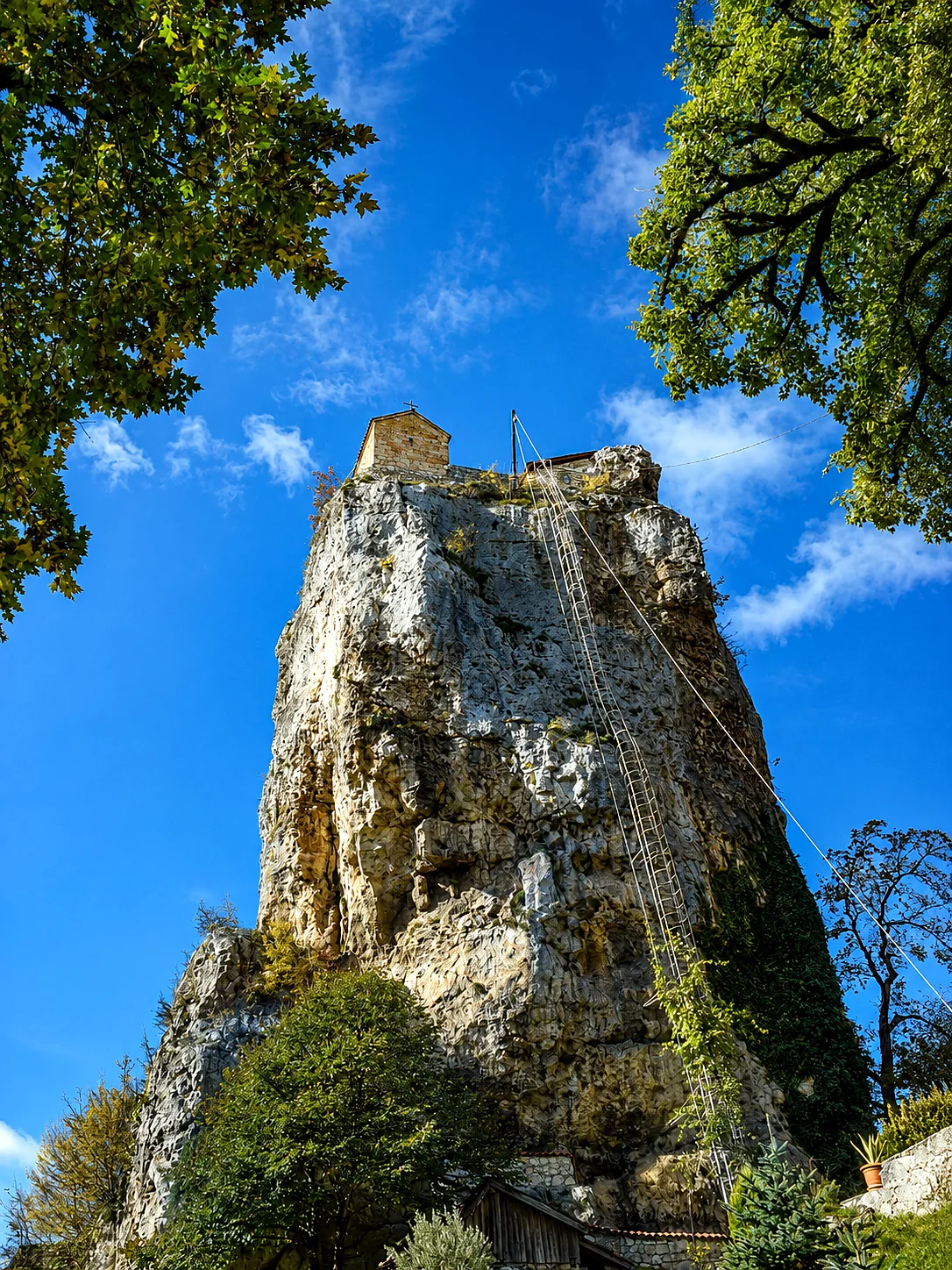
Just outside Chiatura, the Katskhi Pillar is one of the most striking natural and religious landmarks in the country: a tall limestone monolith with a small medieval monastery on its flat summit. The view from below is impressive on its own — the sheer rock face with the tiny church at the top. Summit access is restricted because it's an active monastic site, so most visitors experience it from the base. The combination of natural formation and human construction makes it one of the most photographed sites in the region.
Explore Chiatura's industrial landscape
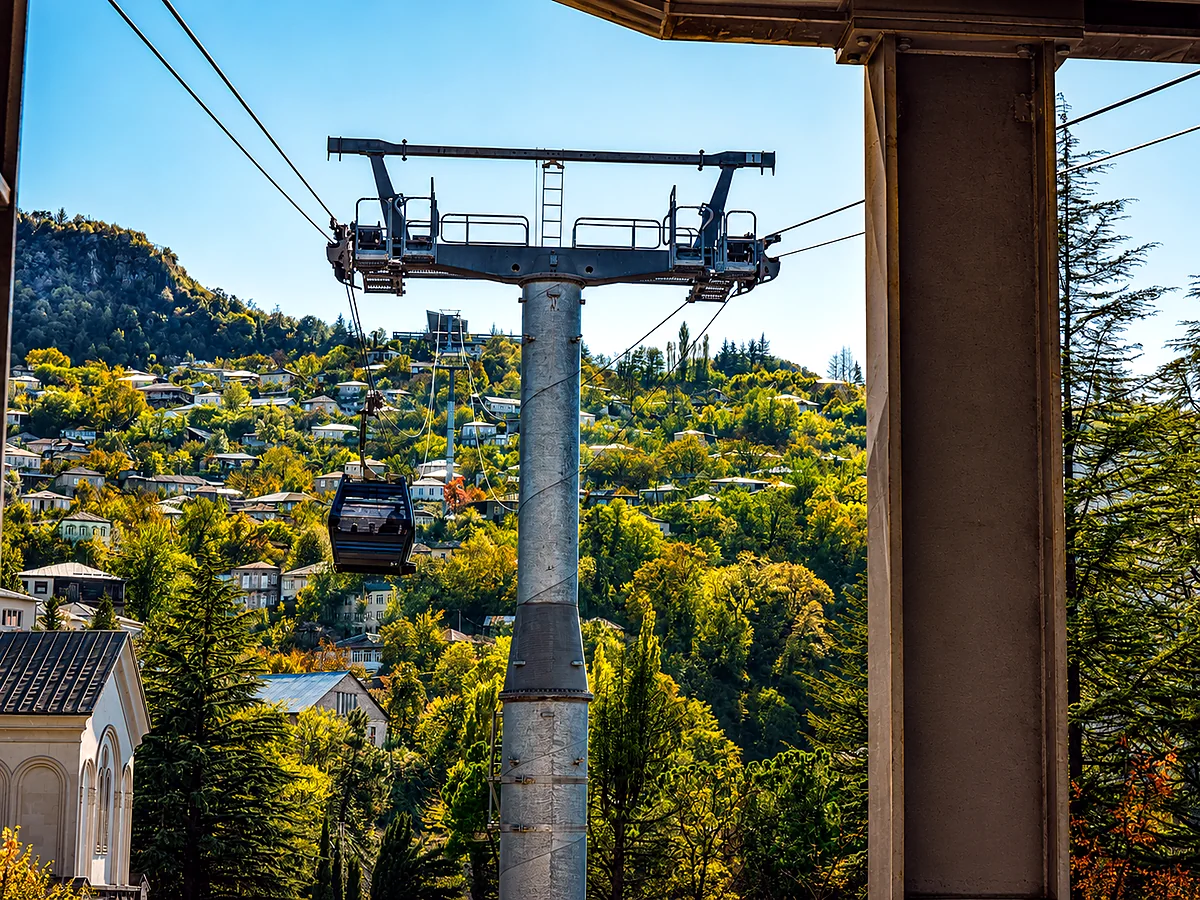
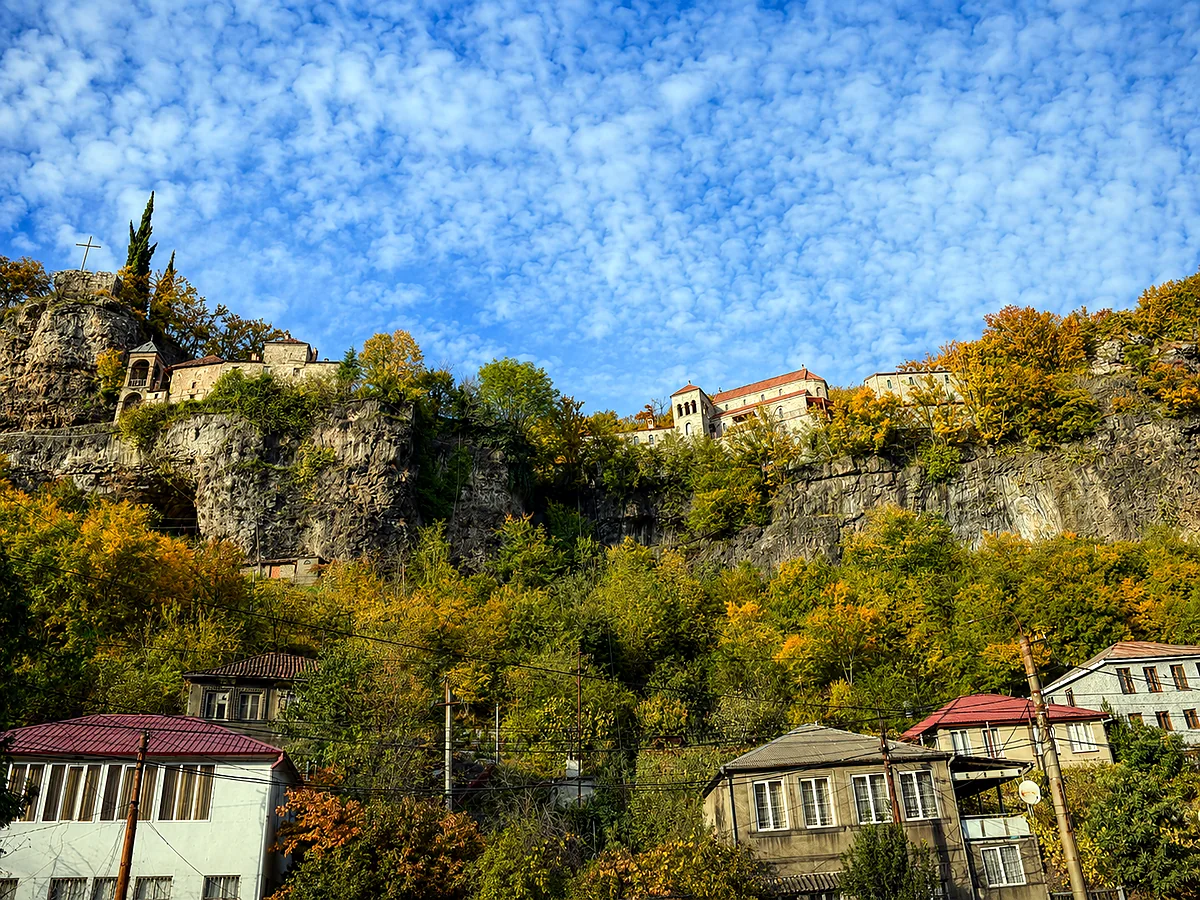
Chiatura grew as a mining town, and that identity is still visible. The town is built into a narrow valley with steep rock walls on both sides, and industrial structures, cable lines, and residential buildings are all woven into that landscape. Walking through, you notice how the place grew around its function rather than following a typical urban grid, which is exactly what makes it visually and culturally different from other Georgian towns. For travelers interested in 20th-century history and Soviet architecture, this is the main draw.
Walk through the local neighborhoods
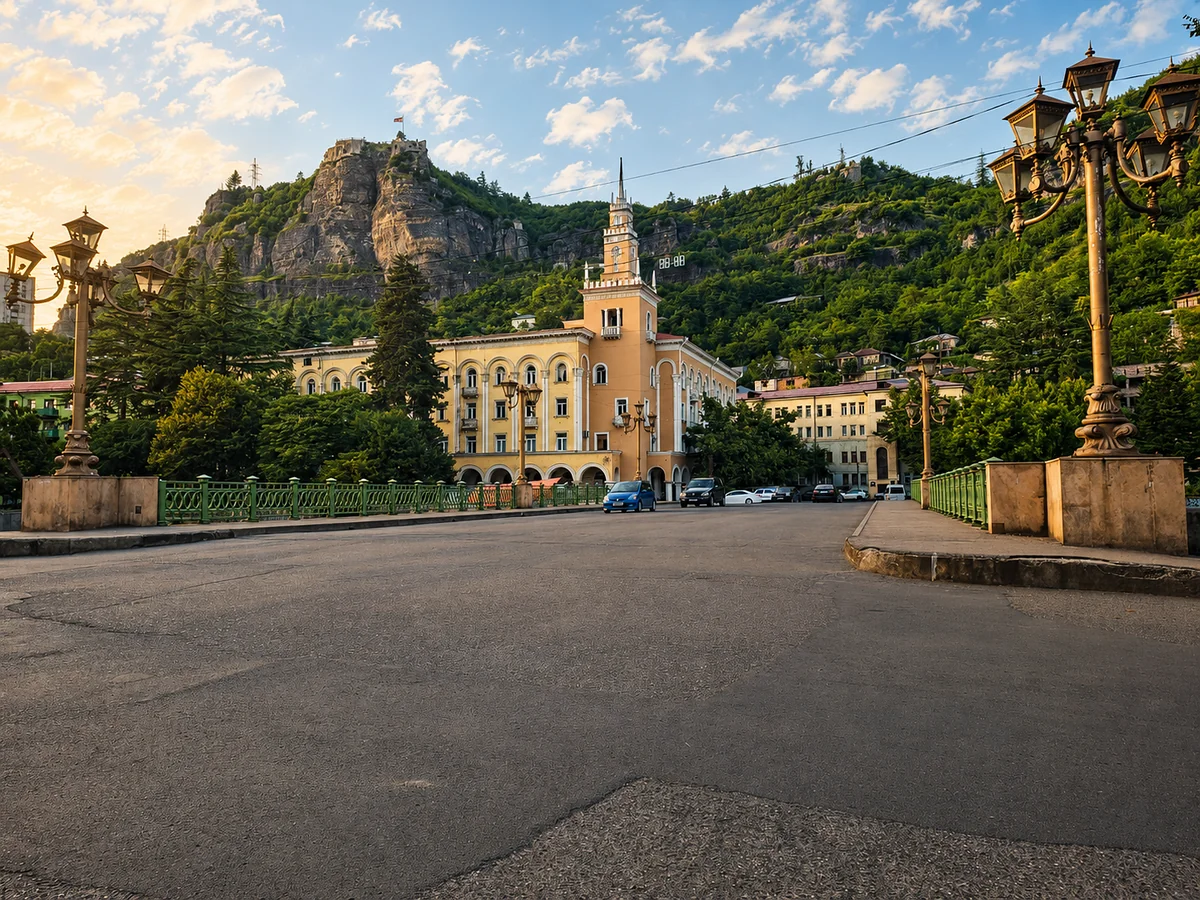
Exploring Chiatura on foot gives a better feel for daily life here. You'll pass Soviet-era residential blocks, small shops and local cafés, and streets that follow the natural shape of the valley. It's not a place designed for tourism, and that's what makes it interesting — the experience feels direct and uncurated. This is a functioning town where people live and work, not a preserved exhibit, which gives the Soviet-era surroundings more weight than any museum display.
Visit Mghvimevi Monastery
Near the center of Chiatura, Mghvimevi Monastery is partly built into the rock. The entrance, set into a cliff face, makes a strong first impression, and inside the monastery is simple but atmospheric. It's a small site, but it adds a cultural and religious element that balances the industrial side of the town. The approach involves a steep climb up steps cut into the cliff, rewarded with good views over the river and canyon.
Combine Chiatura with Kutaisi and western Georgia
Chiatura is usually visited as a day trip from Kutaisi, about 1–1.5 hours away by road. It pairs naturally with the Katskhi Pillar and the surrounding villages and countryside, which makes it an easy addition to a western Georgia itinerary. Most travelers fold both Chiatura and Katskhi into a single day out from Kutaisi.
Why Chiatura is worth visiting
Chiatura offers something most destinations don't. It isn't about comfort or polished experiences — it's about authenticity: Soviet industrial history, a unique urban landscape, everyday life in a non-touristic environment, and dramatic natural surroundings. It suits travelers who want to see beyond the standard routes and don't mind that the reward is atmosphere and character rather than comfort or classic sights.
Caucasus Travel FAQ
Ride the Soviet-era cable cars for the canyon views, see the nearby Katskhi Pillar, explore the industrial townscape on foot, and visit the cliffside Mghvimevi Monastery. It's usually done as a day trip from Kutaisi.
Yes. Some lines have been restored with upgraded cabins while others remain closer to their original form, and they work as both local transport and a tourist experience. Hours and which lines run can be irregular, so check locally first.
Generally no. The summit monastery is an active religious site with restricted access, so most visitors see it from the base — which is still dramatic. The pillar is a tall limestone monolith with a medieval church on top, just outside Chiatura.
Most easily from Kutaisi, about 1–1.5 hours by road, and usually visited as a day trip. It combines well with the Katskhi Pillar and the surrounding countryside in a western Georgia itinerary.
Yes, if you want something beyond the standard routes. It's not about comfort or polished sights but about authenticity — Soviet industrial history, an unusual canyon townscape, and everyday local life in a dramatic setting.