
Things to Do in Samegrelo: Martvili Canyon, Megrelian Food, and the Road to Svaneti
Samegrelo, in western Georgia — the country in the South Caucasus — is one of the greenest and most varied regions in the country, combining canyons, forests, and rivers with a distinct local culture and cuisine. It sits between the Black Sea and the mountains of Svaneti, so it's often experienced as part of a wider western-Georgia journey — but it has enough on its own to be worth stopping for. Centered on Zugdidi, with its sites mostly within short distances, it's an easy region to explore. Here are the things most worth doing.
What are the best things to do in Samegrelo?
The highlights are Martvili Canyon, with its turquoise water and boat rides; the Dadiani Palace in Zugdidi, with its Napoleonic connection; the scenic drive up to Mestia and Svaneti; and the region's famously rich Megrelian cuisine. For the adventurous, there's the wilder Balda Canyon and the demanding multi-day trek to the remote Tobavarchkhili Lakes. It's a green, less-touristed region that rewards both a quick stop and a slower stay.
Explore Martvili Canyon
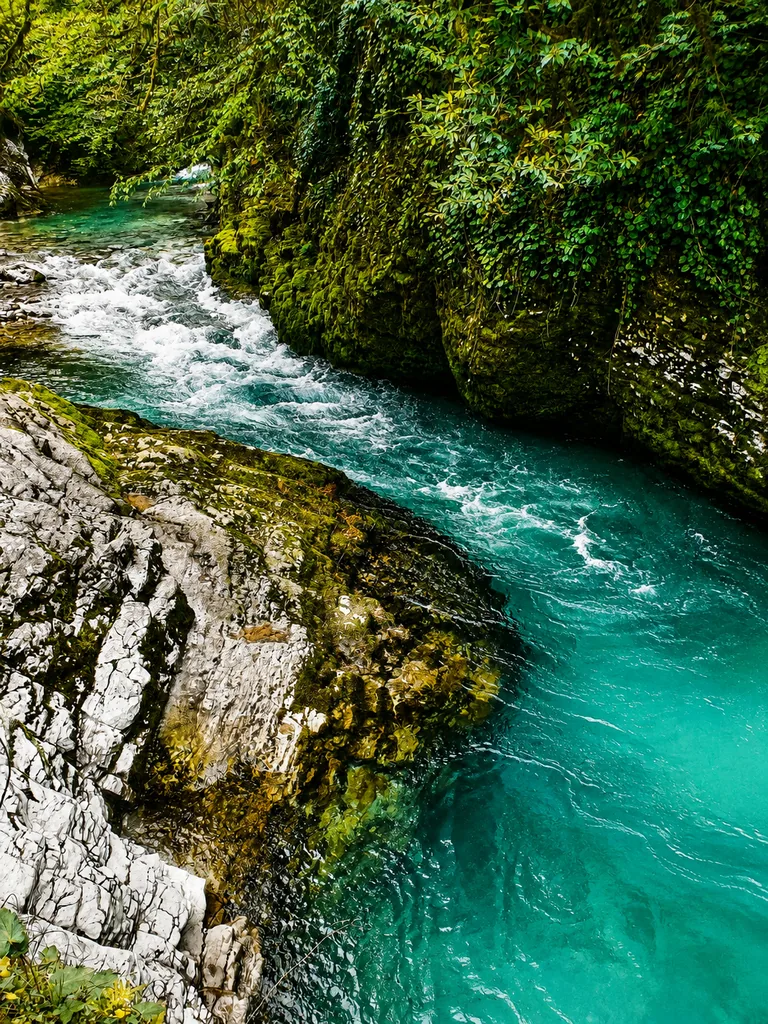
Martvili Canyon is the best-known natural attraction in Samegrelo and one of the highlights of western Georgia. The Abasha River has cut a narrow gorge through pale limestone, producing vertical rock walls dropping to intensely turquoise water, with small waterfalls and dense vegetation all around. You can walk the path along the rim for views down into the gorge, then take a short boat ride through the narrower sections for a closer perspective on the rock and water. The setting feels enclosed and calm — a different kind of landscape from Georgia's open valleys — and the site is well organized, with maintained paths, boat service, and facilities at the entrance. It's commonly combined with the nearby Okatse Canyon as a full day out. (Martvili has its own detailed guide in this series.)
Discover Balda Canyon
For something wilder, Balda Canyon is a more adventurous, less-developed alternative to Martvili. It's a river canyon with natural pools, a waterfall at the end of the trail, and — depending on conditions — a rope crossing over the water. It feels raw and unstructured compared to Martvili, which is much of its appeal for travelers wanting something more active and hands-on. Because it's far less developed, it suits people comfortable with rougher, less-marked terrain, and access can vary with the season and water levels.
Trek to the Tobavarchkhili Lakes
For experienced, well-equipped hikers, the Tobavarchkhili Lakes — “Silver Lakes” in Megrelian — are one of the most remote and rewarding destinations in Samegrelo, a cluster of glacial lakes high in the Egrisi Range at around 2,500–2,650 meters. This is a serious undertaking, not a casual hike: the classic route runs roughly 45 kilometers over four to six days, crossing high passes, rivers, and slopes that can hold snow even in summer, with no shelters, no mobile coverage, and trails that are at times hard to follow. It's genuinely one of the most challenging treks in Georgia, and the strong advice is to go with an experienced guide (and often pack horses), with proper gear and a buffer day for weather. The reward is some of the most untouched mountain wilderness in the country. The season is short — roughly mid-July to mid-September.
Visit Zugdidi and the Dadiani Palace
Zugdidi, the regional capital, is the best place to get a feel for Samegrelo — a quiet city of broad streets, markets, and everyday life, with its standout sight the Dadiani Palace. The former residence of the princes of Samegrelo, it's now a museum holding medieval Georgian religious objects, the family's belongings across generations, and — most unexpectedly — one of Napoleon's bronze death masks, acquired through the marriage of Princess Salome Dadiani to Napoleon's great-nephew Achille Murat. The palace sits in one of Georgia's oldest botanical gardens, and together they give real context for the region's past and its surprising connections beyond Georgia. (Zugdidi has its own detailed guide in this series.)
Drive from Zugdidi to Mestia
One of the most impressive experiences in Samegrelo is the drive north toward Svaneti. The road from Zugdidi up the Enguri valley climbs from flat green farmland, through the steep-walled Enguri gorge (passing the huge Enguri Dam and its blue-green reservoir), to the high Svan valleys around Mestia — a complete landscape transformation in about three hours. It's one of the most dramatic road journeys in Georgia, and very much part of the experience rather than just transport. Even if Svaneti is your main goal, the drive itself is a highlight of any time spent in Samegrelo.
Explore the countryside
Beyond the named sites, much of Samegrelo's character shows in its countryside. Driving the rural roads takes you past small villages, agricultural land, and dense forest — the exceptionally green, well-watered landscape that defines the region. It's unhurried, low-key travel, and a good way to see everyday Megrelian life away from any tourist infrastructure. A car gives the freedom to wander and stop where the scenery invites it.
Taste Megrelian cuisine
Samegrelo has one of the strongest, most distinctive food traditions in Georgia, known for being richer and spicier than the national norm — it uses adjika, the hot-pepper-and-garlic paste, generously. Signature dishes include the double-cheese Megrelian khachapuri, kharcho (a spiced beef, rice, and walnut soup), gebzhalia (fresh cheese in a mint-and-cream sauce), and elarji (a cornmeal-and-sulguni porridge pulled into elastic threads). The region's sulguni cheese is considered by many the best in Georgia. Eating well here is genuinely one of the main reasons to visit, and the food is best experienced in a local family or guesthouse setting.
Experience local life
More than most Georgian regions, Samegrelo offers an unstructured, local experience. Spending time here often means simply observing daily life, talking with local people, and settling into a slower pace, in a region with a strong cultural identity and relatively few other tourists. It's a place to engage with rather than tick off — and travelers who do tend to come away with a clearer sense of this particular corner of western Georgia.
When to visit
Spring and summer are best for the landscapes and outdoor activities, when everything is at its greenest and the canyons and trails are in full swing (the Tobavarchkhili trek specifically needs mid-July to mid-September). Autumn is quieter and more relaxed, with the forests turning and the summer humidity easing. July and August can be hot and humid in the lowlands, though the canyons and forests stay pleasant; winter is mild at lower elevations and the quietest time of year.
Caucasus Travel FAQ
Visit Martvili Canyon for its turquoise water and boat rides, explore the Dadiani Palace in Zugdidi (home to one of Napoleon's death masks), drive the scenic road up toward Svaneti, and eat your way through the rich Megrelian cuisine. For the adventurous, there's the wilder Balda Canyon and the demanding multi-day trek to the remote Tobavarchkhili Lakes.
Yes — it's the region's top natural attraction. The Abasha River has carved a dramatic limestone gorge with vivid turquoise water, a rim walking path, and short boat rides through the narrow sections. It's well set up for visitors and is usually combined with the nearby Okatse Canyon as a full-day trip from Zugdidi or Kutaisi.
It's one of the most challenging treks in Georgia — a roughly 45 km route over four to six days at 2,500–2,650 m, with high passes, river crossings, snow even in summer, no shelters, and no mobile coverage. It's strongly recommended to go with an experienced guide and proper gear, ideally between mid-July and mid-September. The reward is some of the most untouched wilderness in the country.
The main sight is the Dadiani Palace, the former residence of the princes of Samegrelo, now a museum with medieval Georgian religious objects, the family's belongings, and one of Napoleon's death masks — acquired through Princess Salome Dadiani's marriage to Napoleon's great-nephew Achille Murat. It sits in one of Georgia's oldest botanical gardens. Zugdidi is also a good place to experience everyday Megrelian life.
Megrelian cuisine is among Georgia's richest and spiciest. Try the double-cheese Megrelian khachapuri, kharcho (spiced beef, rice, and walnut soup), gebzhalia (cheese in mint-and-cream sauce), and elarji (cornmeal-and-sulguni porridge). The local sulguni cheese is considered by many the finest in Georgia.