
Things to Do in Imereti: Gelati, Prometheus Cave, and the Canyons
Imereti, in central western Georgia — the country in the South Caucasus — is one of the most accessible and varied regions in the country. Centered on Kutaisi, it offers a mix of cultural landmarks, cave systems, canyon landscapes, and local experiences, all within relatively short travel distances. Thanks to Kutaisi International Airport, Imereti is often the first region visitors explore when arriving in western Georgia — and its compactness means you can cover a lot without long drives. Here are the things most worth doing.
What are the best things to do in Imereti?
The highlights are the UNESCO-listed Gelati Monastery and the Bagrati Cathedral above Kutaisi; Prometheus Cave, with its lit chambers and underground boat ride; and the Okatse and Martvili canyons. Add the Sataplia reserve with its dinosaur footprints, the faded Soviet spa town of Tskaltubo, and the region's quieter wine tradition. Kutaisi itself makes the base, and most of these are easy day trips from it.
Explore Kutaisi
Kutaisi is the main hub of Imereti and the natural starting point for the region — Georgia's third-largest city and the historical capital of the west. It has historical landmarks, lively local markets, walkable streets, and views along the Rioni River, and compared to Tbilisi it feels more relaxed and compact, easy to explore on foot over a day. It also has the transport links and range of accommodation that make it the practical base for everything else in the region. (Kutaisi has its own detailed guide in this series.)
Visit Bagrati Cathedral
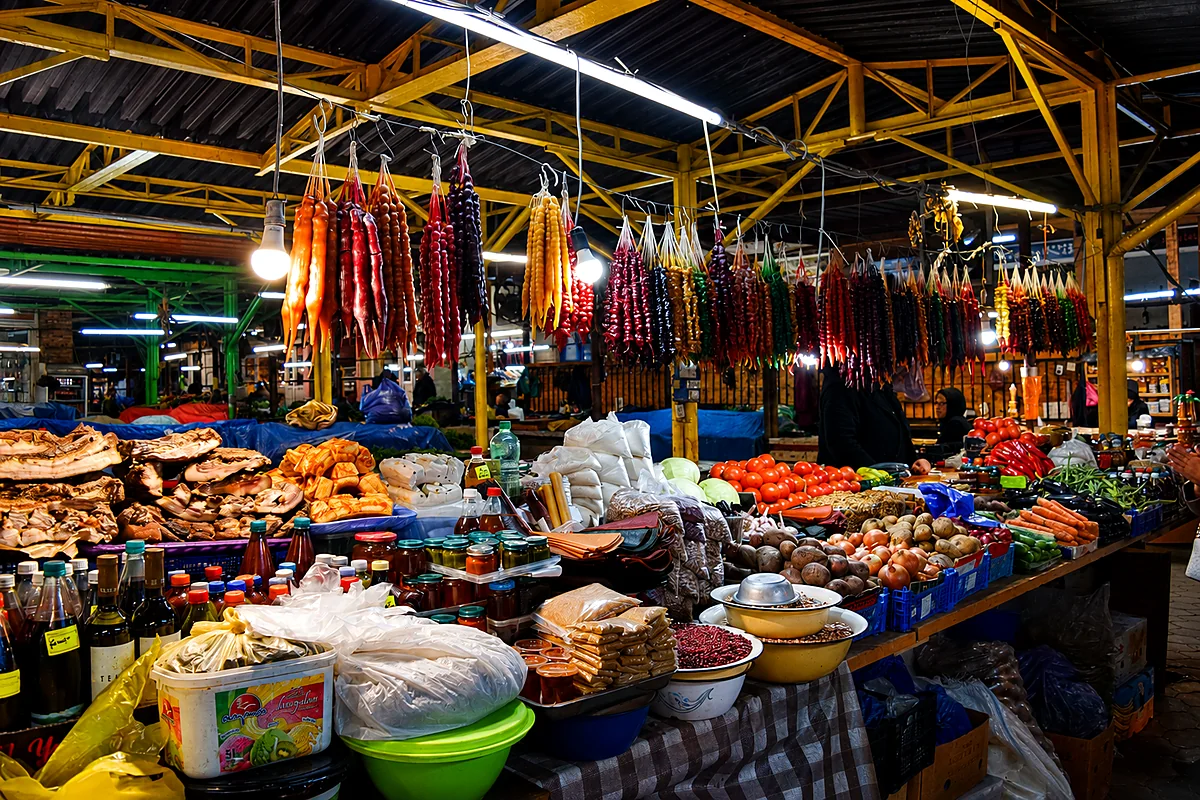
Bagrati Cathedral is one of Kutaisi's defining landmarks, standing on Ukimerioni Hill above the city with panoramic views over the Rioni River and the surrounding valley. Built in the early 11th century under King Bagrat III, it's an important symbol of Georgian history and unity. Worth knowing: after a major reconstruction completed in 2012, UNESCO removed Bagrati from the World Heritage List in 2017, judging that the rebuilding had compromised its authenticity — so unlike nearby Gelati, it no longer holds World Heritage status. That doesn't diminish the visit: the hilltop setting and the views over Kutaisi are among the best in the city, and the debate over its restoration is itself part of what makes it interesting.
Visit Gelati Monastery
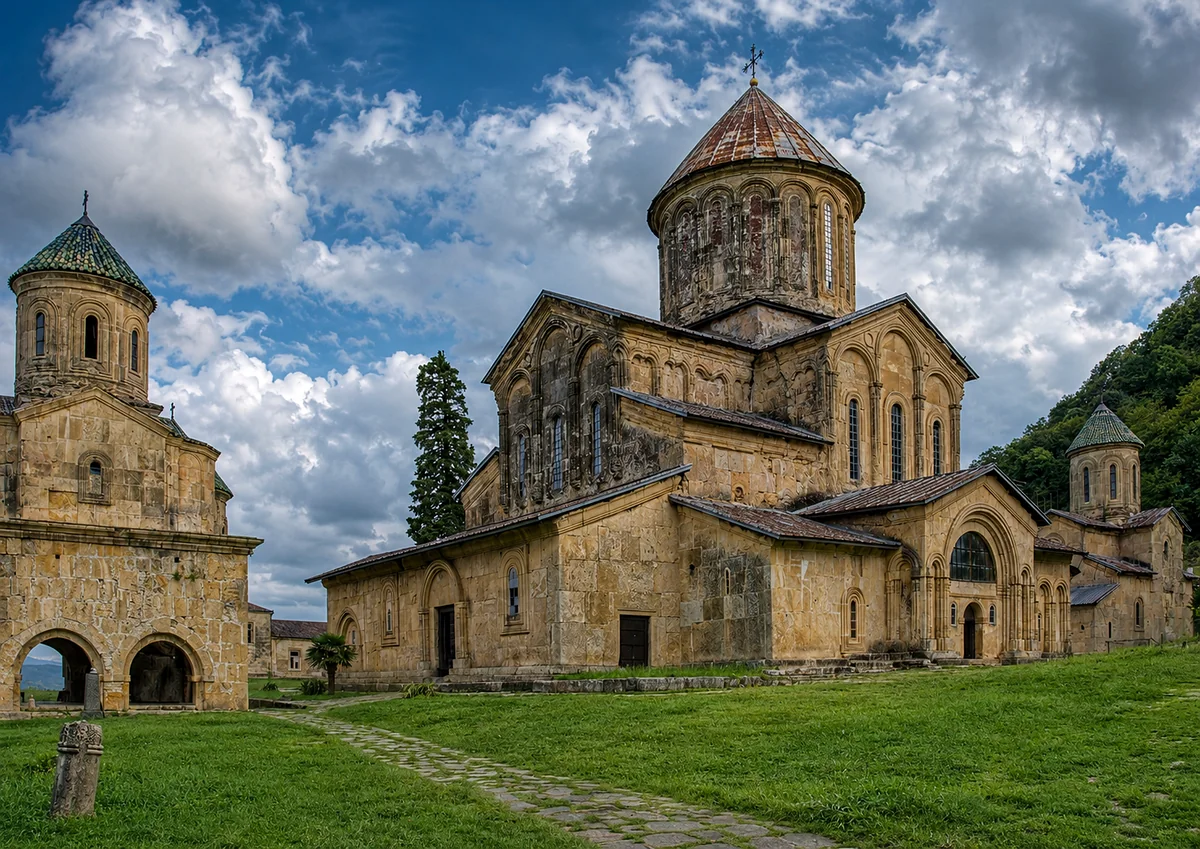
Gelati Monastery is one of the most important cultural sites in Georgia and a UNESCO World Heritage Site in its own right. Founded in 1106 by King David the Builder as both a monastery and an academy of learning, it was one of the leading intellectual centers of the medieval Georgian world. The complex is known for its architecture and, above all, its art: the main cathedral holds the finest surviving medieval mosaics in Georgia, including a celebrated 12th-century apse mosaic of the Virgin and Child, alongside centuries of frescoes. David the Builder is buried beneath the main gate. Nine kilometers from Kutaisi and still an active monastery, it's an essential stop in the region.
Explore Prometheus Cave
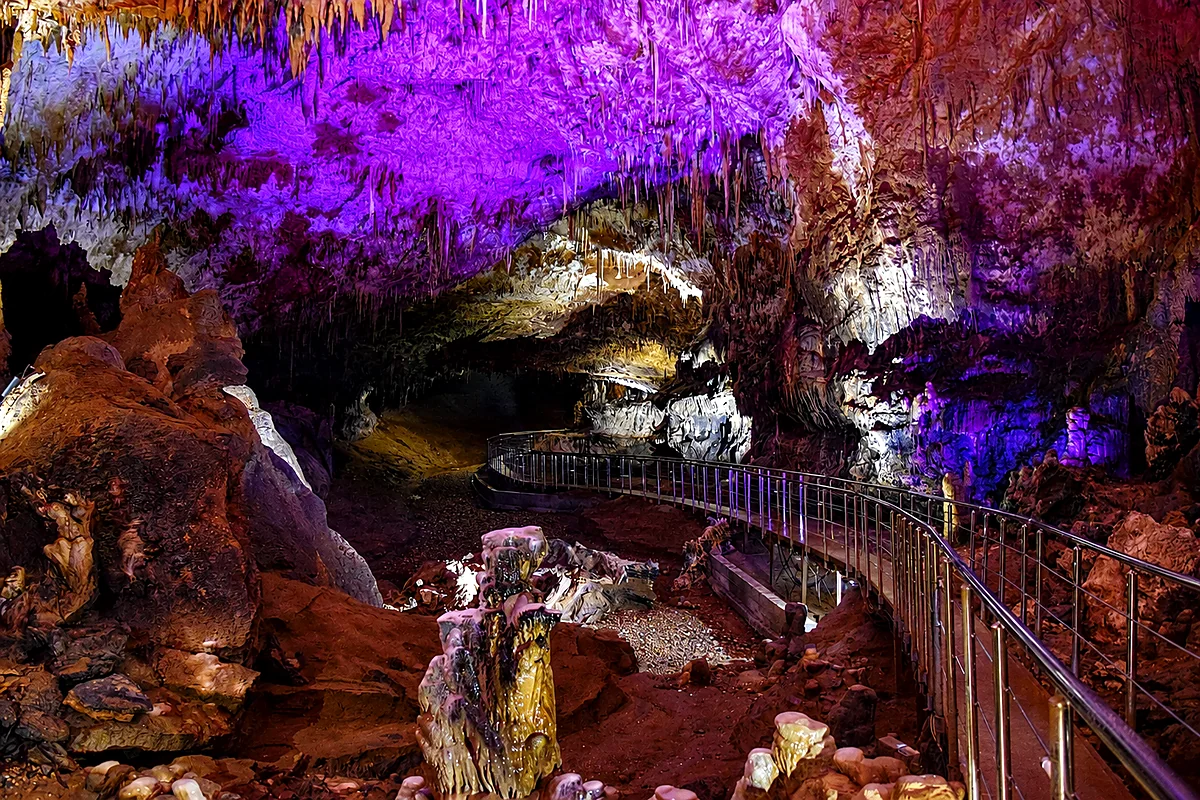
Prometheus Cave, near Tskaltubo, is one of the largest and most impressive cave systems in Georgia and the region's most popular natural attraction. Visitors follow a lit walkway through a series of large underground halls filled with stalactites and stalagmites formed over millions of years, ending with a short boat ride on an underground river. It's well organized and accessible, suitable for most travelers regardless of fitness, and stays cool year-round — a particularly welcome stop in summer. Allow about an hour and a half to two hours.
Visit Sataplia Nature Reserve
Just outside the Kutaisi city limits, Sataplia combines nature and geology in a compact, easy stop. The reserve has a small cave, Cretaceous-period dinosaur footprints preserved in the limestone, forest walking paths through relict Colchic forest, and a glass-floored observation platform with views over the Rioni valley and the city. It works as a two-to-three-hour outing — accessible and varied without being demanding, and especially good for visitors with children.
Walk along Okatse Canyon
Okatse Canyon is known for the elevated walkway built along the edge of its cliffs, giving views straight down into a deep gorge. The route is a structured path with a slightly adventurous feel where the walkway cantilevers out over the drop, and the walk in to the canyon entrance and back is part of the experience. It's a rewarding half-day from Kutaisi for the dramatic perspective it gives onto the karst landscape.
Explore Martvili Canyon
Martvili Canyon offers a different kind of canyon experience from Okatse. Here you can take a short boat ride through the narrow canyon passages, walk the paths above the water, and see waterfalls and rock formations along the way. The turquoise color of the Abasha River running through the limestone walls makes it one of the most visually striking places in western Georgia. It sits on the Samegrelo border about an hour and fifteen minutes from Kutaisi and is frequently combined with Okatse in a single day. (Martvili also appears in the Samegrelo guide in this series.)
Visit Tskaltubo
Tskaltubo offers a completely different atmosphere from the rest of the region. The town is known for its grand Soviet-era sanatoriums, many now abandoned and in various states of decay, which create an unusual setting that combines 20th-century history and architecture. Some spa facilities still operate and parts of the town are being slowly revived, but much remains in atmospheric decline — a draw in itself for travelers interested in Soviet history and urban exploration. It's about 12 kilometers from Kutaisi and close to Prometheus Cave. (Tskaltubo has its own detailed guide in this series.)
Discover Imeretian wine
Wine in Imereti is a quieter, less commercialized alternative to Kakheti, built on indigenous western-Georgian grapes — whites like Tsolikouri, Tsitska, and Krakhuna, and reds like Otskhanuri Sapere. Made by the traditional qvevri method but usually with shorter skin contact than in Kakheti, Imeretian amber whites are often more approachable for those new to skin-contact wine while still carrying real complexity. Tasting here typically happens in small, family-run wineries, which makes for a more intimate, direct experience — though it usually needs an introduction through a guesthouse or local contact rather than a walk-in, since these producers rarely have formal visitor facilities.
Drive through the Imereti countryside
One of the best ways to experience Imereti is simply to drive it. The short distances between sites let you combine cultural landmarks, natural landscapes, and small villages in a single day, through the characteristic mixed farmland and forested hills of western Georgia. A car gives the most freedom, especially for reaching the smaller wineries and villages off the main routes, though organized day tours from Kutaisi cover the major sites efficiently for travelers without their own transport.
When to visit
Spring and summer are ideal for the nature and outdoor sites, when the canyon rivers run full and the landscapes are at their greenest — though the cave and indoor sites are comfortable year-round, and the cave is especially welcome in summer heat. Autumn is quieter and well suited to wine experiences, with the Imeretian harvest active and the forested hills changing color. Winter is mild at valley elevation and the main sites stay accessible, though some smaller family wineries and rural guesthouses run reduced schedules outside the main season.
Caucasus Travel FAQ
Visit the UNESCO-listed Gelati Monastery and the Bagrati Cathedral above Kutaisi, explore Prometheus Cave with its underground boat ride, and walk the Okatse and Martvili canyons. Add the Sataplia reserve (with its dinosaur footprints), the Soviet spa town of Tskaltubo, and a tasting at a small Imeretian family winery. Most are easy day trips from Kutaisi.
Yes — Gelati is a UNESCO World Heritage Site in its own right. Founded in 1106 by King David the Builder as a monastery and academy, it holds the finest surviving medieval mosaics in Georgia, including a 12th-century apse mosaic of the Virgin and Child. It's nine kilometers from Kutaisi and still active. (The nearby Bagrati Cathedral was removed from the World Heritage List in 2017 after its reconstruction, so it no longer carries the status.)
Prometheus Cave, near Tskaltubo, is one of the largest and most impressive caves in Georgia. A lit walkway leads through a series of big underground halls full of stalactites and stalagmites, finishing with a short boat ride on an underground river. It's well organized and accessible for most visitors, stays cool year-round, and takes about 1.5–2 hours.
Yes — they're often combined into a single day trip from Kutaisi. Okatse has a dramatic cantilevered cliff-edge walkway over a deep gorge; Martvili (on the Samegrelo border) is a wider canyon with turquoise water, boat rides, and waterfalls. A car or an organized tour covers both comfortably in a day.
Yes — it's a quieter, more intimate alternative to Kakheti. Imereti's indigenous grapes (Tsolikouri, Tsitska, Krakhuna) and shorter skin-contact qvevri whites make amber wines that are often more approachable for newcomers while still complex. Tastings happen in small family wineries, which usually need an introduction through a guesthouse or local contact rather than a walk-in.