
Things to Do in Tbilisi, Georgia: A Local Guide to the Capital
Tbilisi is the capital of Georgia — the country in the South Caucasus, not the US state — and the city where most trips to the country begin. The historic core is compact and walkable, so you can cover the main sights on foot over two to three days, with sulfur baths, old churches, museums, and one of the world's oldest wine cultures packed into a small area. Below is what's worth your time, how long each thing takes, and where the gap between the hype and the reality is widest.
What are the best things to do in Tbilisi?
The best things to do in Tbilisi are walking the Old Town (Dzveli Tbilisi), soaking in the Abanotubani sulfur baths, going up to Narikala Fortress for the city view, seeing Sameba Cathedral and the cluster of churches, a mosque and a synagogue in the historic center, visiting the Georgian National Museum on Rustaveli Avenue, and eating and drinking through the city's restaurants and wine bars. Most of these sit within walking distance of each other, which is why two to three days is enough for a first visit.
Walk the Old Town (Dzveli Tbilisi)
Walking the Old Town is the first thing most visitors do in Tbilisi, and it's the right call. The lanes wind without much logic between houses whose carved wooden balconies hang out over the street, often draped with vines or laundry. Many buildings are half-restored and half-crumbling — plaster peeling to show older layers of paint, balconies leaning at angles. That unevenness is honest: large parts of the Old Town are lived-in and worn rather than polished for tourists, and a few streets back from the main routes you'll see real disrepair.
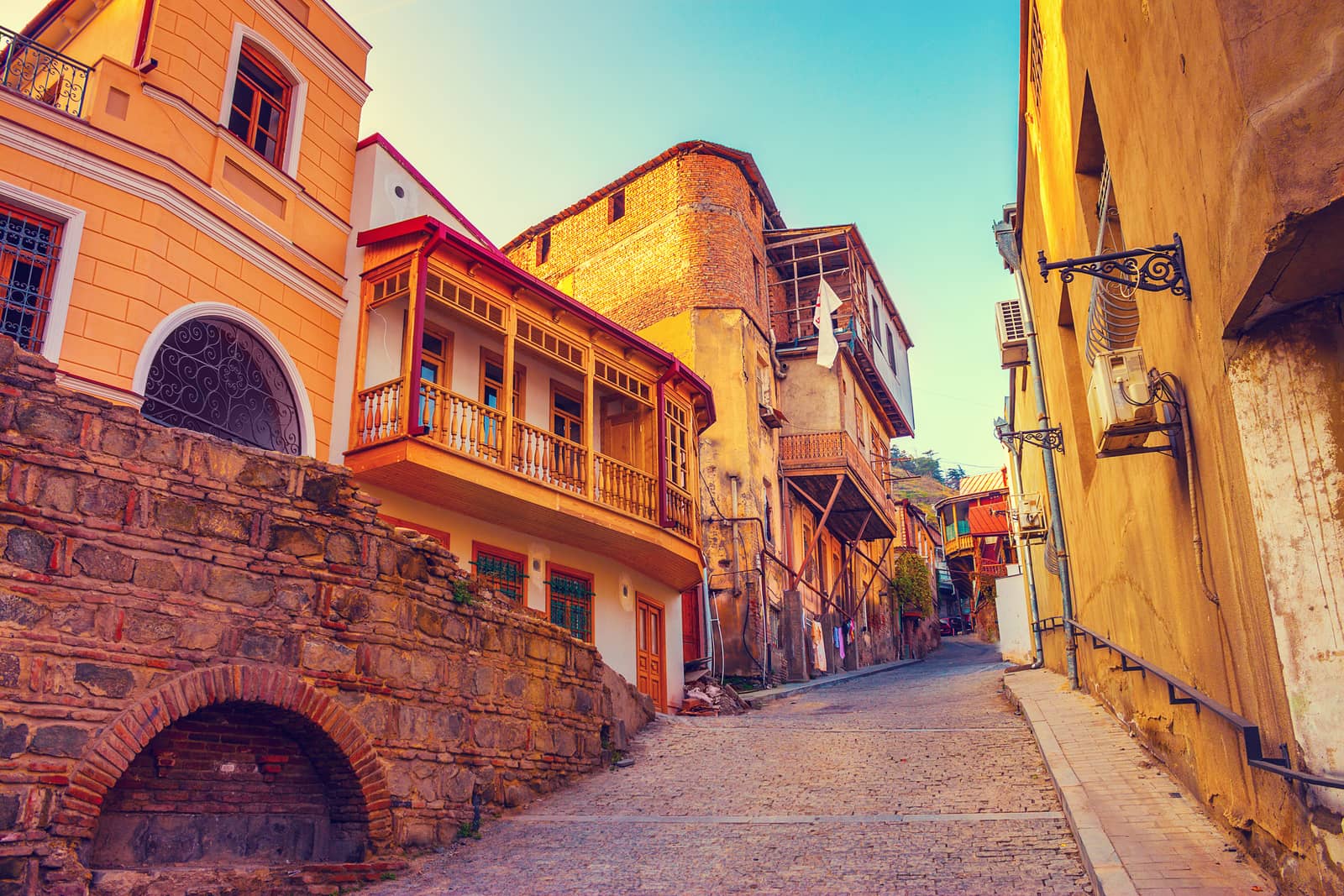
Give it half a day on foot. Wear shoes with grip — the cobbles are uneven and several routes climb.
Bathe in the Abanotubani sulfur baths
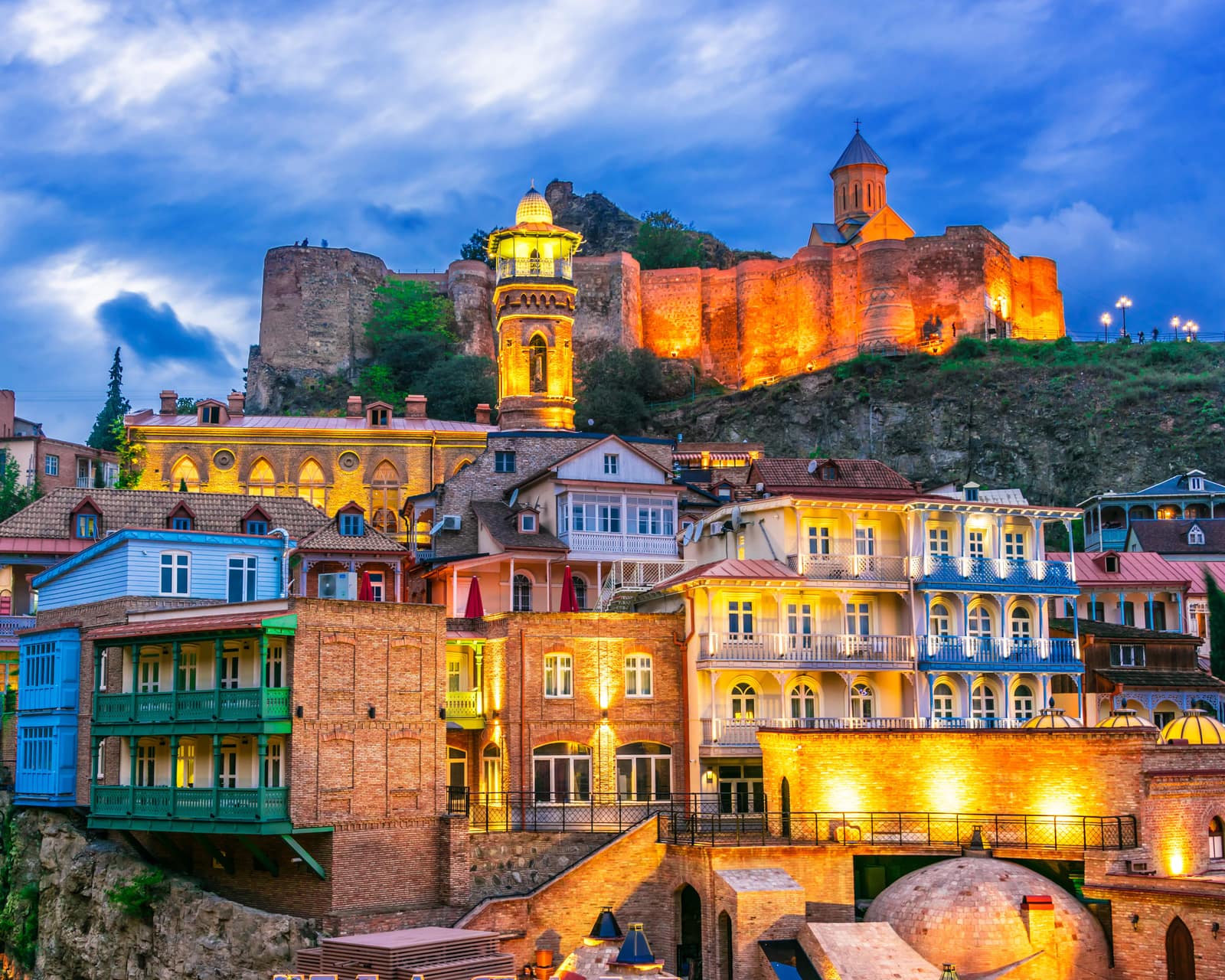
Bathing in the Abanotubani sulfur baths is the most distinctly Tbilisi thing you can do. The domed brick bathhouses sit below Narikala Fortress and are fed by natural hot springs; they've operated in some form since the city's earliest days. The water surfaces at roughly 37–47°C, smells faintly of sulfur, and is genuinely hot. You can pay for a private room by the hour or use the public sections.
Set expectations: these are working bathhouses, not luxury spas. The rooms are simple and the sulfur smell is part of the deal. An optional kisi (scrub-down) is offered at most baths and is worth trying once.
Go up to Narikala Fortress
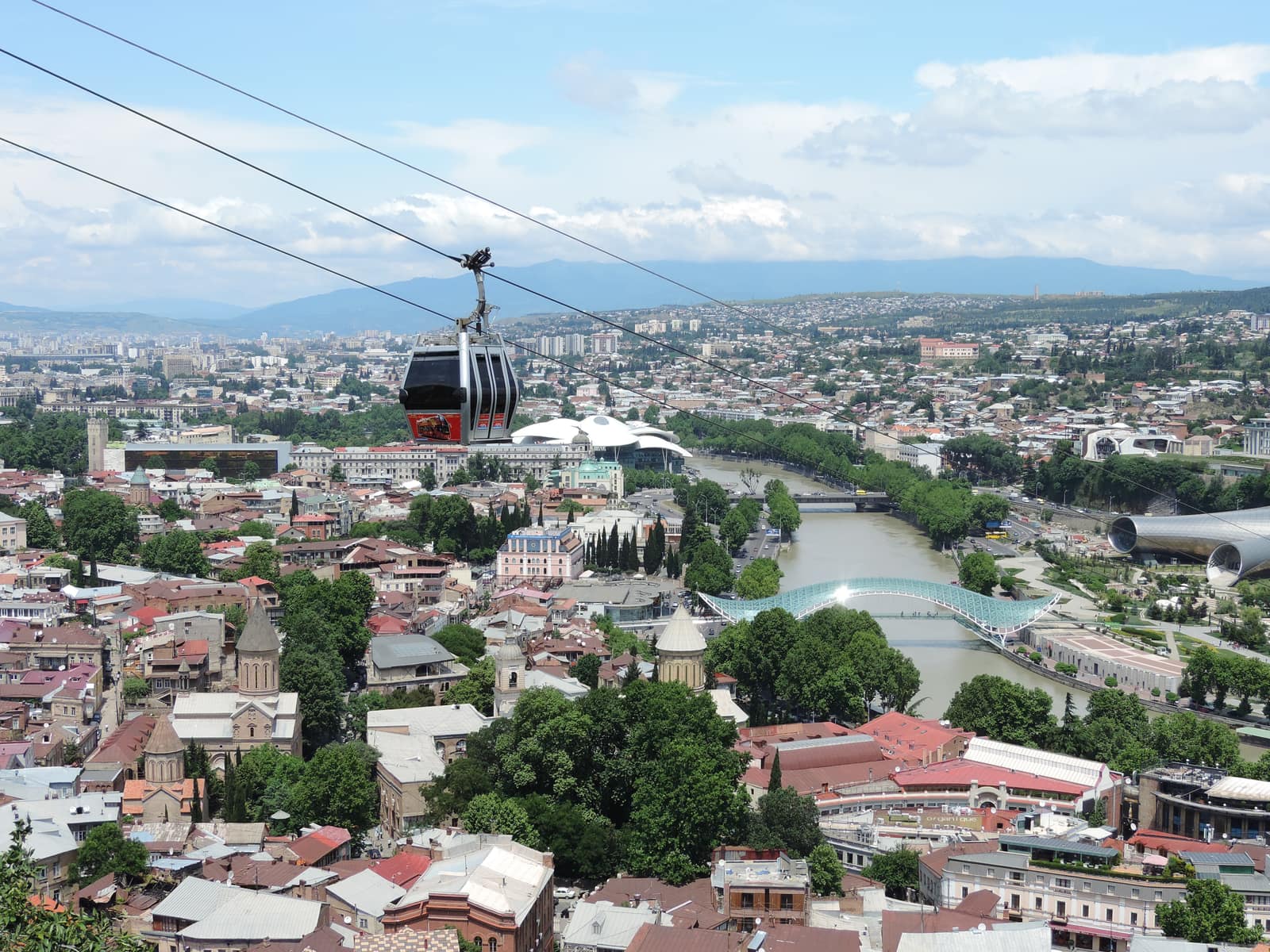
Going up to Narikala Fortress gives you the clearest overview of how Tbilisi sits in its valley — the Old Town below, the Mtkvari River winding through, the newer districts to the north, and Mtatsminda hill rising behind. The fortress dates to the 4th century, was expanded under Arab and Georgian rule, and was largely wrecked when a gunpowder store inside exploded in 1827. What's left is a ruin you can walk around rather than an intact castle.
A cable car runs up from the Old Town side. You can also walk up through the Old Town, which is steep but free. Budget about an hour including the view.
See Sameba Cathedral and the Old Town's religious sites
Sameba Cathedral — formally the Holy Trinity Cathedral — is the most prominent religious building in modern Tbilisi. It was completed in 2004, stands on Elia Hill in the Avlabari district, and is one of the largest Orthodox cathedrals in the world by floor area; its golden dome rises about 84 meters and is visible across the city. It is the seat of the head of the Georgian Orthodox Church. Dress modestly — shoulders and knees covered, headscarves available for women at the entrance.
What's more interesting is the religious mix in the historic center. Within a short walk you can find medieval Georgian Orthodox churches (including the 6th-century Anchiskhati Basilica, the oldest in the city, and Metekhi Church on its cliff), the Armenian Apostolic cathedral, a mosque that has served Tbilisi's Muslim community since the city's Persian-influenced period, and a working synagogue. This isn't a curated diversity showcase — it's the leftover of Tbilisi's long history as a trading crossroads where these communities lived side by side.
Visit the Georgian National Museum
Visiting the Georgian National Museum on Rustaveli Avenue is the fastest way to make sense of everything else you'll see in Georgia. It holds prehistoric gold, medieval manuscripts, and a Soviet occupation exhibition that gives essential 20th-century context. The same complex includes the Dmanisi hominid fossils — among the earliest human-ancestor remains found outside Africa. Allow one to two hours.
Rustaveli Avenue itself, named after the 12th-century poet Shota Rustaveli, is the main 19th-century boulevard and worth a walk for the architecture, the Rustaveli Theatre, and the Parliament building. Nearby Freedom Square has the gilded St. George statue where a Lenin statue once stood. Both are places to walk through rather than linger.
Eat your way through Georgian food
Eating is one of the main things to do in Tbilisi, because in Georgia a shared meal is a core part of how people connect. The traditional feast, or supra, is led by a tamada (toastmaster) and runs through a long sequence of dishes and toasts. You don't need a formal supra to get the idea — a normal restaurant dinner shows the spirit.
Two dishes to start with: khinkali, the large pleated soup dumplings filled with spiced meat, eaten by hand — hold by the thick stem, bite a small hole, drink the broth first, then eat the dumpling and leave the knot on your plate (locals often count the knots to see how many you've had). And khachapuri, cheese-filled bread; the Adjarian version is a boat of bread filled with molten cheese, topped with a raw egg and butter you stir in at the table. Beyond those, expect walnut-based sauces, herb-heavy salads, slow stews, and a strong range of vegetable and bean dishes thanks to the Orthodox fasting tradition — useful if you're vegetarian. One caveat: restaurants right on the main Old Town tourist streets are hit-or-miss; the food is usually better a few streets off the main drag.
Taste Georgian wine in the city's wine bars
Tasting wine is worth building into your time in Tbilisi even if you don't visit the vineyards. Georgia is widely considered one of the oldest wine-producing regions in the world, with archaeological evidence of winemaking going back roughly 8,000 years. The traditional method ferments grapes — skins, seeds, and all — in buried clay vessels called qvevri, which produces the amber or "orange" wines Georgia is now known for. They have a tannic grip that can surprise people used to standard white wine.
Tbilisi's wine bars usually pour qvevri styles and modern winery wines side by side, so you can compare. Ask for Rkatsiteli (the main white grape, grown in Kakheti) and Saperavi (the dark grape behind the country's best-known reds). It's also a good way to decide whether a full wine tour in Kakheti is for you before committing a day to it.
Spend an evening in Vera and Vake
For an evening away from the historic sites, the Vera and Vake districts northwest of the center have the city's denser café and bar culture, popular with locals as much as visitors. This is also where much of Tbilisi's newer restaurant and arts scene sits. It's residential and low on landmarks — the point is the atmosphere and the food, not sightseeing.
Go up Mtatsminda for the view
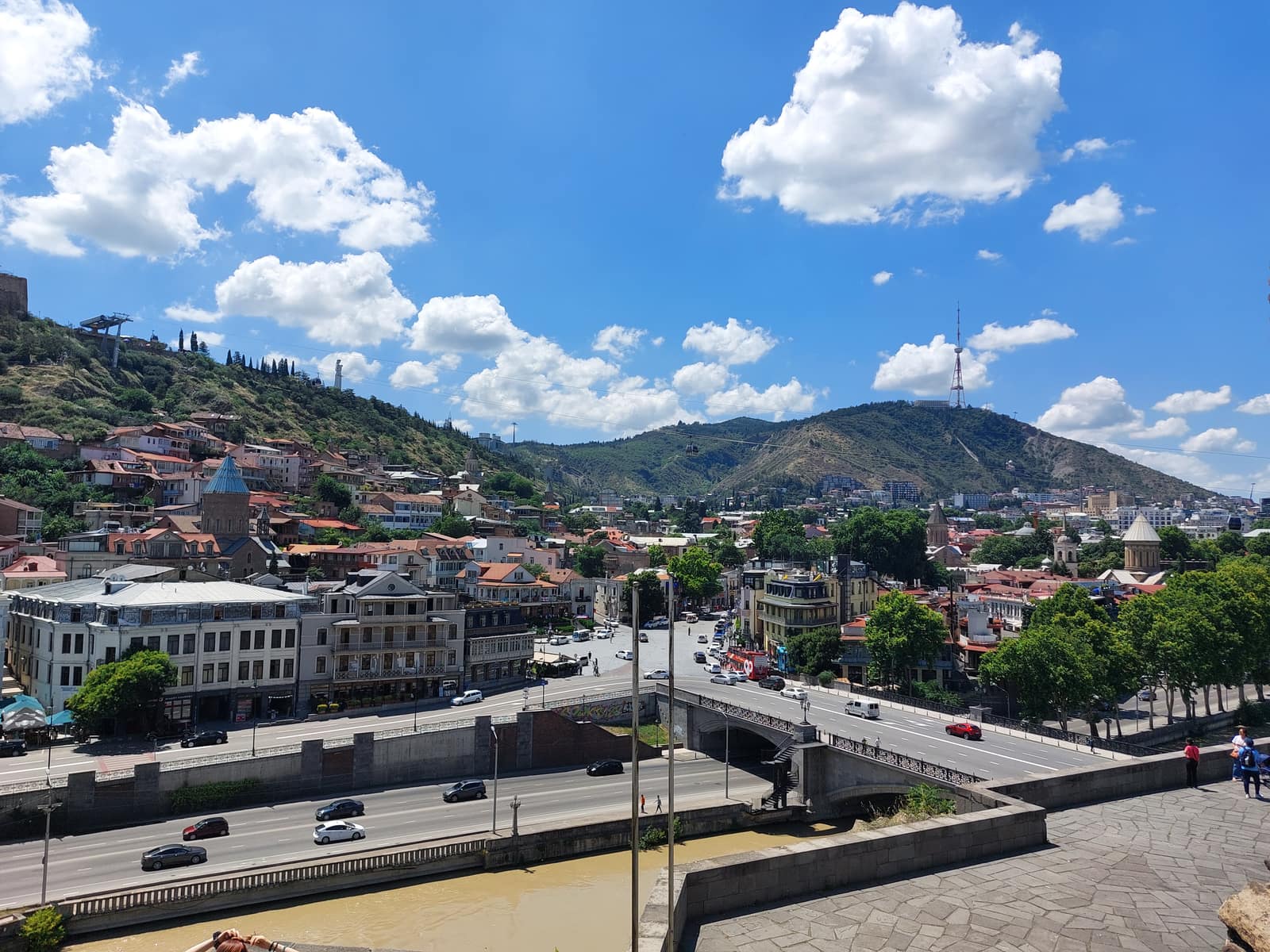
Going up Mtatsminda, the forested hill on the west side of the city, gives you a different angle on Tbilisi from the one at Narikala. There's a viewpoint and park at the top. Best in late afternoon, when the light is good and the city below starts to switch on.
Day trips you can add from Tbilisi
If you have extra days, Tbilisi is a strong base for short trips. Mtskheta, the ancient capital and a UNESCO World Heritage Site, is about 20 km north where two rivers meet and is easily a half-day. Kakheti, the main wine region, is roughly 80–120 km east (under two hours by road) for vineyards and monasteries. Kazbegi (Stepantsminda) in the Greater Caucasus is about 150 km north via the Georgian Military Highway, built around the Gergeti Trinity Church above the village — doable as a long day trip, better with an overnight.
When to do all this
Spring (April–June) and autumn (September–October) are the most comfortable times for walking the city, with temperatures around 15–25°C. Summers get hot — July and August often top 35°C, and the Old Town has little shade, so plan baths and museums for midday and walking for mornings and evenings. Winters are mild with occasional snow and noticeably quieter.
How long do you need?
Two to three days covers the main things to do in Tbilisi at a reasonable pace: a day for the Old Town, baths, and Narikala; a day for Rustaveli, the National Museum, and Sameba; and time around both for food and wine. Add a day for each day trip. The most common mistake is treating Tbilisi as a one-night stop on the way to the mountains — you can, but you'll miss most of what's here.
Caucasus Travel FAQ
Walk the Old Town, soak in the Abanotubani sulfur baths, go up to Narikala Fortress for the view, see Sameba Cathedral and the historic center's churches, mosque and synagogue, visit the Georgian National Museum, and eat and drink through the city's restaurants and wine bars.
Yes, as a one-time experience. The Abanotubani baths are fed by natural hot springs at around 37–47°C and are a centuries-old part of city life. Expect simple, working bathhouses rather than luxury spas, and a faint sulfur smell.
Yes — the fortress ruins are open to walk around at no charge. You can hike up through the Old Town for free, or take the paid cable car.
Spring (April–June) and autumn (September–October), when temperatures are around 15–25°C. Summers can exceed 35°C; winters are mild and quieter.