
Bakuriani
Bakuriani is a mountain resort town in the Borjomi-Kharagauli district of southern Georgia — the country in the South Caucasus — at around 1,700 meters in the Trialeti range. It's best known as Georgia's most accessible ski destination, a reputation it has held since the Soviet era, and it remains the first choice for families and beginner skiers who want a winter mountain trip without the demanding terrain of higher resorts. The town is small, a few thousand permanent residents, but its infrastructure is more developed than most Georgian settlements of comparable size, built up over decades of hosting winter visitors.
Dense conifer forest covers the hillsides in every direction, which gives Bakuriani a softer look than the bare, rocky slopes of a resort like Gudauri — even the ski runs cut through trees rather than open faces. The same forests make summer here pleasant: cool, green, and quiet when lowland Georgia is at its hottest.
Is Bakuriani good for skiing?
Bakuriani is a good ski resort for beginners, families, and lower-intermediate skiers, and a poor match for advanced skiers used to large Alpine resorts. Its strength is accessibility, atmosphere, and value rather than scale or steepness: the runs are mostly gentle to intermediate, snow is generally reliable from December through March, and it's about two and a half to three hours from Tbilisi. Most visitors find the two ski areas, Didveli and Kokhta, enough for three or four days. If you want big vertical and technical terrain, Gudauri is the better Georgian option.
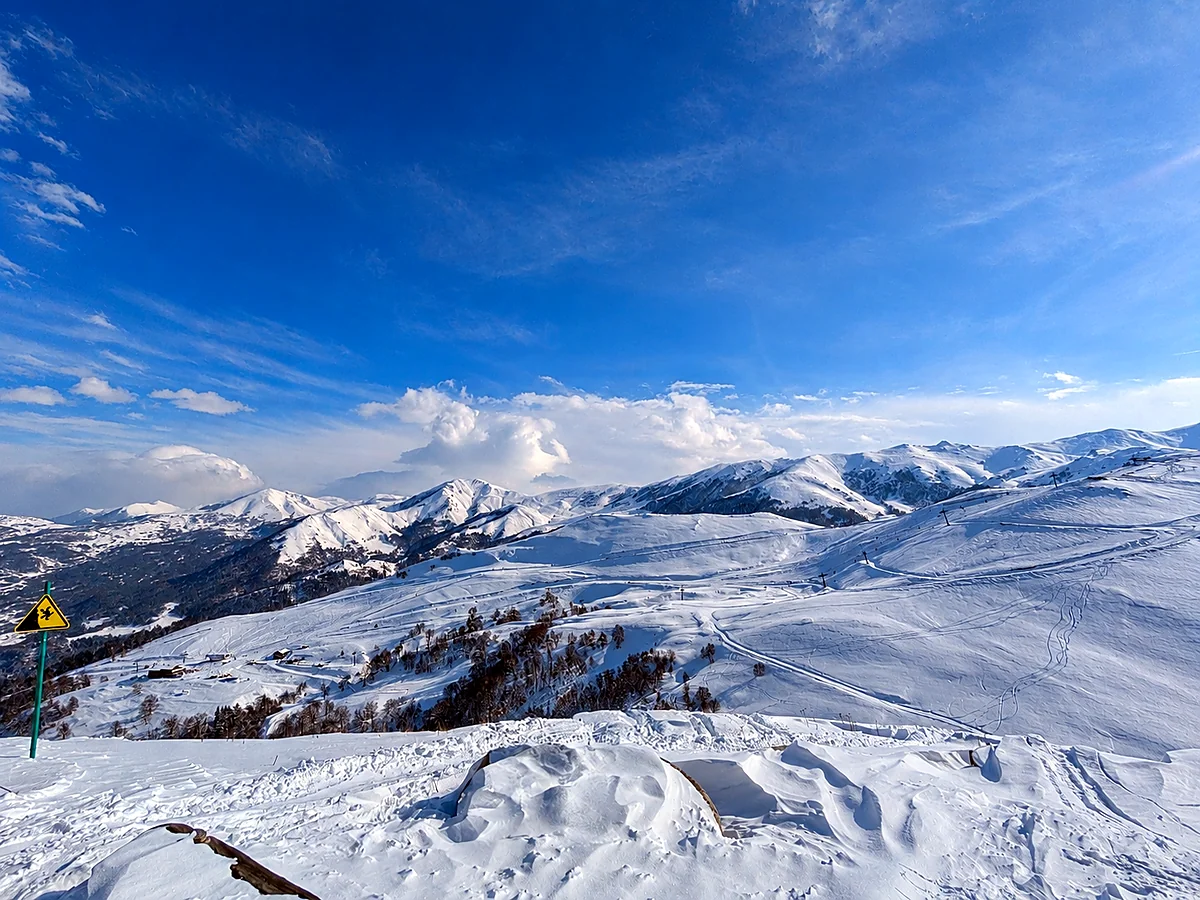
Skiing and winter activities
Bakuriani's ski terrain splits between two main areas, Didveli and Kokhta, which together give a reasonable variety for a resort this size.
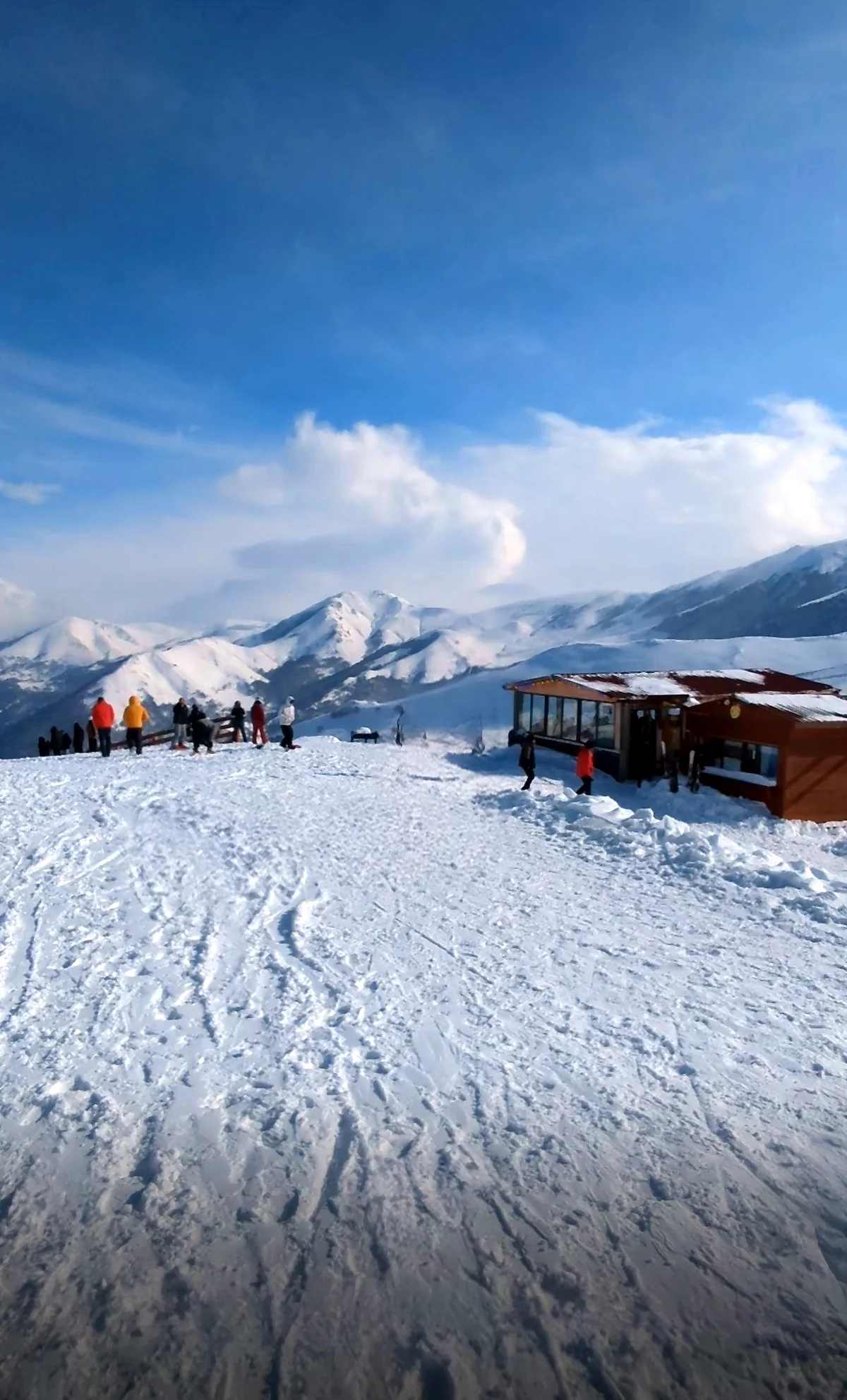
Didveli is the larger and more modern area, with gondola and chairlift infrastructure upgraded over the past decade. The runs go from gentle beginner slopes to a handful of more challenging intermediate pistes, and the layout is well organized. Ski and snowboard rental is easy to find at the base, and several ski schools run through the season, which makes Didveli well suited to first-timers and people returning to the sport after a break.
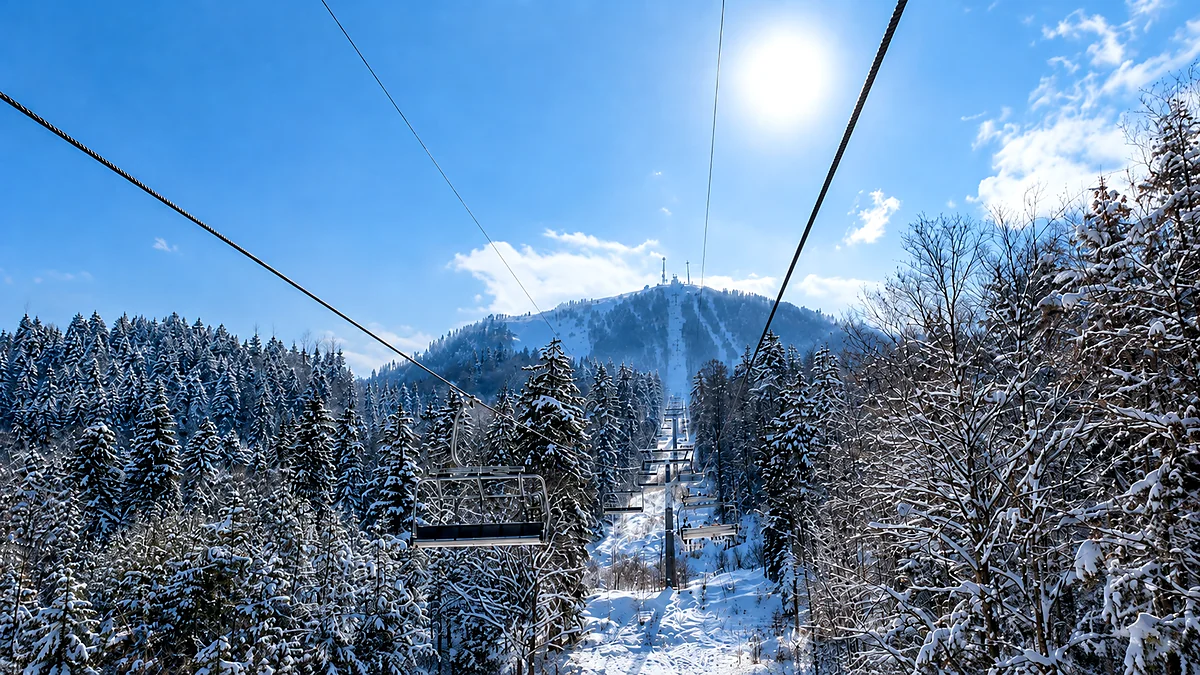
Kokhta, on a separate part of the mountain, is quieter and more forested. The slopes are usually less busy than Didveli and run through dense pine, which gives them a distinctive feel. The terrain is manageable for intermediates but lacks the vertical drop and variety advanced skiers look for.
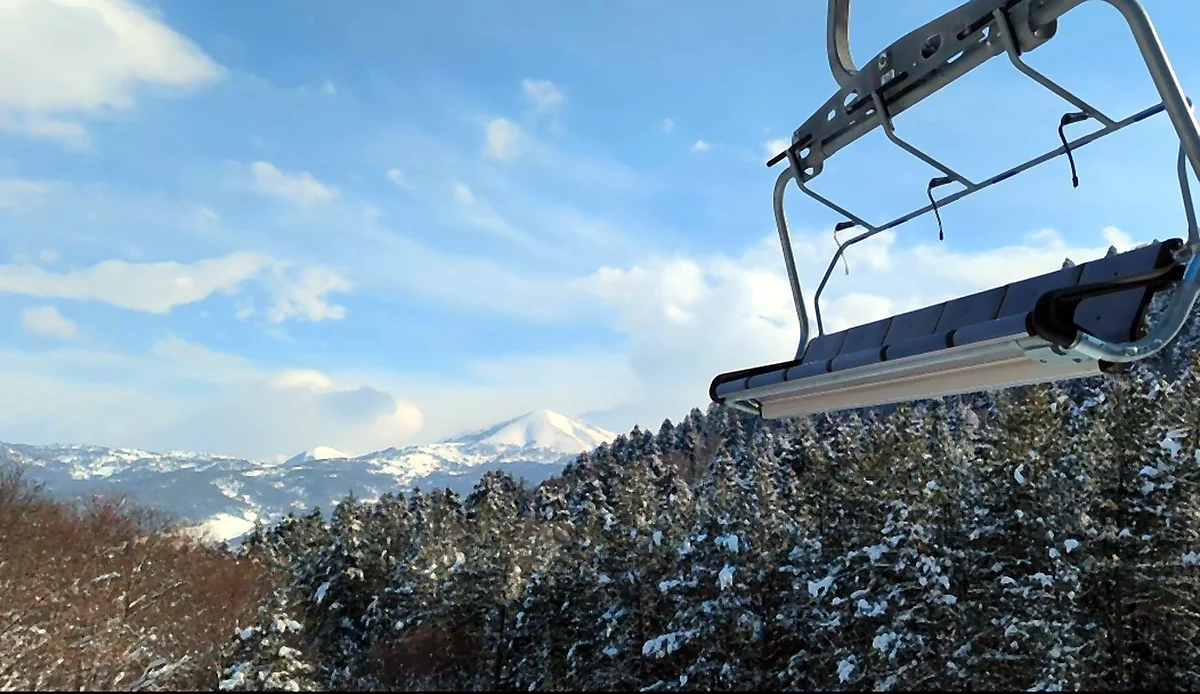
Snow is generally reliable from December through March, with January and February the most consistent. Bakuriani sits low enough that warm spells can affect snow quality later in the season, though the forested slopes hold cover better than open ones. Beyond skiing, the winter draws people for snowshoeing, sledding, and forest walks, and the town stays relaxed rather than party-focused — a real point of difference from some other resorts.
Summer in Bakuriani
Bakuriani works as a summer destination too, though it's quieter than in winter. The main draw is the climate: at 1,700 meters it stays noticeably cooler than Tbilisi and the lowland cities, which makes it a popular escape in the July–August heat. The surrounding forests are laced with hiking and walking trails from easy valley loops to longer climbs into the higher Trialeti range, and mountain biking has grown in recent years with several suitable trails.
Late spring and early summer are especially good, when the forests are fully green and wildflowers cover the meadows. Autumn brings color as the deciduous trees among the conifers turn, usually peaking in October.
The Kukushka narrow-gauge railway
The narrow-gauge railway linking Bakuriani to Borjomi is one of the more characterful ways to arrive. Built in 1902 to serve forestry operations, it later became a passenger line and still runs today. The journey covers about 37 kilometers and takes roughly two and a half hours, winding through forested gorges at a thoroughly leisurely pace. Locals call it the Kukushka ("cuckoo"), after the sound of its original steam engine. It runs a limited schedule and is more a scenic experience than a practical way to travel, so it's best treated as something to do rather than a way to save time.
Borjomi and the surrounding region
Bakuriani and Borjomi are closely linked, geographically and in how most people plan the area. Borjomi is roughly 30 kilometers away by road — or about two and a half hours on the Kukushka — in the deep gorge of the Mtkvari River. The two complement each other: Bakuriani for mountain and ski activities, Borjomi for its mineral springs, its 19th-century imperial architecture, and the trails of Borjomi-Kharagauli National Park, one of the largest protected forests in the Caucasus. Many visitors base in one town and day-trip to the other, or split their stay.
Akhaltsikhe, with its Rabati Castle and access to the Vardzia cave monastery, is around 50 kilometers southeast of Bakuriani and reachable in under an hour by road, which makes it a practical addition to any itinerary based in this part of southern Georgia.
How to get to Bakuriani
The most straightforward way to reach Bakuriani from Tbilisi is by road, taking about two and a half to three hours depending on conditions. Marshrutkas (minibuses) run regularly from Tbilisi's Didube bus station, usually routing through Borjomi. The Kukushka narrow-gauge train from Borjomi is slower but scenic, and worth doing for at least one leg if time allows. Because the train schedule is limited, check current departure times before relying on it.
Best time to visit Bakuriani
Winter — December through March — is the main season, with January and February offering the most reliable snow. June through September is the best window for hiking and outdoor activities, and July and August are busiest with people escaping the lowland heat. Spring and autumn are quieter and can be rewarding if you'd rather have the town without the crowds, though some resort facilities run reduced schedules outside the main winter and summer periods, so it's worth checking what's open before a shoulder-season trip.
History and Soviet legacy
Bakuriani's development as a resort began in earnest under the Soviet Union, when it was designated one of the main winter sports training centers in the Caucasus. Reliable snow, accessible terrain, and a location within a few hours of Tbilisi made it practical for both elite athletic training and recreational holidays for Soviet citizens. Some facilities from that era — parts of the lift infrastructure and several larger sanatorium-style hotels — are still visible, though many have been replaced or substantially upgraded in recent years. That mix of upgraded modern lifts and lingering Soviet-era buildings is part of how the town looks today.
Caucasus Travel FAQ
Yes. Bakuriani is Georgia's most accessible ski resort and a strong choice for beginners and families, with gentle to intermediate runs, plentiful rental, and several ski schools at Didveli. Advanced skiers used to large Alpine resorts will find the terrain limited.
Didveli is the larger, more modern area, with upgraded gondola and chairlift infrastructure and the best beginner facilities. Kokhta is quieter and more forested, manageable for intermediates but with less vertical drop and variety.
December through March, with January and February offering the most reliable snow. Bakuriani sits low enough that late-season warm spells can affect snow quality, though the forested slopes hold cover better than open ones.
Yes, mainly for the cooler mountain climate and forest trails. At 1,700 meters it stays much cooler than the lowlands in July and August, with hiking and mountain biking, green meadows in early summer, and autumn color around October.
Bakuriani is better for beginners, families, and a relaxed, forested, good-value trip. Gudauri offers bigger vertical, more open terrain, and more for advanced skiers. The right choice depends on ability and the kind of atmosphere you want.