
Rustavi Fortress: The Ancient City Beneath the Soviet One
Rustavi Fortress is the remains of an ancient and medieval fortified city on the bank of the Mtkvari (Kura) River, beside the modern city of Rustavi in the Kvemo Kartli region of Georgia — the country in the South Caucasus. Though the modern Rustavi is a 20th-century Soviet industrial city, it takes its name from a genuinely ancient predecessor on this site: Bostan-Kalaki, "the city of gardens," one of the oldest cities in Georgia and an important center of the early Georgian kingdom of Iberia. What survives of the fortress is modest — fragments of walls, the outlines of towers, scattered masonry that rewards some prior knowledge to read — so visitors should calibrate their expectations. But the history beneath those stones is substantial, and the site is the one visible link between the industrial city of today and the ancient town that gave it its name.
What is Rustavi Fortress?
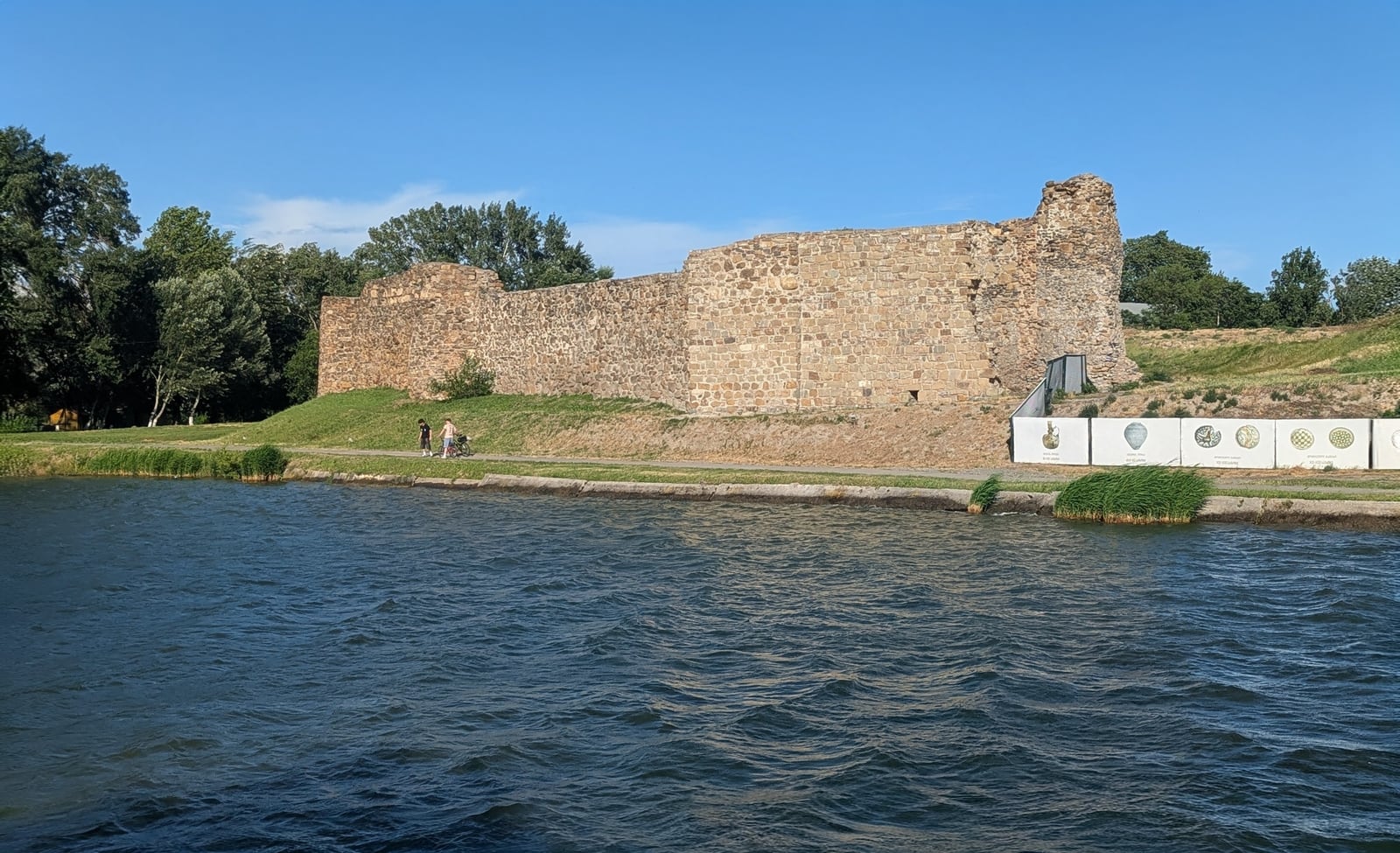
Rustavi Fortress is the ruined fortification of ancient and medieval Rustavi (historically Bostan-Kalaki), on the Mtkvari River by the modern city of Rustavi, about 25 km southeast of Tbilisi in Kvemo Kartli, southern Georgia. The fortress dates to roughly the 4th–5th century AD and guarded a southern approach to Tbilisi; the city it protected was one of Georgia's oldest, important through the era of the Kingdom of Iberia and the medieval Golden Age before being destroyed by the Mongols in the 13th century. Today only fragmentary walls and tower outlines remain, and the site has been the focus of recent archaeological work. It's a modest ruin best visited as a short historical stop within a Rustavi or wider Kvemo Kartli itinerary.
History
Rustavi is one of the oldest cities in Georgia. In tradition, the ancient city here — Bostan-Kalaki, meaning "city of gardens" — was founded in deep antiquity; the 11th-century chronicler Leonti Mroveli, in the Georgian Chronicles, attributes its founding to the wife of Kartlos (the legendary ancestor of the Georgians) and lists it among the old cities of the land alongside Mtskheta and Uplistsikhe, suggesting origins perhaps as early as the 4th–5th century BC. Whatever the exact date, this was a real and significant place long before the modern city existed.
The fortress itself dates to about the 4th–5th century AD, built on the site of the ancient city to guard a southern approach to Tbilisi along the Mtkvari valley routes. Rustavi grew into an important political and administrative center of the Kingdom of Iberia, playing a notable role under King Vakhtang Gorgasali in the 5th century. Over the following centuries it was repeatedly contested as the great powers fought over the Caucasus: it passed under Sassanid Persian control (from 503), came within the Byzantine sphere after Emperor Heraclius's campaigns (627–628), then fell under Arab rule, attracting Arab administrative attention as a place of real importance. During the struggle against Arab rule it belonged to the Principality (later Kingdom) of Kakheti — its ruler Kvirike III the Great installed a duke (eristavi) here — before passing to the unified Kingdom of Georgia.
In the late 11th century the Turk-Seljuks took the region, and Rustavi was recovered by the Georgian crown in the era of David IV "the Builder." Under the unified kingdom it prospered through the 12th–13th-century Golden Age, before the Mongol invasions of the 13th century destroyed the city (later campaigns, including Timur's, completed its ruin). Archaeology has shown the fortress had three successive defensive wall systems over its long life — rectangular towers in the earliest (5th–8th c.), semicircular ones added later (9th–11th c.), and an outer wall with a tunnel-gate in the 12th–13th c. — tracing the evolution of its military architecture across a millennium. Notably, Rustavi is recorded as the only fortress in Georgia known to have had frescoes, though none survive today.
After its medieval destruction the site lay ruined for centuries, its stone quarried away, while its role passed to other settlements. When Soviet planners built a new metallurgical city near the ruins in the 1940s, they named it Rustavi after its ancient predecessor — a deliberate revival of a real historical identity on the same ground, rather than an arbitrary label. So while today's industrial city is a 20th-century creation, the name carries a genuine continuity with one of Georgia's oldest urban sites.
The remains
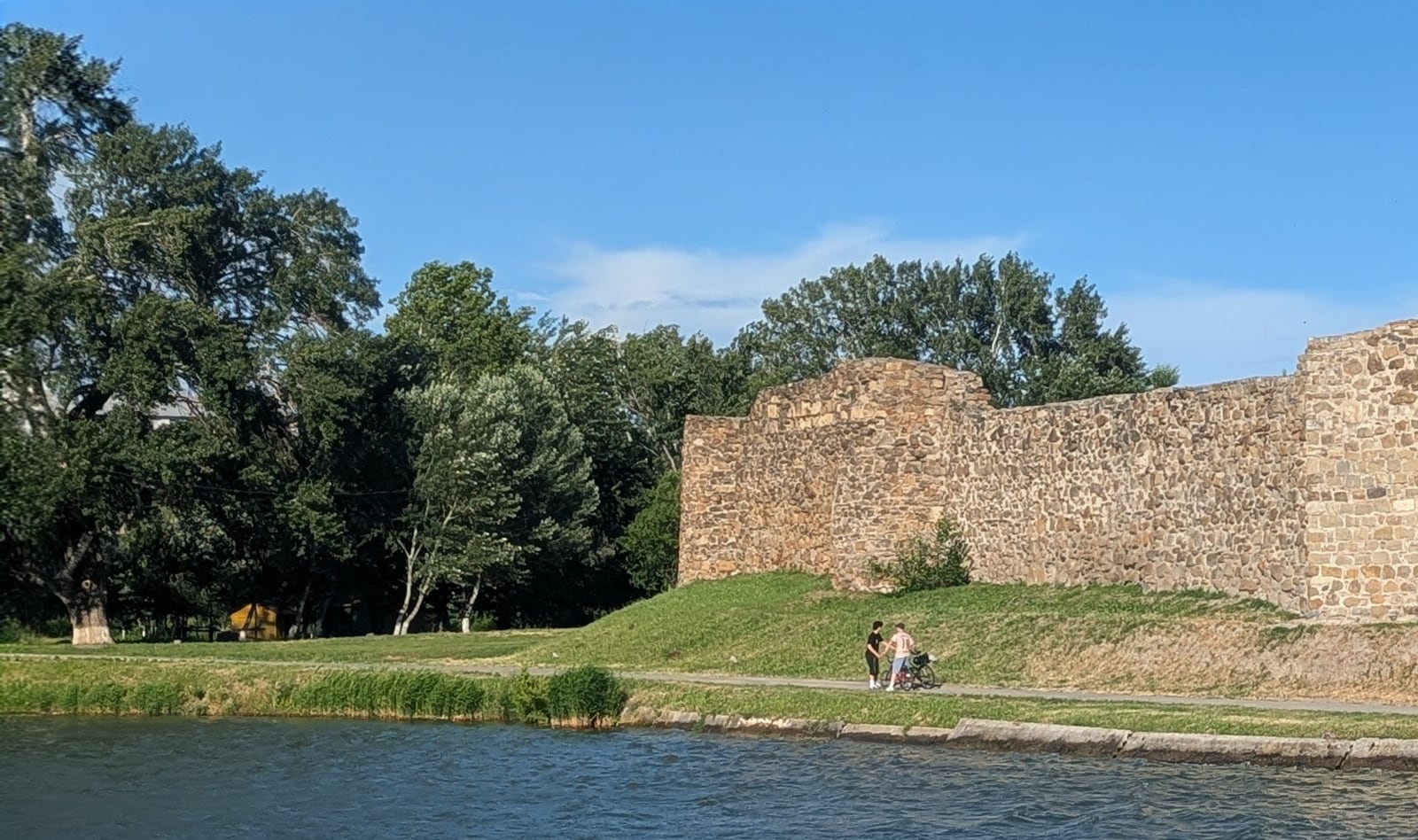
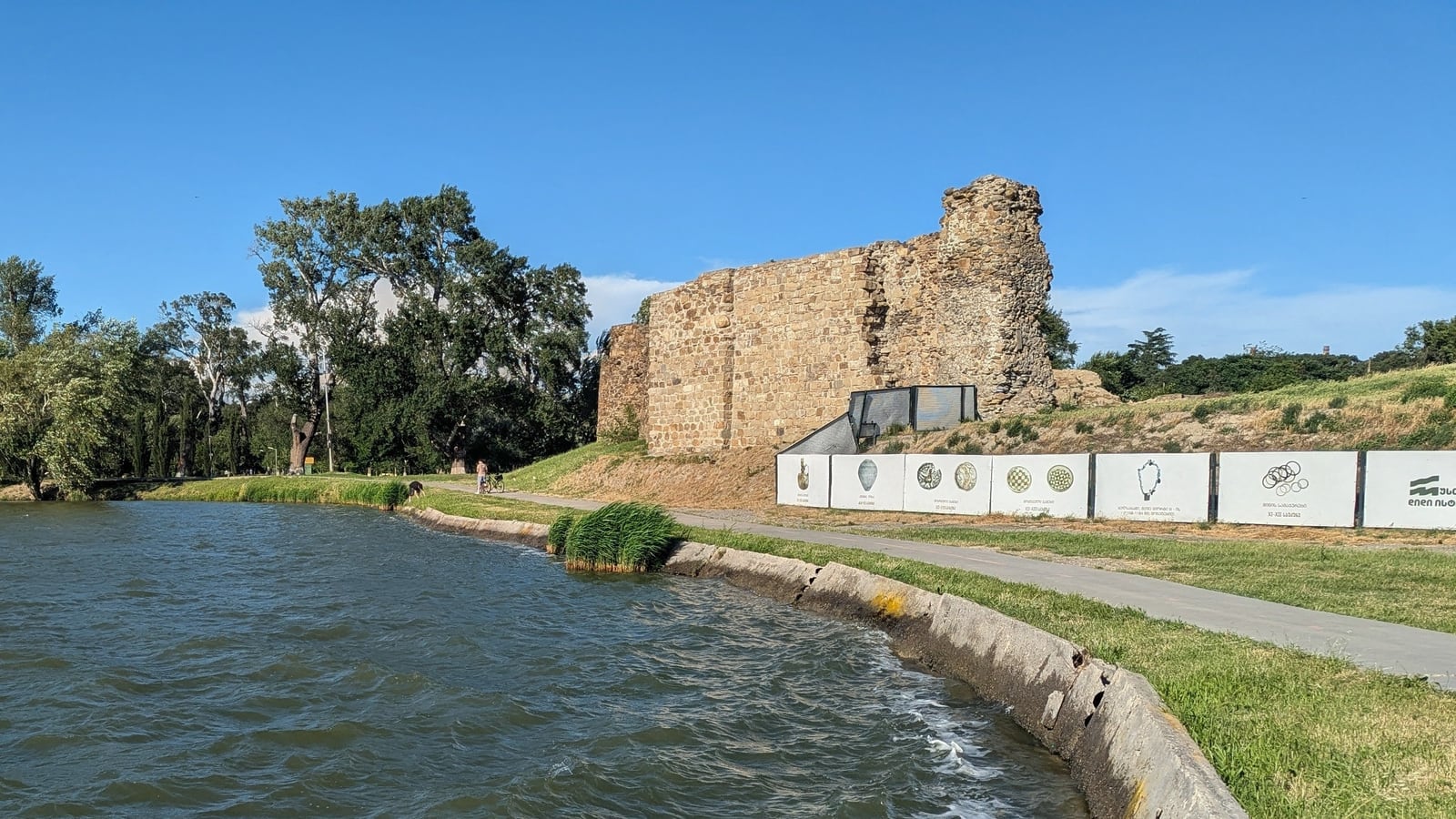
What survives reflects medieval destruction, centuries of stone-robbing, and the long neglect of the site. The remains are fragmentary — sections of wall with enough height and coherence to read clearly as deliberate construction, the outlines of towers and internal structures, and the natural defensive logic of the position, still legible in the landscape even where the built fabric has gone. The fortress has been the focus of recent archaeological excavation (a major expedition has been working the site in the mid-2020s), so the visible remains and what's known about them are actively expanding — and access arrangements may change as that work proceeds.
The setting along the Mtkvari adds what the ruins alone cannot. The river flows here through the open, semi-arid landscape characteristic of the eastern Georgian lowlands, distinct from the greener country of central and western Georgia, and the combination of river, remnant walls, and open terrain gives the site a quiet, contemplative quality. The modern city is visible from the ruins — its Soviet-era apartment blocks and industrial infrastructure forming an involuntary backdrop — and that juxtaposition of the ancient defensive site against the 20th-century industrial city built on the same ground is, in its way, the most interesting thing about the visit: two very different Rustavis, eight centuries and a whole world apart, occupying the same river bend.
Visiting
The fortress is a short, modest visit — a walk around the surviving remains, a pause where the walls are most coherent, and time looking out over the Mtkvari and the modern city. Ten to fifteen minutes covers it, longer only if its history — the ancient chronicles, the Iberian and Golden-Age associations, the ancient-vs-modern contrast — holds particular interest for you. Note that the fortress sits within Rustavi Park and is generally freely accessible, with no entrance fee or set opening hours; but an archaeological excavation has been underway at the site since 2025, so parts may be fenced or have restricted access at times, and the municipality has announced plans to develop it into an open-air museum.
Rustavi Fortress works best as an addition to a Rustavi or Kvemo Kartli itinerary rather than a standalone trip — naturally combined with the city itself (and the Rustavi International Motorpark), and with the broader Kvemo Kartli circuit of Bolnisi, Dmanisi, and David Gareja. For travelers interested in the historical geography of the Mtkvari valley, the medieval urban network of Kvemo Kartli, or the relationship between ancient and modern in Georgia, it adds a genuine historical layer to Rustavi that the Soviet cityscape alone cannot. For most others, it's a brief, honest stop — modest in what it shows, real in what it represents.
Getting there
- Location: On the Mtkvari (Kura) River by the modern city of Rustavi, Kvemo Kartli region, southern Georgia, ~25 km southeast of Tbilisi.
- Getting there: Frequent marshrutkas from Tbilisi (Isani/Samgori) to Rustavi, ~30–40 minutes; the fortress is a few minutes by taxi from the Rustavi city center (a local driver will know it).
- Time needed: About 10–15 minutes for the ruins; longer for the history-minded.
- Admission / access: Free; the ruins lie within Rustavi Park, with no entrance fee, set hours, or formal visitor infrastructure. Ongoing excavation (since 2025) may fence or restrict parts of the site at times; an open-air museum is planned.
- Combine with: Rustavi city and the Motorpark, and the wider Kvemo Kartli sites (Bolnisi, Dmanisi, David Gareja).
Caucasus Travel FAQ
It's the ruined fortification of ancient and medieval Rustavi — historically called Bostan-Kalaki, "the city of gardens" — on the Mtkvari (Kura) River beside the modern city of Rustavi, about 25 km southeast of Tbilisi in Kvemo Kartli, southern Georgia. The fortress dates to roughly the 4th–5th century AD and guarded a southern approach to Tbilisi; the city it protected was one of Georgia's oldest and an important center of the Kingdom of Iberia. Today only fragmentary walls and tower outlines survive, but the site is a genuine link to the ancient city that gave the modern town its name.
Ancient Rustavi (Bostan-Kalaki) is one of Georgia's oldest cities — the 11th-century chronicler Leonti Mroveli mentions it among the old cities alongside Mtskheta and Uplistsikhe, with possible origins as far back as the 4th–5th century BC. The modern city is a 20th-century Soviet industrial creation, built near the ancient site in the 1940s, but it was deliberately named after its ancient predecessor on the same ground — so the name carries a real historical continuity, not a coincidence. The fortress is the most visible surviving trace of that deep history.
The fortress was built around the 4th–5th century AD on the site of the ancient city, guarding the routes south of Tbilisi. Rustavi was an important center of the Kingdom of Iberia (notably under King Vakhtang Gorgasali) and changed hands repeatedly over the centuries — Sassanid Persians, Byzantines, Arabs, the Kingdom of Kakheti, and the unified Kingdom of Georgia — before prospering in the 12th–13th-century Golden Age and being destroyed by the Mongol invasions of the 13th century. Archaeology has revealed three successive defensive wall systems over its history, and it's recorded as the only Georgian fortress known to have had frescoes (none survive). The site is under active archaeological study.
It's a modest ruin, not a dramatic monument — fragmentary walls and tower outlines rather than a standing castle — so it's best seen as a short historical stop rather than a destination in itself. Its real value is historical: it's the one visible trace of the ancient city beneath modern Rustavi, and the contrast between the ancient site and the Soviet industrial city around it is genuinely thought-provoking. For travelers interested in Georgia's deep history or the layering of ancient and modern, it's a worthwhile 10–15-minute stop; for those wanting visual drama, it's understated. Note that ongoing excavation may affect access.
Rustavi is about 25 km southeast of Tbilisi, roughly 30–40 minutes by frequent marshrutka from Tbilisi's Isani and Samgori metro areas. The fortress sits by the Mtkvari River on the edge of the modern city, a few minutes by taxi from the center — a local driver will know the location. There's no formal visitor infrastructure, and because archaeological work has been underway at the site, access arrangements may have changed, so it's worth checking current status. It pairs well with Rustavi's other sights and the wider Kvemo Kartli circuit.