
Rustavi
Rustavi is a city of about 130,000 people in the Kvemo Kartli region of eastern Georgia — the country in the South Caucasus — on the Mtkvari River about 25 kilometers southeast of Tbilisi. It's Georgia's fourth largest city and, in its origins and character, one of the most distinctive — not for medieval monuments or mountain landscapes, but because it represents a chapter of Georgian history the standard travel narrative tends to skip. Rustavi is a Soviet industrial city, built rapidly from the late 1940s as a purpose-designed metallurgical center, and its urban fabric, social history, and current slow reinvention all reflect that origin in ways that are genuinely informative for anyone trying to understand Georgia as a whole country rather than a collection of picturesque highlights.
The site wasn't without history before the Soviets arrived. Medieval Georgian chronicles mention a settlement called Rustavi at or near this location, and archaeology confirms habitation across earlier periods. Medieval Rustavi was a significant fortified town that changed hands repeatedly between Georgian, Arab, and other regional powers before declining. What the Soviet planners built in the 1940s was effectively a new city on and around the remnants of that older settlement, and the two histories coexist in the landscape even though the Soviet layer overwhelmingly dominates the built environment.
Why visit Rustavi?
The main reason to visit Rustavi is to see a planned Soviet industrial city at a scale and clarity hard to find elsewhere in Georgia — wide boulevards, a rational grid, and standardized residential blocks built around the steel plant. It also works as a practical base for some of the most interesting and least-visited sites in southern Georgia: the David Gareja cave-monastery complex, Bolnisi, and Dmanisi. Be clear about what it is, though: this is a place for travelers interested in 20th-century history, architecture, and urban planning, or using it as a transit point — not a conventionally scenic destination, and its appeal is spatial logic and history rather than beauty.
The Soviet city
The decision to build a major industrial center at Rustavi was made during the Second World War, when the Soviet state needed to rapidly expand steel production away from the western regions being overrun by German forces. The location was chosen for its proximity to Tbilisi, its access to the Mtkvari for water, and its rail connections, which could bring raw materials from Azerbaijan and elsewhere. Construction began in 1944, and the Rustavi Metallurgical Plant — eventually one of the largest steel works in the entire Soviet Union — was the engine the city was built around.
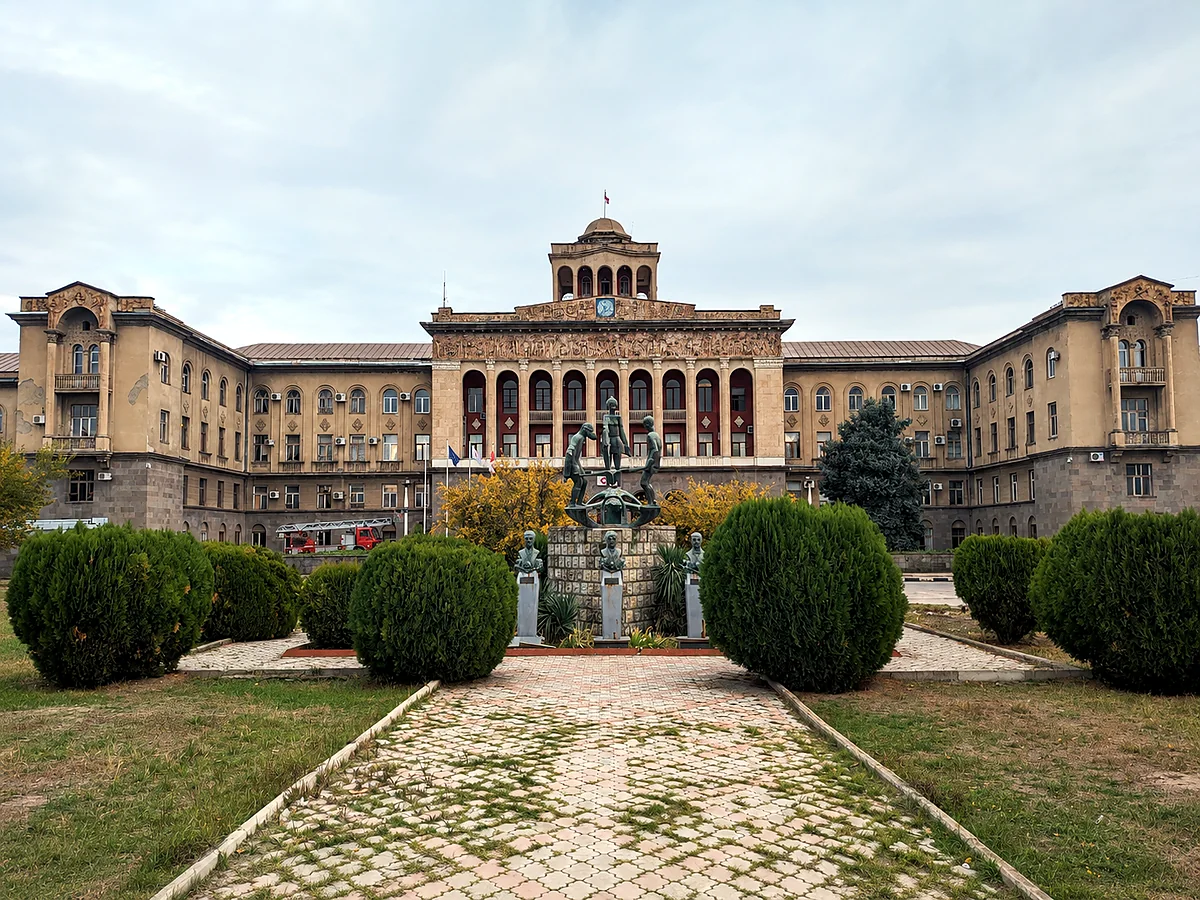
The urban planning followed the standard Soviet model for new industrial cities: wide, straight boulevards on a rational grid, large residential blocks providing standardized housing for the incoming workforce, public buildings (cultural centers, cinemas, administrative offices) at key nodes, and clear separation between industrial zones and residential areas. The ambition was considerable. At its peak the city had a population significantly larger than today, with workers drawn from across Georgia and other Soviet republics, giving Rustavi a more ethnically mixed character than most Georgian cities of comparable size.
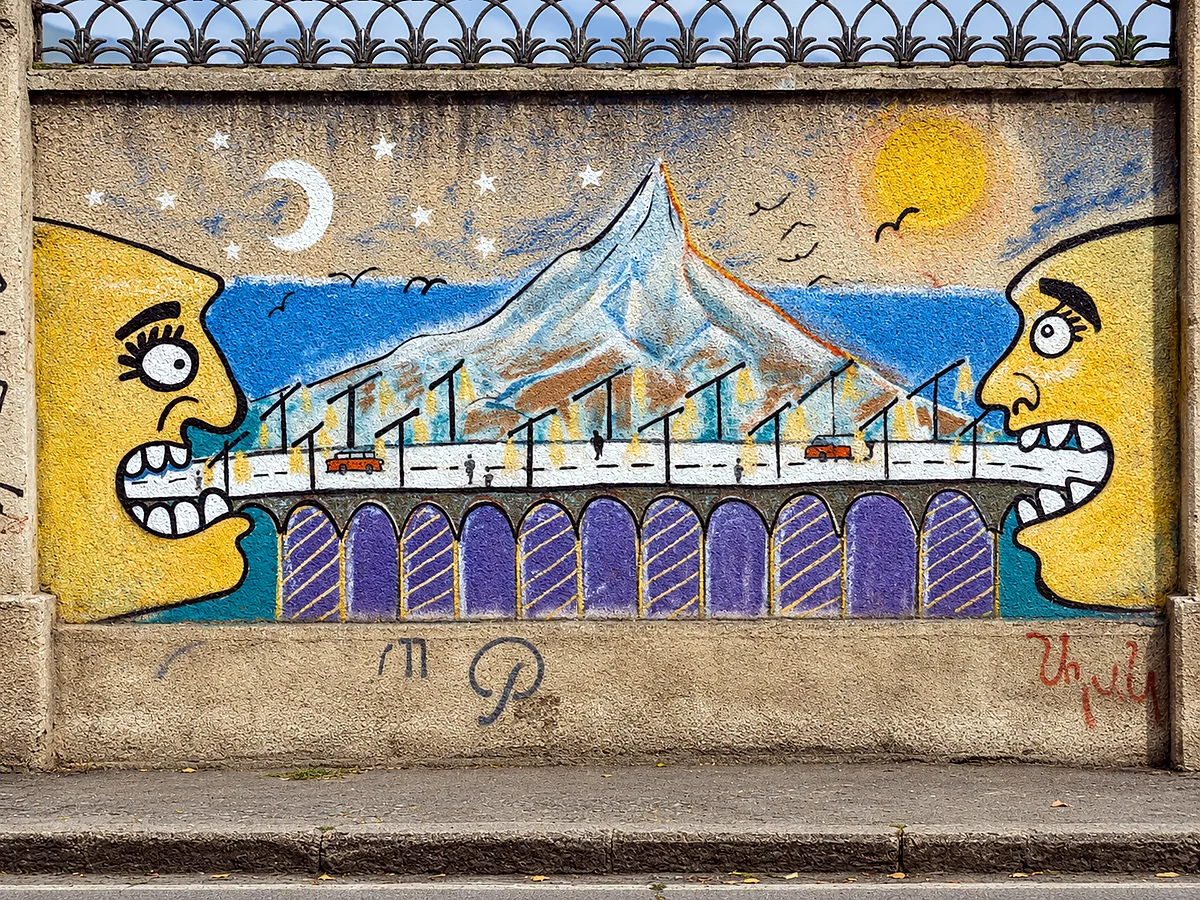
The collapse of the Soviet Union brought immediate and severe economic consequences. The plant cut operations dramatically, employment fell sharply, and a significant share of the population left — including many non-Georgian workers who had come specifically for the industrial jobs and had less reason to stay once those jobs disappeared. The city that emerged from the 1990s was smaller, quieter, and economically weakened, but the Soviet urban fabric remained largely intact, giving Rustavi the particular quality of a place built for a purpose that no longer fully exists but whose infrastructure persists. The steel plant still operates in reduced form under private ownership, and Rustavi has gradually diversified — light industry, logistics, services, and the commuter economy from its closeness to Tbilisi have all grown, and its position within the effective greater-Tbilisi area gives it a stability more remote post-industrial cities in Georgia lack.
Urban character and public spaces
Walking through Rustavi gives a clear, unmediated experience of Soviet urban planning at a scale hard to find in Tbilisi, where the 19th-century city and newer development have softened the Soviet layer. The wide boulevards, the proportions of the residential blocks, the placement of public institutions, and the general spatial logic all reflect mid-20th-century Soviet urbanism with unusual clarity — not preserved as a museum exhibit, but simply the actual environment in which people live. For travelers interested in 20th-century history, architecture, or urban planning, this is genuinely interesting material.
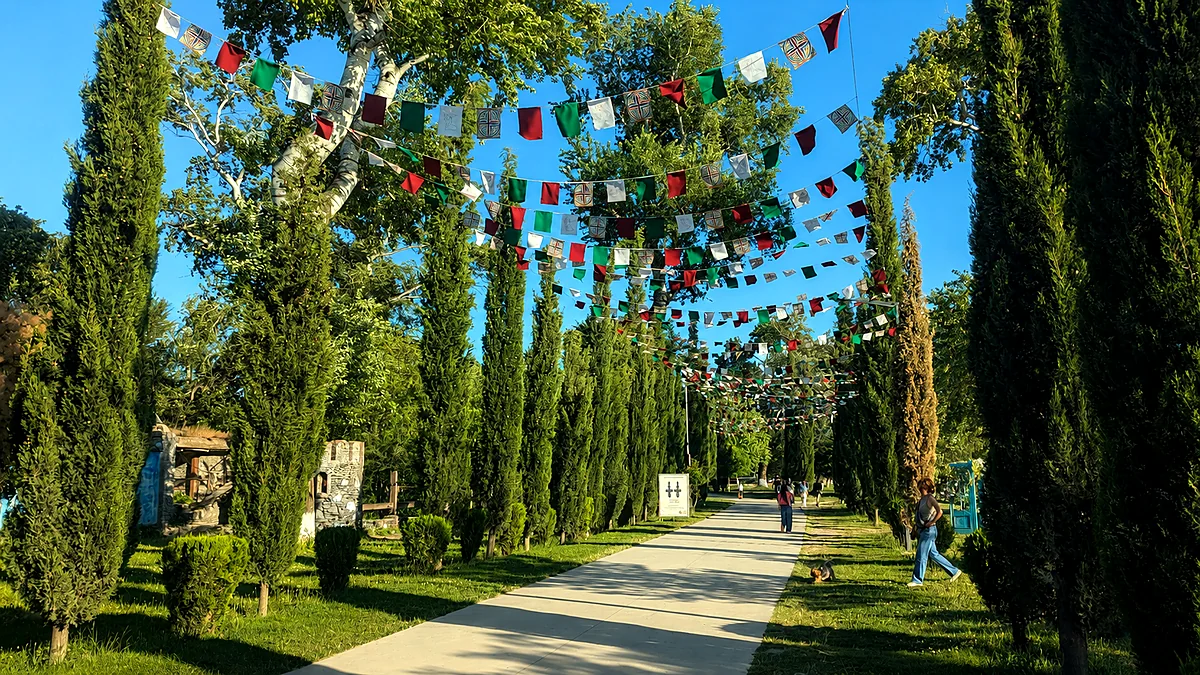
The Rustavi Central Park is the city's main green public space, a well-maintained area along the river that serves the resident population and has had various upgrades in recent years; the riverside setting makes it pleasant in good weather, and it's a genuine gathering place for families and younger residents in the evenings and on weekends. The Rustavi International Motorpark is the most significant sporting facility in the city and one of the more notable in Georgia — a purpose-built motorsport complex that hosts regional and international racing and has given Rustavi a contemporary identity beyond its industrial heritage, drawing visitors from Tbilisi and further afield on event weekends.
David Gareja and day trips from Rustavi
Rustavi's most practical asset for travelers is its position within eastern and southern Georgia, which holds several of the country's most interesting yet least-visited destinations.
The David Gareja monastery complex, about 100 kilometers southeast near the border with Azerbaijan, is one of the most remarkable and dramatically situated sites in Georgia. Founded in the 6th century by the monk David, one of the Thirteen Assyrian Fathers credited with spreading monasticism through Georgia, it expanded over later centuries into an extensive network of cave churches, hermit cells, refectories, and monastic buildings carved directly into the sandstone cliffs of the Gareja plateau. The frescoes preserved in several cave churches are among the finest surviving medieval Georgian painting, and the surrounding landscape — semi-arid, windswept, and largely empty in a way unlike anywhere else in Georgia — adds a dimension no description quite conveys. Rustavi is one of the closest urban centers and a logical staging point. One important caveat: parts of the complex sit on the disputed Georgia–Azerbaijan border, and access to the upper Udabno cave churches has at times been restricted depending on the border situation, so it's worth checking the current position before going.
Bolnisi, roughly 50 kilometers southwest, has the 5th-century Bolnisi Sioni Cathedral with its extraordinary early inscriptions in Georgian script, and the remnants of the 19th-century German colonial settlement of Katharinenfeld, whose solid European farmhouses and rational street plan still stand as evidence of one of the more unexpected chapters in Caucasian history. Dmanisi, further southwest, is the site of the 1.8-million-year-old hominin fossils that represent the oldest evidence of human ancestors outside Africa, alongside a well-preserved medieval fortress and cathedral on a dramatic promontory above two river gorges. The Algeti National Park in the Trialeti range, around an hour's drive away, protects a substantial area of forested mountain terrain that contrasts with the open, semi-arid plains of the valley floor, with hiking trails of various lengths and cooler temperatures that make it a practical destination in the hottest summer months.
Kvemo Kartli and regional diversity
Rustavi sits at the center of Kvemo Kartli, one of the most ethnically diverse regions in Georgia, where Georgian and Azerbaijani communities have lived alongside each other for centuries, with Armenian communities also present in parts of the region. The diversity is visible in the landscape — mosques alongside Orthodox churches, Azerbaijani-language signage alongside Georgian, and agricultural villages whose architecture and layout reflect different cultural traditions. The open, relatively flat terrain of the Kvemo Kartli valley — drier and more expansive than western Georgia's forests or the northern mountain corridors — has an austere character that travelers who move through it slowly tend to find more rewarding than its absence from standard itineraries suggests.
How to get to Rustavi
Rustavi is connected to Tbilisi by frequent marshrutka (minibus) service from the Isani and Samgori metro stations, with the trip taking around 30 to 40 minutes, and it's also reachable by suburban train from Tbilisi's central station. Given how easy these connections are, Rustavi functions effectively as part of the Tbilisi commuter belt, and many visitors combine it with a Tbilisi base rather than staying overnight; accommodation exists but is limited compared with the capital. The city's road connections to the south and southeast — toward David Gareja, Bolnisi, and Dmanisi — make it a practical transit point for itineraries covering the less-visited southern reaches of Kvemo Kartli.
Best time to visit Rustavi
Spring and autumn are the most comfortable seasons in Rustavi's relatively dry, continental climate. Summers are genuinely hot — the open plains of eastern Georgia hold heat more intensely than the forested or elevated regions — and the lack of shade in much of the urban environment makes July and August less comfortable for extended walking. Winter is mild by the standards of Georgia's mountain regions and rarely brings significant snow at this elevation, though the grey skies and reduced light of the colder months do little to flatter a cityscape that depends more on spatial logic than architectural beauty. For the surrounding natural and historical sites, spring — when the semi-arid landscape around David Gareja briefly turns green — and autumn offer the best conditions.
Caucasus Travel FAQ
Rustavi is Georgia's fourth largest city and its main planned Soviet industrial city, built from the 1940s around a large metallurgical plant. It's known for its clearly legible Soviet urban planning, the Rustavi International Motorpark, and its role as a base for the southern Kvemo Kartli sites, especially the David Gareja monastery complex.
It depends on your interests. Rustavi isn't a conventionally scenic destination, but for travelers interested in 20th-century history, Soviet architecture, or urban planning it's genuinely interesting, and it's a practical base for David Gareja, Bolnisi, and Dmanisi. Most visitors come from a Tbilisi base, since it's only 30–40 minutes away.
Yes — Rustavi is one of the closest urban centers to David Gareja, about 100 km southeast, and a logical staging point. Note that parts of the complex sit on the disputed Georgia–Azerbaijan border, and access to the upper Udabno cave churches has at times been restricted, so check the current situation before going.
Spring and autumn are most comfortable. Summers are genuinely hot with little shade in the urban areas, and winter is mild but grey. Spring and autumn are also best for the surrounding sites, including David Gareja, whose semi-arid landscape briefly turns green in spring.