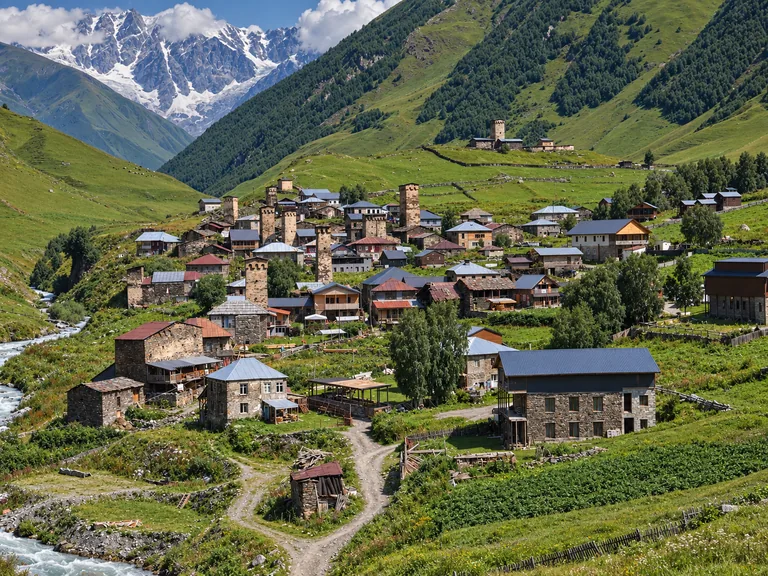
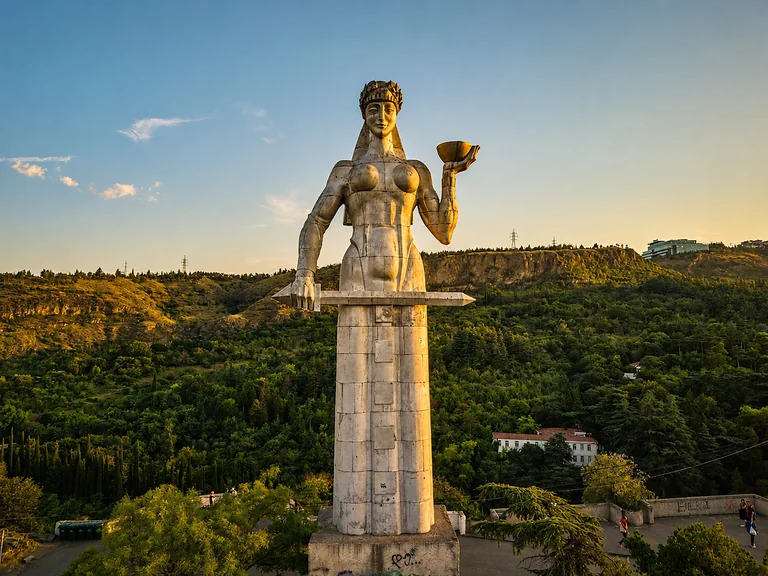
On a map, combining Azerbaijan, Georgia and Armenia looks simple: three small countries side by side, three capitals within a day's travel of each other. In practice, the direction you travel in decides whether the trip works. Azerbaijan currently treats arriving by land and leaving by land differently, and that one rule shapes the whole route.
The good news is that a two-week journey through all three countries is still entirely possible. It just has to start in the right place. This guide explains the border rules as they stand, why the order Azerbaijan → Georgia → Armenia fits them, and what a realistic 14-day route looks like, including the two land-border crossings and the longer driving days.
Border information reviewed: 3 October 2026. Border rules in this region change, so confirm the current position before you book.
Can you visit Azerbaijan, Georgia and Armenia in two weeks?
Yes. Two weeks is enough for the main highlights of all three countries, provided the route is planned in one direction and you accept that it is an active trip rather than a slow one.
- It covers highlights, not everything. You see the three capitals, one mountain region, one wine region and the best-known monasteries and historic sites along the way.
- Some days are long. Two border-crossing days and a couple of mountain transfers involve real time on the road.
- Starting in Azerbaijan removes the biggest complication. You fly into Baku, and from then on every border you cross is one you are allowed to cross by land.
- Georgia sits naturally in the middle, and Armenia works well as the final country, with a flight home from Yerevan.
Why the order Azerbaijan → Georgia → Armenia matters
The reason is practical. Azerbaijan's land borders have been under a special regime since 2020, and that regime has been extended repeatedly, most recently until at least 2 January 2027. Under the current official guidance:
- Entering Azerbaijan by air is open to foreign travellers under the normal visa rules for their nationality.
- Entering Azerbaijan by land is, for ordinary travellers, only possible with special permission from the Task Force under the Cabinet of Ministers. Tourists should not plan on getting it.
- Leaving Azerbaijan by land is allowed. Foreign nationals and stateless persons may exit through the land borders without that permission.
- The railway is a limited exception. Since 25 May 2026, entry and exit by rail between Azerbaijan and Georgia has been permitted for Azerbaijani citizens and for foreign citizens who already have the right to enter Azerbaijan visa-free. It does not apply to travellers who need a visa or e-Visa, and it does not reopen the road crossings.
So the same border behaves differently depending on which way you are going. Travelling from Azerbaijan into Georgia by road is straightforward. Travelling from Georgia into Azerbaijan by road is, for most visitors, not available.
That is why this route begins in Baku. You arrive by air, travel west across Azerbaijan, leave by land into Georgia, and continue by land into Armenia. The border between Georgia and Armenia is open in both directions, and the border between Armenia and Azerbaijan is closed, so Armenia is the natural end of the line.
The reverse journey, Yerevan → Tbilisi → Baku, is not an equivalent overland route. It works only if you fly the last leg, from Tbilisi or Yerevan to Baku, unless you qualify for the railway exception described above. If you want to travel the whole way on the ground, start in Azerbaijan.
The border situation in brief
| Journey | Current status | How you travel and what to know |
|---|---|---|
| Arrival in Baku | Open under normal visa rules | By air. Check whether your passport needs an e-Visa before you fly. |
| Azerbaijan → Georgia | Open for exit | By land at Balakan–Lagodekhi, crossed on foot between the two checkpoints. Georgia requires travel insurance on entry. |
| Georgia → Armenia | Open in both directions | By land at Sadakhlo–Bagratashen, the main crossing between the two countries, operating around the clock. |
| Departure from Yerevan | Open | By air. Book a multi-city ticket: into Baku, out of Yerevan. |
| Georgia → Azerbaijan by road | Not available to ordinary travellers | Requires special permission; fly instead. |
The practical direction at the moment:
- Fly into Azerbaijan.
- Travel overland from Azerbaijan to Georgia.
- Travel overland from Georgia to Armenia.
- Fly home from Yerevan.
This means booking an open-jaw (multi-city) flight rather than a return: one ticket into Baku and another out of Yerevan. It avoids doubling back across two countries, and it is the reason the route needs no internal flights at all. Airline schedules change by season, so check current options for your departure city rather than assuming a particular connection.
For more detail on individual crossings, see our guides to Azerbaijan's border crossings, Georgia's border crossings and Armenia's border crossings.
A 14-day Azerbaijan, Georgia and Armenia itinerary
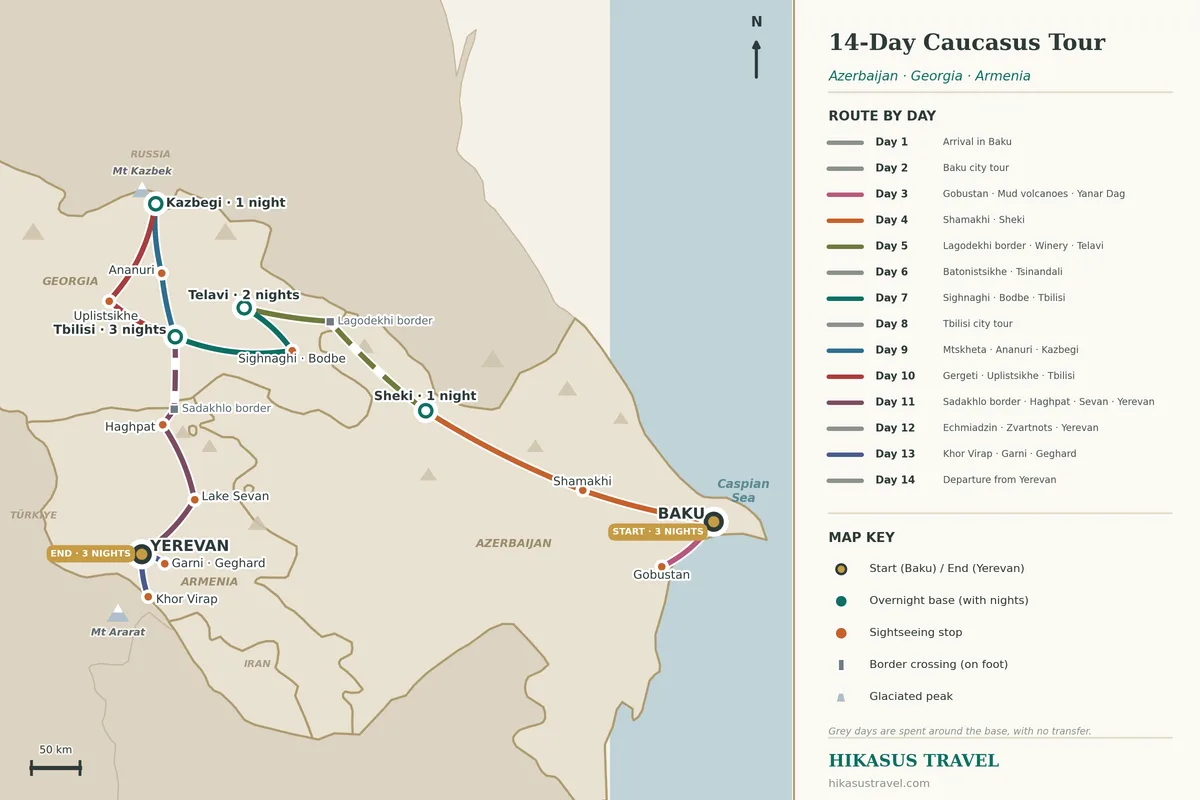
The route below is the one we operate as our 14-day private tour, so it is tested against the border rules rather than drawn on a map. Day 1 is an arrival day and Day 14 is a departure day, which leaves twelve days of travelling and sightseeing between them: four nights in Azerbaijan, six in Georgia and three in Armenia.
Days 1–4: Azerbaijan — Baku, Gobustan and Sheki
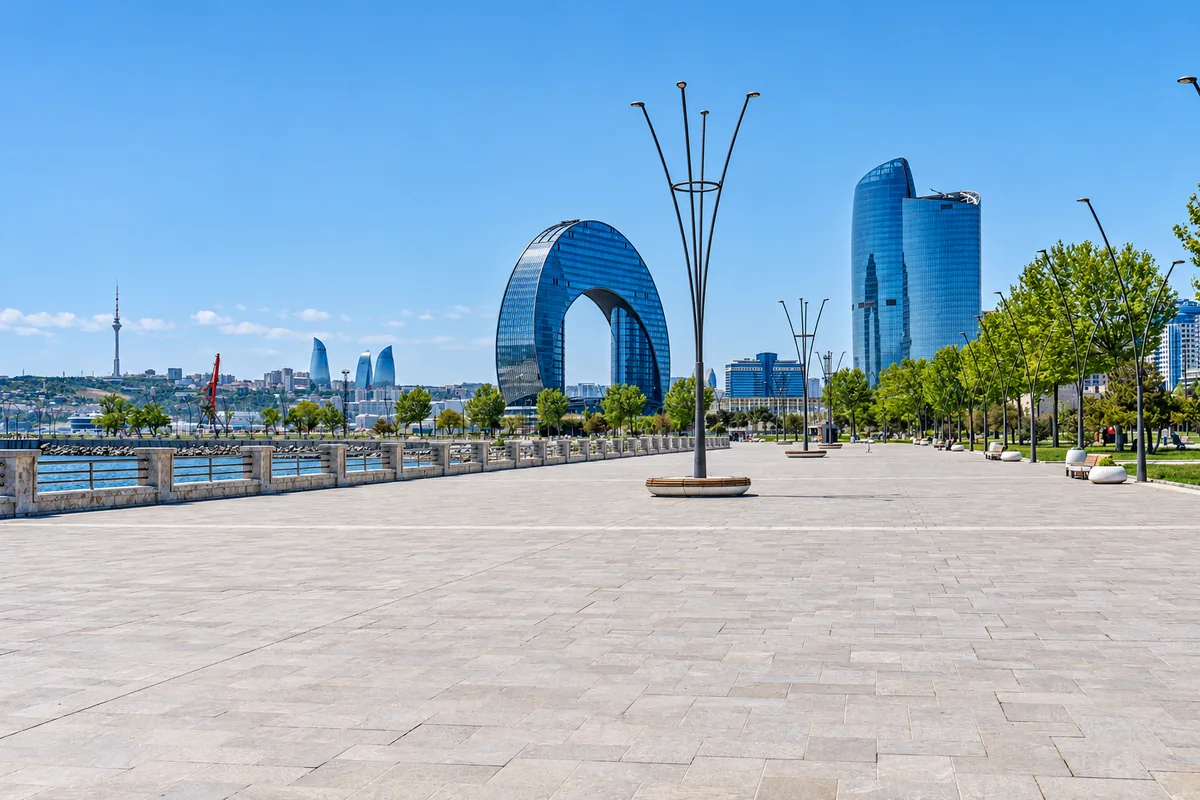
You land at Heydar Aliyev International Airport and spend three nights in Baku. The first full day belongs to the city: Icherisheher, the walled Old City, with the Maiden Tower and the Palace of the Shirvanshahs, then the Heydar Aliyev Center, the Caspian promenade and the Flame Towers above it.
Day 3 heads south and around the Absheron Peninsula. Gobustan's rock carvings and the nearby mud volcanoes fill the morning; the Ateshgah fire temple and the burning hillside of Yanar Dag fill the afternoon.
Day 4 is the first long transfer. The road runs west into the foothills of the Greater Caucasus, with a stop at the Juma Mosque in Shamakhi, and ends in Sheki. There you visit the Palace of the Sheki Khans and one of the old caravanserais.
Azerbaijan works first for two reasons. One is the border rule. The other is geography: Sheki lies in the north-west of the country, a short drive from the Georgian border, so the route moves steadily toward Georgia instead of returning to Baku.
Days 5–10: Georgia — Kakheti, Tbilisi and the Caucasus
Day 5 is the first border day. After a morning at Sheki's bazaar you drive to the Balakan–Lagodekhi crossing, leave Azerbaijan, walk across to the Georgian checkpoint and meet your Georgian guide and driver. The crossing opens directly into Kakheti, Georgia's main wine region, so lunch and a tasting at a winery follow almost at once, and the day ends in Telavi.
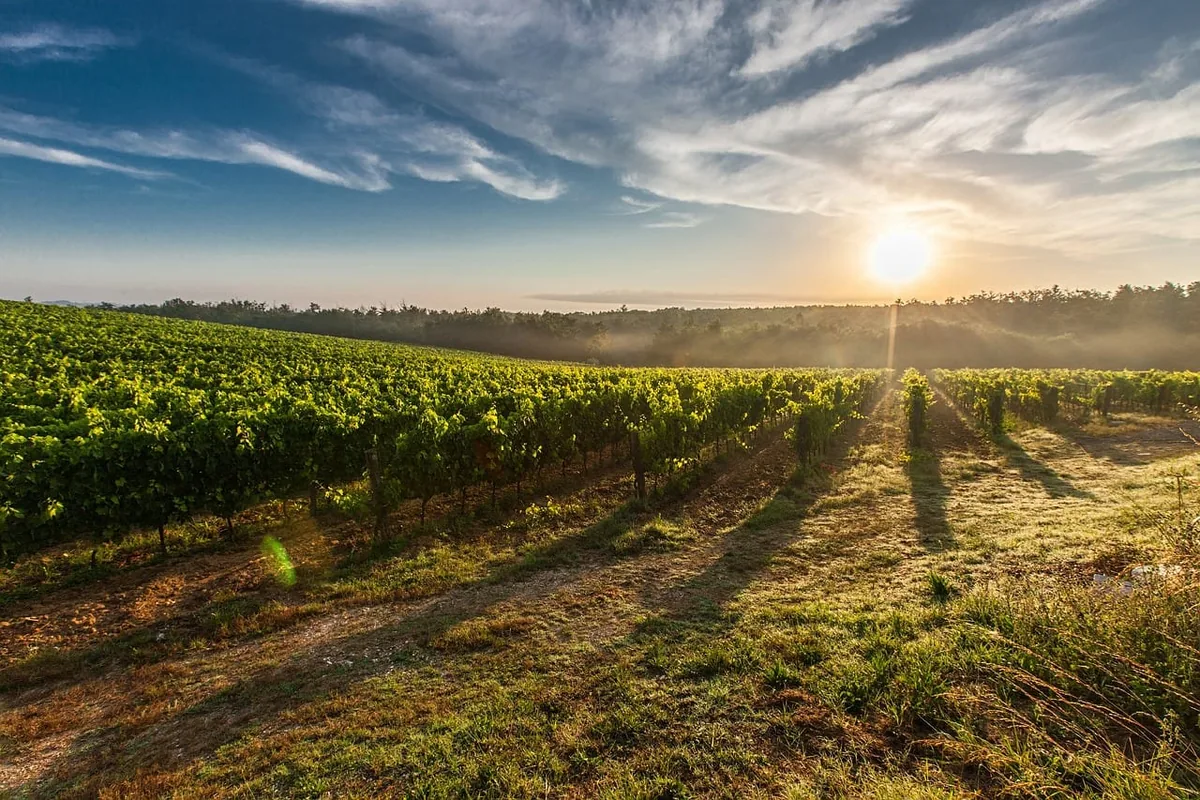
Day 6 stays in Kakheti: Telavi's old town, the Tsinandali estate and a second winery. Day 7 continues to the walled hill town of Sighnaghi and Bodbe Monastery before reaching Tbilisi, and Day 8 is a full day in the capital's old town.
Day 9 follows the Georgian Military Highway north: Mtskheta with Svetitskhoveli Cathedral and Jvari Monastery, the fortress of Ananuri, the viewpoint at Gudauri, and a night in Kazbegi. On the morning of Day 10 you go up to Gergeti Trinity Church below Mount Kazbek, then drive back south by way of the rock-cut town of Uplistsikhe to Tbilisi.
The order inside Georgia is what keeps the route efficient. You enter in the east, move through Kakheti to Tbilisi, make one return trip into the mountains, and leave from Tbilisi toward the south. Nothing is covered twice except the highway to Kazbegi, which has no alternative.
Days 11–14: Armenia — Haghpat, Lake Sevan and Yerevan
Day 11 is the second border day and the longest of the trip. From Tbilisi you drive south to the Sadakhlo–Bagratashen crossing, enter Armenia and meet your Armenian guide and driver. The road then leads through Lori to Haghpat Monastery, climbs to Lake Sevan and Sevanavank, and arrives in Yerevan in the evening.
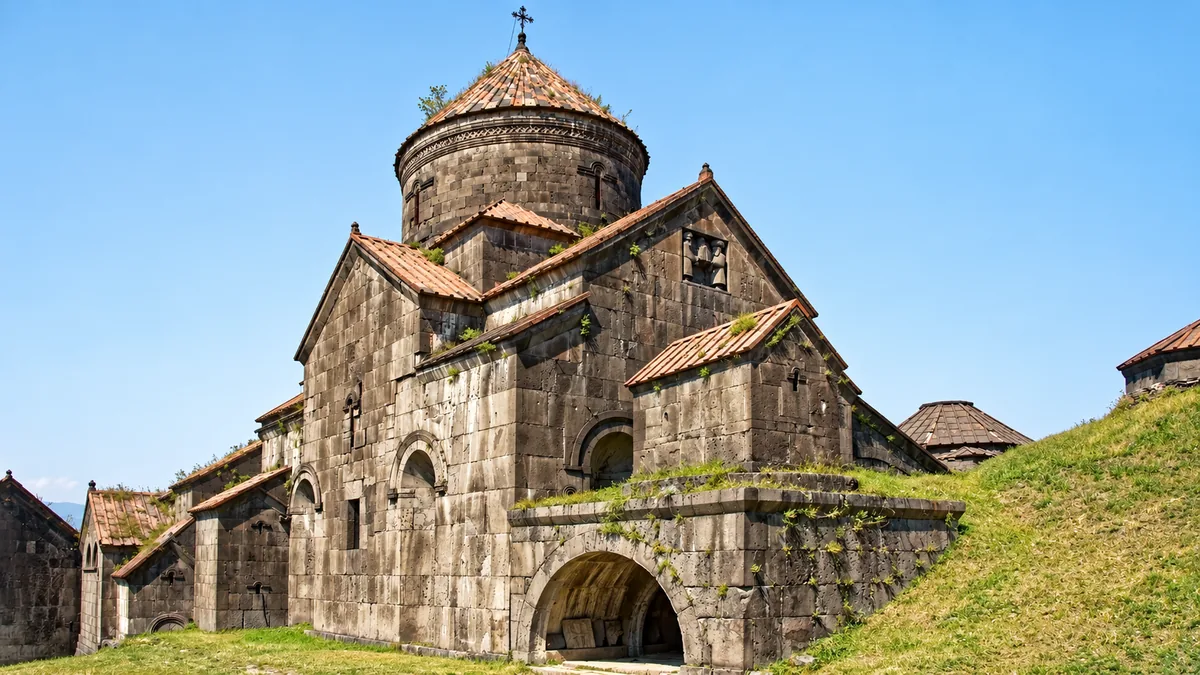
Day 12 pairs Etchmiadzin and the ruins of Zvartnots with a tour of Yerevan. Day 13 takes in Khor Virap, with its view across the border to Mount Ararat in Turkey, then the temple of Garni, the basalt columns of the Symphony of Stones and Geghard Monastery.
Day 14 is the transfer to Zvartnots International Airport and your flight home. Armenia fits last because the Bagratashen crossing brings you into the north of the country, and the route then runs south through Lori and past Lake Sevan to the capital, where the remaining sights are all day trips.
Prefer to have the route arranged for you?
Our 14-Day Caucasus Tour follows exactly this Azerbaijan → Georgia → Armenia route as a private trip. It includes both land-border crossings, a local guide and driver in each country, a choice of accommodation levels and the main sights along the way.
What are the border crossings actually like?
Both crossings on this route are made on foot. The vehicle and guide from one country do not cross with you; a local team hands you over at the border and another meets you on the far side. This is a normal way to run a three-country trip and it keeps things simple, because no vehicle paperwork is involved.
Azerbaijan → Georgia at Balakan–Lagodekhi
Your Azerbaijani driver takes you to the checkpoint. You clear Azerbaijani exit control, walk the stretch between the two posts with your luggage, and then clear Georgian entry control. The walk is on a paved surface and is manageable with a wheeled suitcase, but there is no porter service, so pack with that in mind. Your Georgian guide and driver wait just beyond the Georgian checkpoint.
Georgia has required visitors to hold travel insurance covering health and accidents since 1 January 2026, and it can be checked on entry, so have your policy to hand at this border.
Georgia → Armenia at Sadakhlo–Bagratashen
This is the main crossing between the two countries, on the road from Tbilisi to Yerevan, and it operates around the clock. The pattern is the same: exit control on the Georgian side at Sadakhlo, a short walk, entry control on the Armenian side at Bagratashen, and a new guide and driver waiting.
At both borders, allow extra time. Queues and processing times vary with traffic, holidays, the number of passengers and the checks being carried out, and nobody can promise a fixed duration. The itinerary keeps the rest of each border day flexible for that reason.
Visas and entry requirements
You need to qualify for entry to all three countries separately, and the rules depend on your passport.
- Azerbaijan: some nationalities enter visa-free, and many others can apply online for an e-Visa, which is normally single-entry. Not every nationality is eligible, so check before booking. See our Azerbaijan visa and entry requirements.
- Georgia: many nationalities enter visa-free, and everyone needs valid travel insurance. See our Georgia visa and entry requirements.
- Armenia: many nationalities enter visa-free, and others can apply for an e-Visa. See our Armenia visa and entry requirements.
Because this route enters each country only once, a single-entry Azerbaijani e-Visa is sufficient. Make sure your passport is valid for the whole journey, and confirm the requirements for the passport you will actually travel on.
How much driving is involved?
More than the distances suggest. These are the days to be aware of:
- Day 4, Baku to Sheki: around five to six hours on the road, broken by the stop in Shamakhi.
- Day 5, Sheki to Telavi: a moderate drive, but the border crossing and the winery visit make it a full day.
- Day 10, Kazbegi to Tbilisi by way of Uplistsikhe: about five hours of driving after the morning at Gergeti.
- Day 11, Tbilisi to Yerevan: the longest day, with roughly six hours of driving plus the border, Haghpat and Lake Sevan.
The other days are much lighter, and the city days in Baku, Tbilisi and Yerevan involve very little driving. On a private trip the stops and pace can be adjusted, but the long days cannot be removed without dropping places from the route.
When is the best time for this route?
Late spring and early autumn suit the route as a whole. From roughly May to June and September to October, Baku and Yerevan are comfortable for walking, Kakheti is green or in harvest, and the road to Kazbegi is normally clear.
July and August are hot in Baku, Tbilisi and Yerevan, though pleasant in the mountains and at Lake Sevan. In winter the cities remain easy to visit, but snow can affect the Georgian Military Highway and the Kazbegi section, so a winter trip needs flexibility on those two days. Mountain weather is never guaranteed in any season.
Is two weeks enough for the Caucasus?
It is enough for a well-planned first journey, and not enough to see every region. This route gives priority to the three capitals, Sheki, Kakheti, Kazbegi and the monasteries within reach of Yerevan.
It leaves out western Georgia and Svaneti, the south of Armenia around Tatev, and the regions of Azerbaijan beyond the Baku–Sheki corridor. Those are good reasons to come back rather than gaps in the trip. With three weeks you could add one of them; with two, a single coherent line across the three countries is the better choice.
Planning it yourself or as a private tour
The route can be travelled independently. Public transport links the main towns, and both border crossings can be walked by individual travellers. The parts that take effort are the ones between the towns: reaching the Balakan checkpoint from Sheki, finding onward transport on the Georgian side, and fitting sights such as Gobustan, Uplistsikhe, Haghpat and Lake Sevan into transfer days.
A private tour solves those joins. A driver takes you to each border, another meets you on the other side, and the monasteries and viewpoints along the road become stops rather than detours. Whichever way you travel, the planning rule is the same: check the border position shortly before departure and build the trip in the direction the rules allow.
The short version
A two-week trip through all three South Caucasus countries works well if it runs from Azerbaijan to Georgia to Armenia. Fly into Baku, cross into Georgia at Lagodekhi, cross into Armenia at Bagratashen and fly home from Yerevan. That order follows the current border rules rather than fighting them, and it also happens to make geographic sense.
If you would like the logistics handled, our 14-day Caucasus tour follows this route. For background on each country, see our guides to Azerbaijan, Georgia and Armenia.