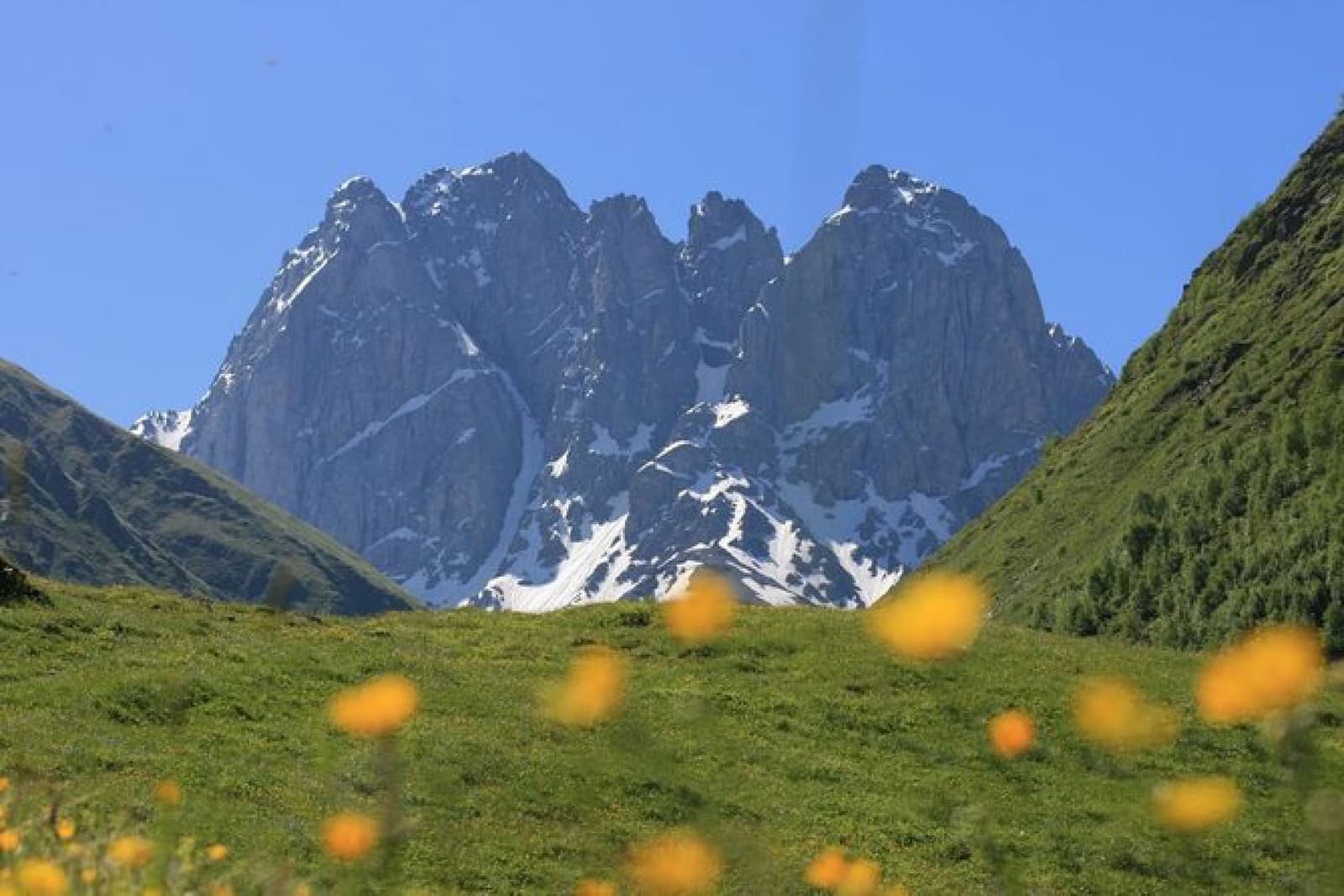
Azerbaijan is difficult to sum up in a single image. Baku rises from the Caspian Sea with medieval walls, oil-boom mansions and some of the boldest modern architecture in the Caucasus. A few hours away, the landscape changes into semi-desert, vineyard country, forested mountain valleys and villages where traditions have developed over centuries with relatively little influence from the capital.
Travel farther and the contrasts become even greater. Sheki's historic center sits beneath the Greater Caucasus. Khinalig stands high in the mountains above Quba. Lankaran is surrounded by subtropical forests, tea plantations and citrus orchards. Nakhchivan, separated geographically from mainland Azerbaijan, has its own medieval architecture, dry mountain scenery and distinctive regional identity.
That variety is the real reason to travel to Azerbaijan. A short trip can focus on Baku and its surroundings. Give the country a week or more, however, and Azerbaijan becomes much more interesting: mountain villages, Silk Road towns, prehistoric rock art, wine, tea culture, regional food and landscapes that look very different from one end of the country to the other. This guide is the Azerbaijan counterpart to our Ultimate Guide to Traveling to Georgia and our Ultimate Guide to Traveling to Armenia, and it links onward to our Azerbaijan destination pages whenever you want to go deeper.
Do You Need a Visa to Travel to Azerbaijan?
That depends on your passport. Azerbaijan allows citizens of some countries to enter visa-free, while travelers from many other countries can use the official ASAN electronic visa system. For eligible travelers, a standard e-Visa is normally issued within three working days, while an urgent application can be processed within three hours. The e-Visa is single-entry, valid for 90 days and normally allows a stay of up to 30 days.
Do not assume the rules are the same for every nationality. Before booking, check our dedicated Azerbaijan Visa & Entry Requirements guide and confirm the current official requirements for the passport you will actually travel with.
One important point about land borders
Azerbaijan's land-entry rules are different from normal air entry. At the time of writing, foreigners can enter Azerbaijan by air under the applicable visa rules, while ordinary land-border entry generally requires special Task Force permission. Since 25 May 2026 there has also been a limited railway exception between Azerbaijan and Georgia for Azerbaijani citizens and foreign nationals who already have the right to enter Azerbaijan visa-free. Foreign travelers may generally leave Azerbaijan by land without that Task Force permission.
These rules can change. If you are combining Azerbaijan with Georgia or Armenia, do not build your itinerary around an assumed road crossing. Check the current rules first and let the actual border situation determine the route.
When Is the Best Time to Visit Azerbaijan?
Azerbaijan can be visited throughout the year, but the best season depends strongly on where you are going.
Spring: April to June
Spring is one of the easiest times for a first trip. Baku is comfortable for walking, the lowlands are green, and temperatures are usually much better suited to sightseeing than in midsummer. This is a strong period for Baku, Gobustan and Absheron, Shamakhi, Lahij, Sheki, Ganja and Goygol, Lankaran, and lower mountain hiking. Higher mountain routes may still have snow or difficult conditions early in the season.
Summer: July and August
Baku and the lowlands can become very hot, particularly during the middle of the day. The mountains are the better reason to visit in summer: Khinalig, Shahdag and the Qusar mountains, highland villages, hiking, Batabat and the mountains of Nakhchivan, and Lerik and the Talysh Mountains. If your itinerary includes Baku in July or August, plan outdoor sightseeing earlier in the morning and later in the afternoon.
Autumn: September and October
For many travelers, this is the strongest overall season. Temperatures fall, mountain roads normally remain accessible, vineyards and orchards are active, and the light is particularly good for photography. September and October work especially well for a longer route combining Baku, wine country, mountain villages, Sheki and western Azerbaijan. Southern Azerbaijan is also attractive in autumn as citrus harvest and forest color begin around Lankaran and Astara.
Winter: November to March
Winter changes the nature of the trip. Baku remains accessible, while Shahdag and other mountain areas shift toward winter recreation. Snow and ice can make some high mountain roads, hiking routes and remote villages impractical. Winter works best when the itinerary is deliberately designed around the season rather than using a summer route unchanged.
How to Get to Azerbaijan
For most international travelers, the main arrival point is Heydar Aliyev International Airport in Baku. Baku has connections with major hubs in Europe, Turkey, the Gulf and neighboring countries, making it the obvious starting point for most Azerbaijan trips.
Because current land-entry rules remain restrictive, flying is also the simplest option for many travelers combining Azerbaijan with another Caucasus country. Nakhchivan is geographically separated from mainland Azerbaijan, so travelers usually reach it by domestic flight from Baku rather than incorporating it into a normal mainland road route.
How Many Days Do You Need in Azerbaijan?
- 3–4 days: Enough for Baku, the Old City, Absheron Peninsula and Gobustan. This gives you a good city break, but not a real sense of Azerbaijan beyond the capital.
- 5–7 days: A much better first trip. You can combine Baku with Shamakhi or Lahij and Sheki, together with Gobustan or Absheron. This starts to show the contrast between the capital, rural Azerbaijan and the Caucasus foothills.
- 8–10 days: This gives you room to travel properly. Possible additions include Ganja and Goygol, Quba and Khinalig, mountain landscapes around Qusar, additional wine regions and slower time in Sheki.
- 12–14 days: With two weeks, you can add southern Azerbaijan around Lankaran and the Talysh Mountains, explore the west more deeply, or include Nakhchivan by domestic flight.
Azerbaijan is much more rewarding when you resist trying to fit every region into one rushed circuit.
Azerbaijan's Currency and Money
The national currency is the Azerbaijani manat (AZN), divided into 100 qəpik. Cards are widely accepted in Baku, larger hotels, modern restaurants and many established businesses.
Cash remains useful for village shops, markets, smaller restaurants, roadside stops, family-run businesses and remote regions. ATMs are easy to find in Baku and larger towns.
There is little reason to carry large amounts of cash from the beginning of your trip. Withdraw or exchange what you need as you travel. Avoid building a travel budget around an old exchange rate — always check the current rate shortly before departure.
Places Worth Building an Azerbaijan Trip Around
Azerbaijan currently has five properties inscribed on UNESCO's World Heritage List: Baku's Walled City, Gobustan Rock Art Cultural Landscape, historic Sheki, the transnational Hyrcanian Forests, and the Cultural Landscape of Khinalig People and the Köç Yolu transhumance route.
But the most interesting itinerary is not simply a UNESCO checklist. The country's appeal comes from how different its regions are.
Baku — Where Most Trips Begin
Baku is Azerbaijan's capital and the natural first stop. The city works because several versions of Azerbaijan sit side by side.
Inside Icherisheher, the walled Old City, narrow lanes lead between mosques, caravanserais, traditional houses, the Maiden Tower and the Palace of the Shirvanshahs.
Walk outside the walls and the architecture changes quickly. The late 19th- and early 20th-century oil boom produced grand European-influenced buildings, while modern Baku added the Flame Towers, Heydar Aliyev Center and a long Caspian waterfront.
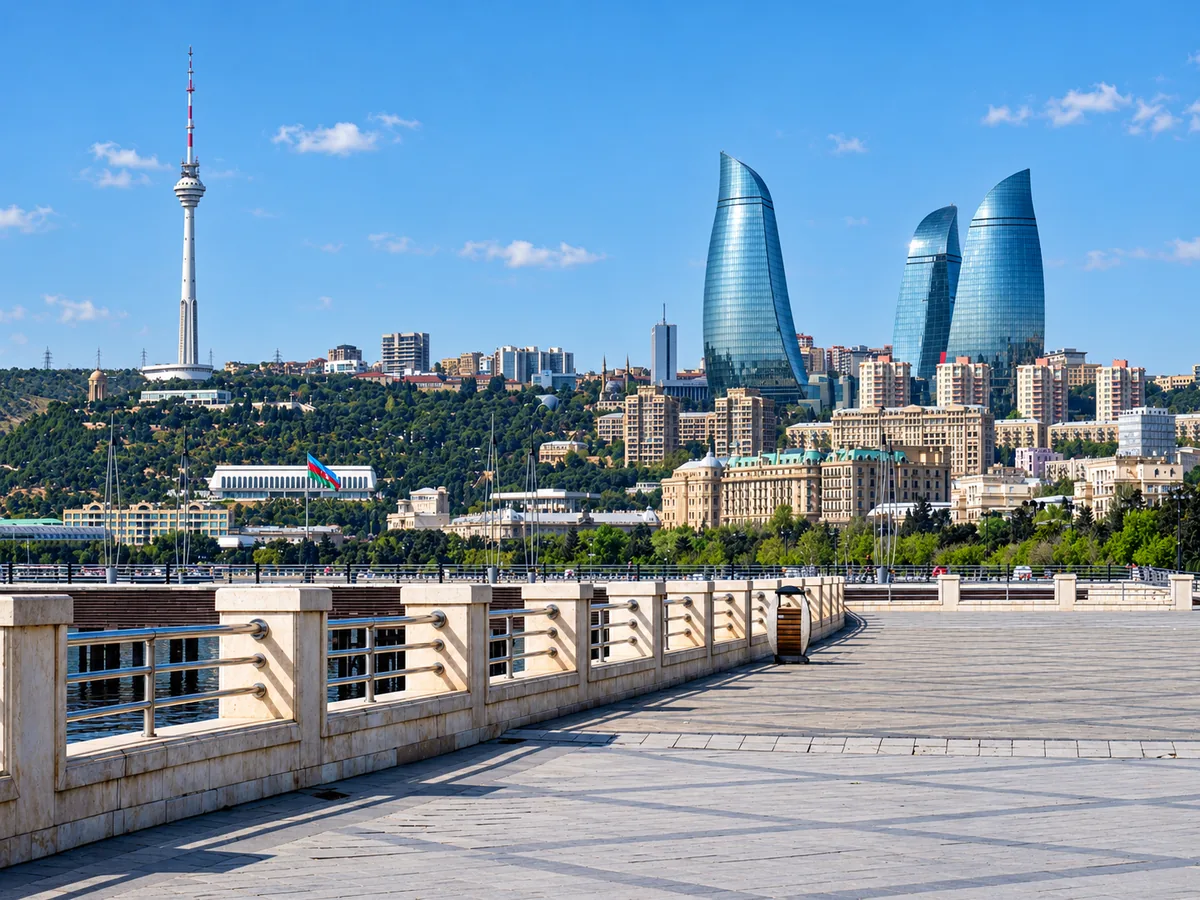
Give Baku at least two full days. A rushed afternoon in the Old City is not enough to understand it.
Gobustan — Rock Art and Mud-Volcano Landscapes
Southwest of Baku, Gobustan introduces a completely different landscape. The UNESCO-listed rock-art reserve preserves thousands of prehistoric engravings documenting human life over a very long period. UNESCO recognizes Gobustan as a cultural landscape in its own right.
The wider area is also famous for mud volcanoes. Gobustan works well as a day trip from Baku and provides one of the clearest examples of how quickly the scenery changes once you leave the capital.
Absheron Peninsula — Fire, Fortresses and the Caspian
The Absheron Peninsula surrounds Baku and contains several sites that explain Azerbaijan's historic association with fire. The best-known are Ateshgah, the fire-temple complex at Surakhani, and Yanar Dag, where natural gas burns continuously from the hillside.
Absheron also contains medieval towers, old settlements, Caspian coastline and traces of Azerbaijan's long oil history. It is easy to combine several of these sites in one day.
Shamakhi and Lahij — Wine, Crafts and Mountain Roads
Travel west from Baku and the dry landscape gradually rises toward the mountains. Shamakhi, in the Mountainous Shirvan region, is one of Azerbaijan's historic centers and a useful base for exploring vineyards and rural countryside.
Farther into the mountains, Lahij is known for its stone streets and copper-working tradition. The road itself becomes part of the experience, particularly as the route climbs through increasingly dramatic valleys.
This area works naturally between Baku and Sheki.
Sheki — One of Azerbaijan's Best Historic Stops
Sheki is one of the country's strongest destinations for a first trip. Its historic center and the Khan's Palace are UNESCO-listed, and the city retains the atmosphere of an important trading stop beneath the Greater Caucasus.
The palace is the architectural highlight, but Sheki is more than one monument. Allow time for the historic center, caravanserais, local craft traditions, regional food and surrounding villages.
Sheki also has one of Azerbaijan's most distinctive regional dishes: piti, traditionally slow-cooked in an individual clay pot.
One night is the minimum. Two gives the city more breathing room.
Quba, Khinalig and the Greater Caucasus
Northern Azerbaijan is where the trip becomes more strongly focused on mountains. Quba is the main gateway, but the real reason to travel farther is the highland landscape.
Khinalig sits at roughly 2,000 metres above sea level and has a distinct language and cultural identity shaped by centuries of relative isolation. The village and the traditional transhumance route known as Köç Yolu became a UNESCO World Heritage property in 2023.
This is not simply a viewpoint excursion. Road conditions, weather and mountain access matter, and the region deserves enough time to avoid turning it into a rushed photo stop.
Ganja and Goygol — Culture, German Heritage and Western Azerbaijan
Ganja is Azerbaijan's second major historic city and is strongly associated with the poet Nizami Ganjavi.
Nearby Goygol tells another story: German settlers founded Helenendorf here in the early 19th century, leaving an architectural and winemaking heritage that still shapes the town.
The wider region also includes Lake Goygol, Mount Kapaz and mountain landscapes that feel very different from Baku and the eastern lowlands. This part of Azerbaijan is particularly useful on longer itineraries heading west.
Lankaran and the Subtropical South
Southern Azerbaijan surprises many first-time visitors. Around Lankaran, the landscape becomes humid and green, with tea plantations, citrus orchards, rice, Caspian wetlands, dense forest and Talysh mountain villages.
Sections of the ancient Hyrcanian Forests within Azerbaijan form part of a transnational UNESCO World Heritage property shared with Iran.
This is one of the best parts of Azerbaijan for travelers interested in nature and regional food rather than monumental sightseeing. Allow at least two or three days if you travel south.
Nakhchivan — A Journey Within a Journey
Nakhchivan is the country's autonomous republic and geographical exclave. It is separated from mainland Azerbaijan, which makes it feel less like another stop and more like a separate extension.
Highlights include Nakhchivan City, the Momine Khatun Mausoleum, Alinja Castle, the Duzdag salt mine, Ashabi-Kahf, Ordubad, Lake Batabat and dry mountain landscapes.
For travelers with enough time, three or four days in Nakhchivan can add one of the most distinctive parts of the country. Because it normally involves a domestic flight from Baku, plan it deliberately rather than squeezing it into an already crowded itinerary.
Azerbaijani Food: What You Should Try
Azerbaijani cuisine changes significantly between regions. Rice, lamb, herbs, vegetables, chestnuts, dried fruits and breads appear often, but the same dishes can look very different from Baku to Sheki or Lankaran.
Plov
Plov is one of Azerbaijan's central dishes. Rice is often cooked separately and served with meat, dried fruit, chestnuts, herbs or other accompaniments. There are many regional and family versions, so ordering plov in different parts of the country is not necessarily repeating the same meal.
Qutab
Thin flatbread filled with combinations such as herbs, pumpkin, meat or cheese, and cooked on a hot griddle. It is one of the easiest Azerbaijani dishes to try during a casual lunch.
Dolma
Stuffed vine leaves or vegetables filled with seasoned meat and rice. Azerbaijan has a strong dolma tradition, with recipes varying by region and season.
Piti
Sheki's signature dish. Lamb, chickpeas and other ingredients are slow-cooked in individual clay pots. There is a particular way of eating it, often separating the broth from the remaining ingredients. Try it in Sheki rather than treating it as a generic national dish.
Lavangi
A southern specialty particularly associated with Lankaran. Fish or chicken is stuffed with a mixture often based on walnuts, onion and regional seasoning. Fish lavangi connects particularly well with the Caspian coast.
Dushbara
Tiny dumplings served in broth, commonly filled with seasoned meat. A good cold-weather dish and a classic example of Azerbaijan's home-style cooking.
Tea Culture
Tea is everywhere. Azerbaijani tea is traditionally served in the distinctive pear-shaped armudu glass, often alongside sweets, jam, lemon or sugar.
In homes and restaurants, tea is less a quick drink than a reason to stay at the table. Southern Azerbaijan around Lankaran is also the country's main tea-growing region, making plantation visits possible on longer itineraries.
If you are invited to sit for tea, do not assume it means ten minutes.
Wine in Azerbaijan
Azerbaijan has an older and broader wine story than many first-time visitors expect. Today you can find vineyards and wineries around areas such as Shamakhi, Goygol, Tovuz, and Gabala and parts of the northwest.
The country's German-settler history also played an important role in the development of commercial winemaking in western Azerbaijan.
Wine is not as dominant in Azerbaijan's international tourism identity as it is in neighboring Georgia, but it can add real depth to a longer food-focused itinerary.
Getting Around Azerbaijan
Distances can look manageable on a map, but mountain roads and regional stops make journey times longer than the numbers suggest.
Private Car and Driver
For a multi-region trip, this is usually the most practical option. A driver gives you the freedom to stop at villages, viewpoints, wineries, roadside markets and small heritage sites that are difficult to combine using public transport. For private Hikasus tours, the vehicle is matched to the route and number of travelers.
Trains
Azerbaijan has a rail network connecting Baku with several major destinations. Rail can work well for specific routes, but it does not replace road transport for many of the mountain villages and rural sites that make an Azerbaijan trip interesting.
Baku Metro and Taxis
Baku has a metro and public bus network. Taxis and ride-hailing are also widely used in the capital. For sightseeing inside central Baku, much of the Old City and waterfront can be covered on foot.
Domestic Flights
Domestic air travel is particularly important for Nakhchivan because of its geographical separation from mainland Azerbaijan. Check current schedules when planning rather than building an itinerary around assumed daily departure times.
Is Azerbaijan Safe to Travel?
For most visitors following normal tourist routes, Azerbaijan is straightforward to travel around. As with any destination, the practical risks are less about dramatic headlines and more about ordinary travel decisions: road safety, mountain weather, heat in summer, remote terrain, and border and restricted zones.
Avoid wandering into military or restricted areas, particularly near sensitive borders, and follow local signage and instructions. Mountain weather can change quickly, so hikes and high-altitude routes should be planned according to current conditions rather than the calendar alone.
For current regional or geopolitical issues, always check official travel advice shortly before departure.
Practical Information You'll Actually Need
Registration for Longer Stays
Foreign visitors staying in Azerbaijan for more than 15 days generally need to be registered at their place of stay. Hotels normally handle this for their guests, and there is no state fee for the registration. If your trip is longer than two weeks, confirm that this has been handled rather than assuming.
SIM Cards and Internet
Azerbaijan has several mobile networks, including Azercell, Bakcell and Nar. Mobile internet works well in cities and along major routes, but coverage can become less reliable in remote mountain areas. If your phone supports eSIM, check current options before departure; otherwise a local physical SIM is easy to arrange in Baku.
Electricity
Azerbaijan uses 220V electricity with European-style two-pin plugs, principally Types C and F. Travelers from the UK, United States, Australia and several other countries will need an adapter.
Language
Azerbaijani is the official language. Russian remains widely understood in many places, particularly among older generations and in Baku. English is increasingly common in tourism, international hotels and among younger people, but it becomes less dependable in rural areas. A local guide makes a significant difference once you travel beyond the main tourist centers.
Useful words include Salam (Hello), Sağ olun (Thank you), Bəli (Yes) and Xeyr (No). Nobody expects perfect pronunciation. Making the effort is enough.
Cultural Etiquette
Azerbaijan is largely Muslim by heritage but everyday social life varies considerably between urban and rural communities. For travelers, the useful rules are simple.
At Mosques and Religious Sites
Dress respectfully. Cover shoulders and knees, speak quietly and avoid photographing people during prayer without permission.
When Visiting Homes
If you are invited into a home, expect tea and food. Hospitality matters, and refusing everything immediately can feel abrupt. You do not have to eat endlessly, but accepting tea or tasting what is offered is normally appreciated.
Photography
Always ask before photographing people at close range, religious ceremonies, military or police facilities, and border infrastructure. Do not photograph clearly restricted military areas.
Tipping
Tipping is appreciated but not governed by one strict national rule. Check whether a restaurant has already added a service charge before leaving extra. For guides and drivers, tipping is optional and should reflect the service you received.
What Should You Pack?
For a standard spring or autumn tour: comfortable walking shoes, light layers, sun protection, a reusable water bottle, a small amount of cash, a power adapter if required, and a modest layer for religious sites.
For mountain trips, add proper walking shoes, a warmer layer, a waterproof shell, a sun hat and sunscreen. Even in summer, mountain temperatures can be dramatically lower than Baku.
A Good First Azerbaijan Itinerary
A common mistake is trying to cover too much. For a first trip of around one week, a strong route is:
- Days 1–2: Baku — Old City, Shirvanshahs' Palace, Maiden Tower, oil-boom architecture, Caspian waterfront and modern Baku.
- Day 3: Gobustan and Absheron — rock art, mud-volcano landscape, fire heritage and the peninsula.
- Day 4: Baku → Shamakhi → Lahij — leave the capital and begin moving toward the mountains.
- Days 5–6: Sheki — historic center, Khan's Palace, regional food and surrounding countryside.
- Day 7: Return or continue — return toward Baku, or extend into another region.
With ten days, add either Quba and Khinalig for mountains, or Ganja and Goygol for western Azerbaijan. With twelve to fourteen days, southern Azerbaijan or Nakhchivan becomes realistic without turning the journey into constant driving.
Can You Combine Azerbaijan with Georgia and Armenia?
Yes — and the three countries are different enough that a combined trip makes sense. Georgia brings wine culture, the Greater Caucasus and Tbilisi. Armenia adds a different Christian heritage, highland landscapes and Yerevan. Azerbaijan changes the atmosphere again with Baku, Caspian landscapes, Islamic and Silk Road heritage, and very different regional environments.
The important part is the logistics. Current Azerbaijan border rules mean a combined Caucasus trip cannot simply assume every international road crossing is available. Depending on nationality and current regulations, part of the journey may require a flight.
That is why combined itineraries should be routed around the rules that exist at the time of travel rather than around an old map or outdated blog post. Our combined Caucasus tours are planned this way from the start.
Is Azerbaijan Worth Visiting?
Yes — particularly if you travel beyond Baku. Baku is interesting enough for a city break, but the larger reason to visit Azerbaijan is the contrast between its regions.
In one trip you can move from a modern Caspian capital to prehistoric rock art, semi-desert, vineyards, Silk Road towns, Greater Caucasus villages, subtropical forest and high mountain landscapes.
It is not a country where one famous monument defines the experience. The strongest trips are built around the changes in landscape, food and culture as you move through the country.
Planning Your Azerbaijan Trip with Hikasus Travel
Hikasus Travel operates private and group tours in Azerbaijan, Georgia and Armenia, as well as combined Caucasus itineraries.
For private Azerbaijan trips, the route can be built around your own travel dates, trip length, interests and preferred pace. That might mean four days focused on Baku and its surroundings, a week combining the capital with Sheki and mountain regions, or a longer itinerary that continues into western or southern Azerbaijan.
The important thing is not fitting in the greatest possible number of stops. It is choosing the parts of Azerbaijan that work together in the time you have. Start with our Azerbaijan destination pages, and get in touch when you are ready to talk dates.
Azerbaijan rewards travelers who give it enough time to move beyond the capital. Start with Baku — but don't stop there.