
Things to Do in Svaneti: Trekking, Svan Towers, and Ushguli
Svaneti, in the high northwestern corner of Georgia — the country in the South Caucasus — is one of the most impressive regions in the country, known for its high mountain landscapes, medieval stone towers, and remote atmosphere. Most of what you do here centers on nature, hiking, and cultural heritage, based out of the town of Mestia, with further exploration toward remote areas such as Ushguli. This isn't a region for short stops: it rewards time and slow exploration. Here are the things most worth doing.
What are the best things to do in Svaneti?
The signature experience is the multi-day Mestia-to-Ushguli trek, one of the most celebrated hikes in the Caucasus. Beyond it: shorter day hikes to the Chalaadi Glacier and toward the Shkhara glacier from Ushguli; exploring Mestia and its Svan towers and museum; visiting UNESCO-listed Ushguli beneath Mount Shkhara; the scenic Mestia-Ushguli drive; staying in family guesthouses for Svan food like kubdari; and, in winter, skiing at the Hatsvali and Tetnuldi resorts. It's a region best given several days.
Hike the Mestia-to-Ushguli trek
This is the most famous multi-day hike in Georgia and one of the highlights of the Caucasus. The route connects Mestia with Ushguli over three to four days (roughly 45–58 km depending on the variant), crossing two passes and traversing the upper Enguri valley through mountain meadows, small Svan villages, and continuously changing views of the high peaks, ending dramatically at Ushguli beneath the Shkhara massif. It's a moderately demanding trek rather than a technical one, with village guesthouses along the way for food and lodging, so you don't need to camp. The trail is well established and navigation is generally straightforward in good conditions — but it's still high mountain terrain, where weather changes fast and the passes need care after fresh snow. Best done June to September. (One honest note: the first stretch out of Mestia can be confusing to follow, so a guide or a downloaded track helps.)
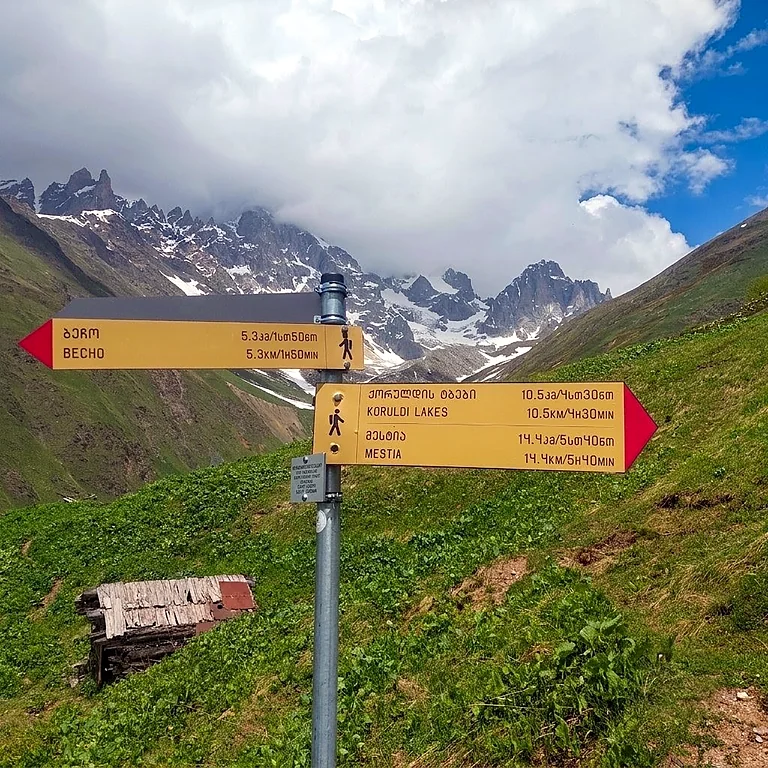
Day-hike toward Mount Shkhara from Ushguli
One of the most rewarding day hikes in Svaneti starts right from Ushguli, following the Enguri River valley up toward the glacier at the base of Mount Shkhara — Georgia's highest mountain at 5,193 meters. It's a relatively gentle valley walk with the great wall of Shkhara ahead of you the whole way, ending at the glacier snout. Allow roughly half a day to a full day for the round trip depending on your pace and how far you go; it's moderate, with no technical sections, though you should keep well back from the glacier face, as ice regularly breaks off. The wide, open views make it one of the best short hikes in the region.
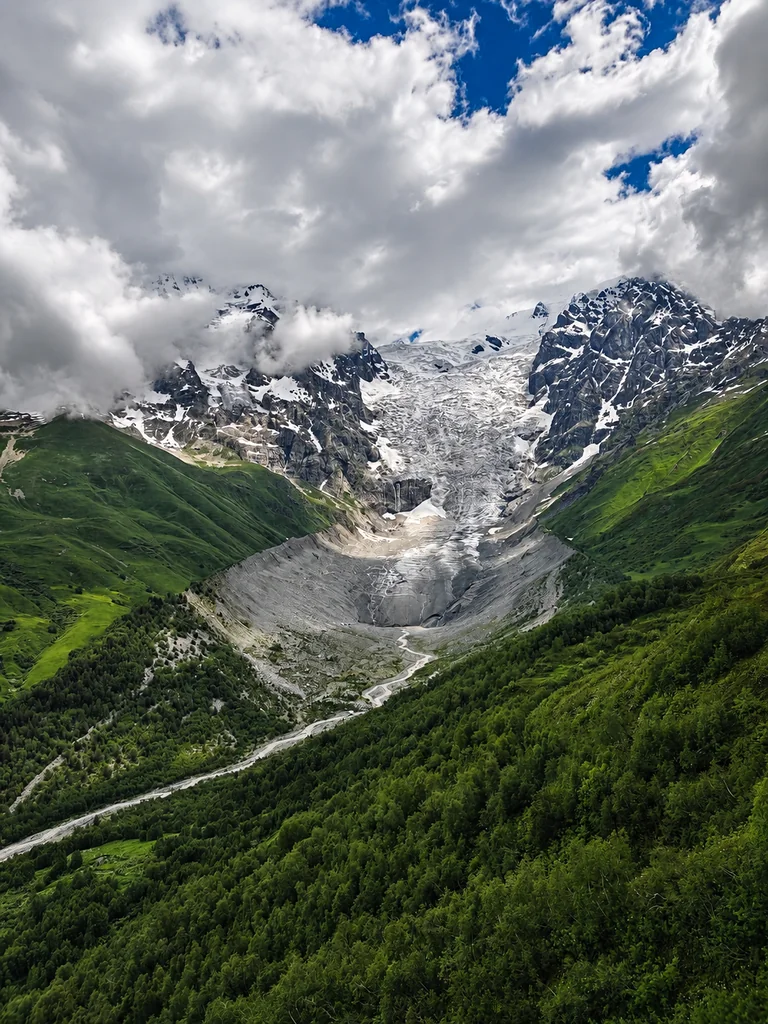
Hike to the Chalaadi Glacier near Mestia
For a shorter walk close to Mestia, the Chalaadi Glacier is the most popular option — an easy-to-moderate hike following the river up to the glacier snout through forest, with strong mountain scenery throughout. A vehicle usually drops you at the trailhead a few kilometers from town, and from there it's a modest walk in to the ice. It's a good half-day outing that pairs well with time exploring Mestia, and it works for less experienced walkers.
Explore Mestia
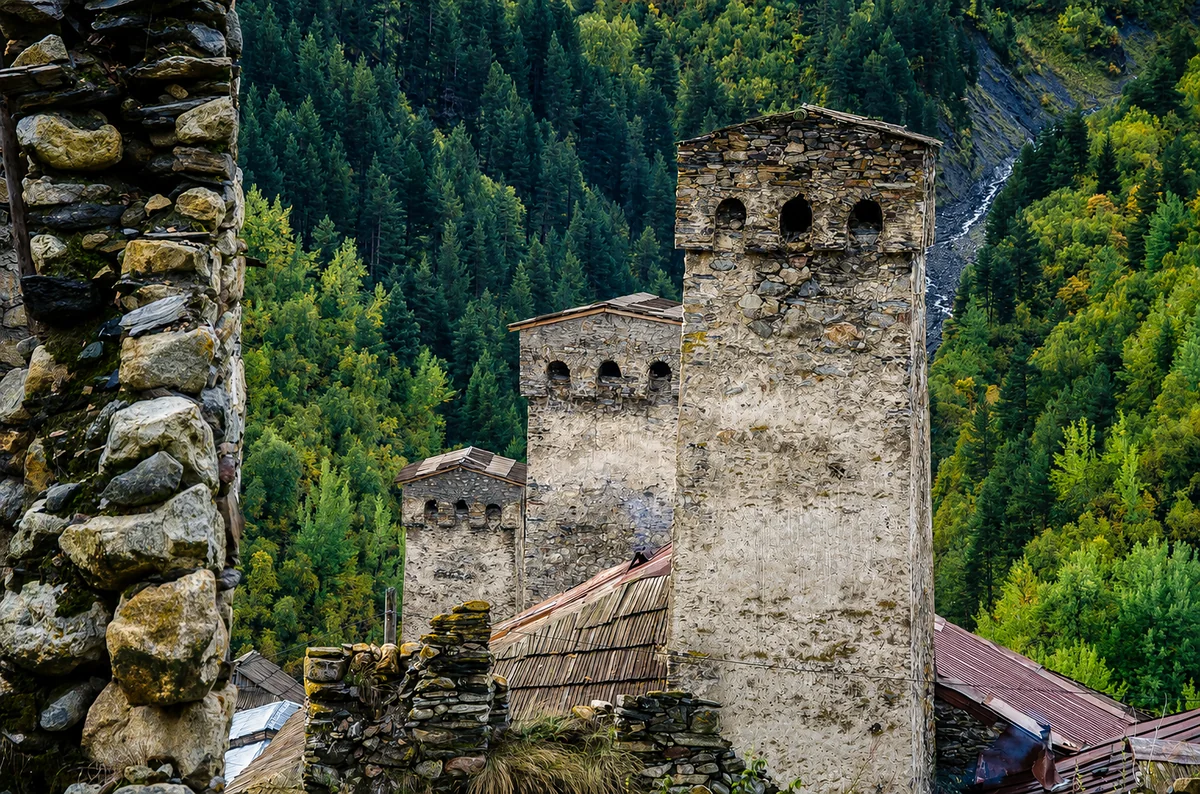
Mestia is the main base in Svaneti and a genuinely interesting place in its own right, mixing modern tourist infrastructure with traditional Svan architecture. You can wander the town and its cluster of medieval Svan towers, take in the mountain setting, and use it as the launch point for nearly every hiking route in the region. It has guesthouses, restaurants, outfitters, and guides, and makes the natural place to acclimatize and plan. (Mestia has its own detailed guide in this series.)
Visit the Svaneti Museum of History and Ethnography
In Mestia, this museum holds one of the most significant collections of medieval Georgian art outside Tbilisi — religious icons, crosses, illuminated manuscripts, and ecclesiastical metalwork, much of it from the Georgian Golden Age, preserved in Svaneti precisely because the region's isolation kept it safe through centuries of invasion. It gives real context for why this remote valley matters so much to Georgian history and culture, and for travelers interested in that history, it's well worth an hour or two.
Explore Ushguli
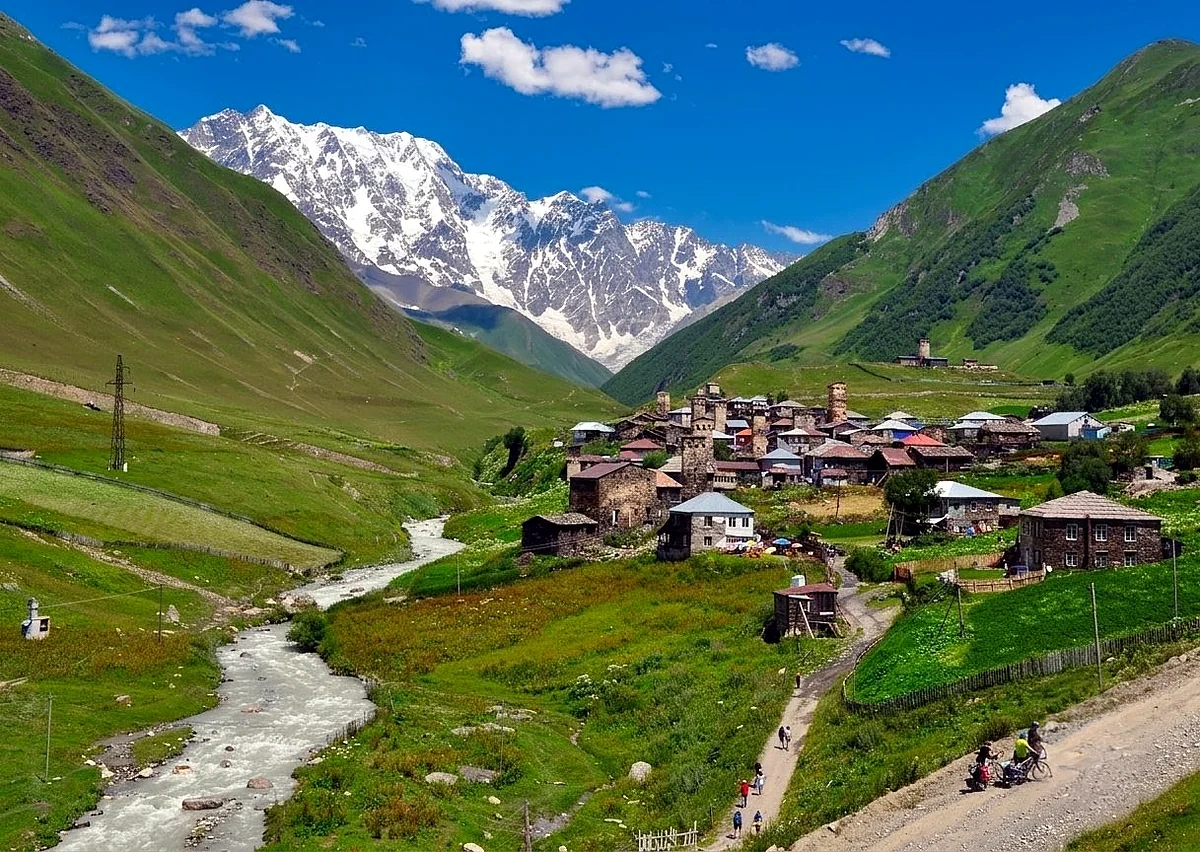
Ushguli, at the head of the Enguri valley around 2,200 meters, is one of the most iconic places in Georgia and one of the highest permanently inhabited communities in Europe. A cluster of four villages spread along a wide meadow, it has dense groupings of medieval Svan towers, a preserved traditional settlement, and the Shkhara massif filling the eastern skyline. It's a UNESCO World Heritage Site, still inhabited year-round by Svan families, with horses and cattle moving through the unpaved lanes — a place whose physical reality matches and often exceeds its photographs. (Ushguli has its own detailed guide in this series.)
Visit Lamaria Church
Above the Chazhashi cluster in Ushguli stands the church of Lamaria, one of the oldest in Svaneti. Set on a rise at the edge of the village, it's a modest medieval stone church with a tower, and the short walk up to it gives some of the best views over Ushguli's towers and out toward the surrounding mountains. It's a quiet, atmospheric stop that rewards the climb.
Drive the Mestia-to-Ushguli road
If you're not trekking, the road between Mestia and Ushguli is itself one of the most scenic drives in Georgia — roughly 45 kilometers taking two to three hours, climbing through the upper Enguri valley past smaller Svan villages, rivers, and high meadows with wide views of the peaks. Much of it is unpaved, so a 4WD (or at least a vehicle with good ground clearance) is recommended, especially after rain. Many visitors hire a shared jeep from Mestia for the day, which is the standard way to reach Ushguli without hiking.
Explore the smaller Svan villages
Beyond Mestia and Ushguli, Svaneti is full of smaller villages where traditional life continues — places like Adishi, Iprari, and others along and off the trekking routes, with their own towers and a quieter, more local feel. Exploring these gives a more intimate perspective on Svan life, takes you to less-visited landscapes, and rewards travelers who have the time to go slowly rather than tick off only the headline sites.
Stay in a guesthouse and try Svan food
Accommodation in Svaneti is mostly in family-run guesthouses, and staying in one is part of the experience — home-cooked meals, direct contact with Svan hosts, and the region's distinctive food. The dish to try is kubdari, a Svan meat-filled bread seasoned with the region's own spices, quite different from the cheese-filled khachapuri found elsewhere in Georgia. Guesthouse dinners, often shared family-style, are one of the warmest parts of a trip here.
Ski at Hatsvali and Tetnuldi
In winter, Svaneti offers skiing at two resorts near Mestia: Hatsvali, the smaller and closer of the two (about 8 km from town, connected by a chairlift), good for beginners and intermediates with a famous viewpoint café; and Tetnuldi, the larger, higher area with more varied terrain. Both are far less crowded than Gudauri, and skiing here comes with the extraordinary backdrop of the Svan towers and the high Caucasus peaks — a genuinely different winter-sports experience.
When to visit
June through September is the best window for hiking and reliable access, with the high passes clear and the village guesthouses open. Winter (roughly December through April) is the ski season at Hatsvali and Tetnuldi, with a very different snow-bound atmosphere — though access to Mestia itself becomes weather-dependent and the road to Ushguli is often closed. Spring and late autumn are transitional and harder for the high routes, with snow lingering on the passes.
Caucasus Travel FAQ
The headline experience is the multi-day Mestia-to-Ushguli trek. Beyond it: day hikes to the Chalaadi Glacier near Mestia and toward the Shkhara glacier from Ushguli; exploring Mestia's Svan towers and its art museum; visiting UNESCO-listed Ushguli beneath Mount Shkhara; the scenic Mestia-Ushguli drive; staying in family guesthouses to try Svan kubdari; and winter skiing at Hatsvali and Tetnuldi.
It's roughly 45–58 km over three to four days, crossing two passes through the upper Enguri valley, with village guesthouses along the way for meals and beds (no camping needed). It's moderately demanding rather than technical, and well established, though the weather can change fast and the first stretch out of Mestia can be confusing to follow. Best from June to September.
Yes. Ushguli is about 45 km from Mestia by a largely unpaved road, two to three hours each way, usually done in a hired shared jeep (4WD recommended). It's a popular day trip from Mestia, though staying overnight lets you experience the village without the day-trippers. In winter the road is often impassable.
It's one of the best day hikes in the region — a moderate valley walk from Ushguli along the Enguri River up to the glacier at the foot of Mount Shkhara, Georgia's highest peak, with the mountain in view the whole way. Allow roughly half a day to a full day round trip. There are no technical sections, but keep well back from the glacier face, as ice breaks off regularly.
Yes — two resorts near Mestia. Hatsvali is the smaller, closer one (about 8 km from town, reachable by chairlift), good for beginners and intermediates; Tetnuldi is larger and higher with more varied terrain. Both are far quieter than Gudauri and set among the Svan towers and high Caucasus peaks. The season runs roughly December to April, though access to Mestia is weather-dependent in winter.