
Svaneti, Georgia: Tower-Villages, Ushguli, and the High Caucasus
Svaneti is a highland region in the northwestern corner of Georgia — the country in the South Caucasus — occupying a series of deep valleys cut into the southern flank of the Greater Caucasus, at elevations from around 1,000 meters in the lower gorges to well above 2,000 meters in the upper settlements. It is geographically isolated in a way few inhabited regions of Europe still are: surrounded on three sides by some of the highest mountains on the continent, connected to the rest of Georgia by roads that were impassable for months each year until relatively recently, and home to a community that developed its own architecture, language, music, and social customs in near-total physical separation from the lowland world. That isolation is the central fact of Svaneti, and it explains almost everything distinctive about the region — the towers, the preserved traditions, the particular intensity of a landscape where the mountains are not a backdrop but a constant, immediate presence.
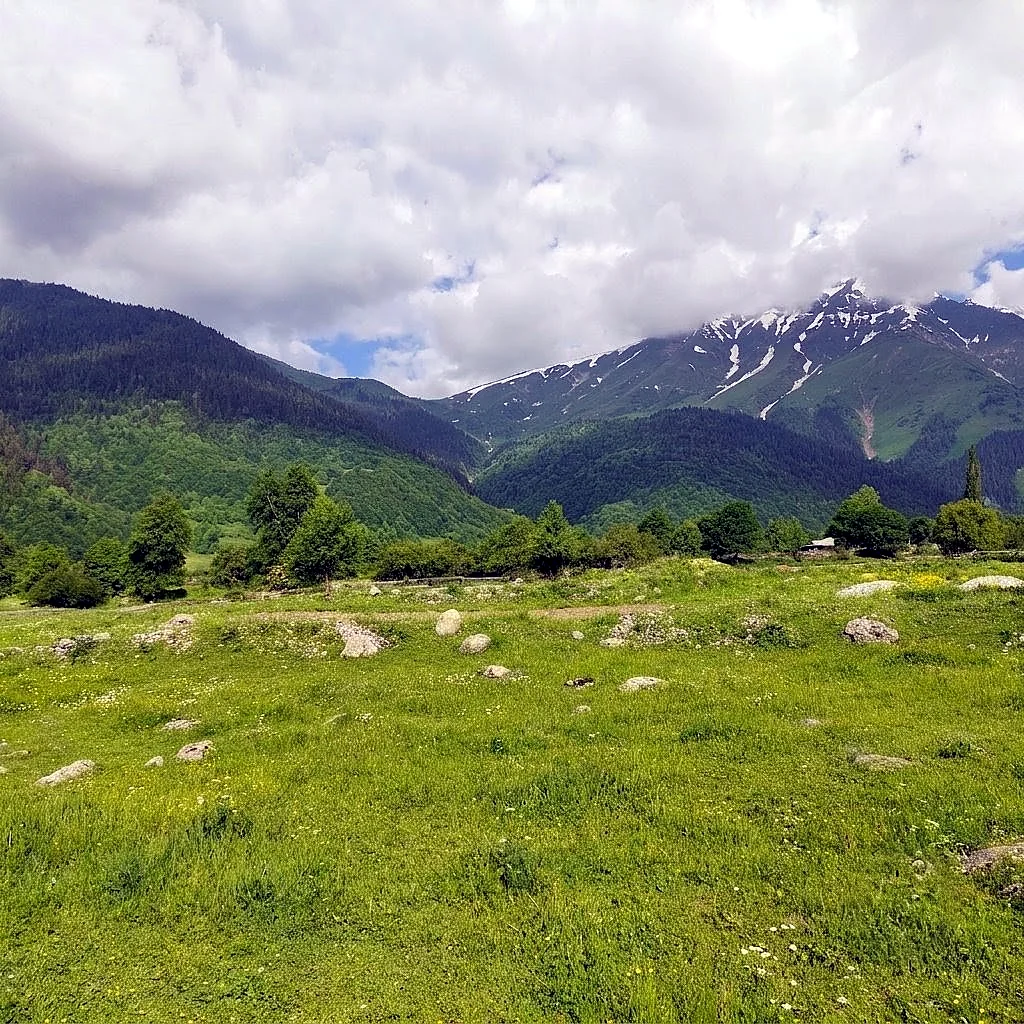
What is Svaneti known for?
Svaneti is best known for its medieval stone defensive towers, which rise in dense clusters above the villages of the upper Enguri valley, and for Ushguli, one of the highest permanently inhabited communities in Europe, beneath the Shkhara massif. Upper Svaneti, centered on the town of Mestia, is a UNESCO World Heritage Site and one of the premier trekking destinations in the Caucasus, ringed by peaks including Shkhara (the highest point in Georgia) and the dramatic twin-summited Ushba. It's also home to the distinct Svan people and language.
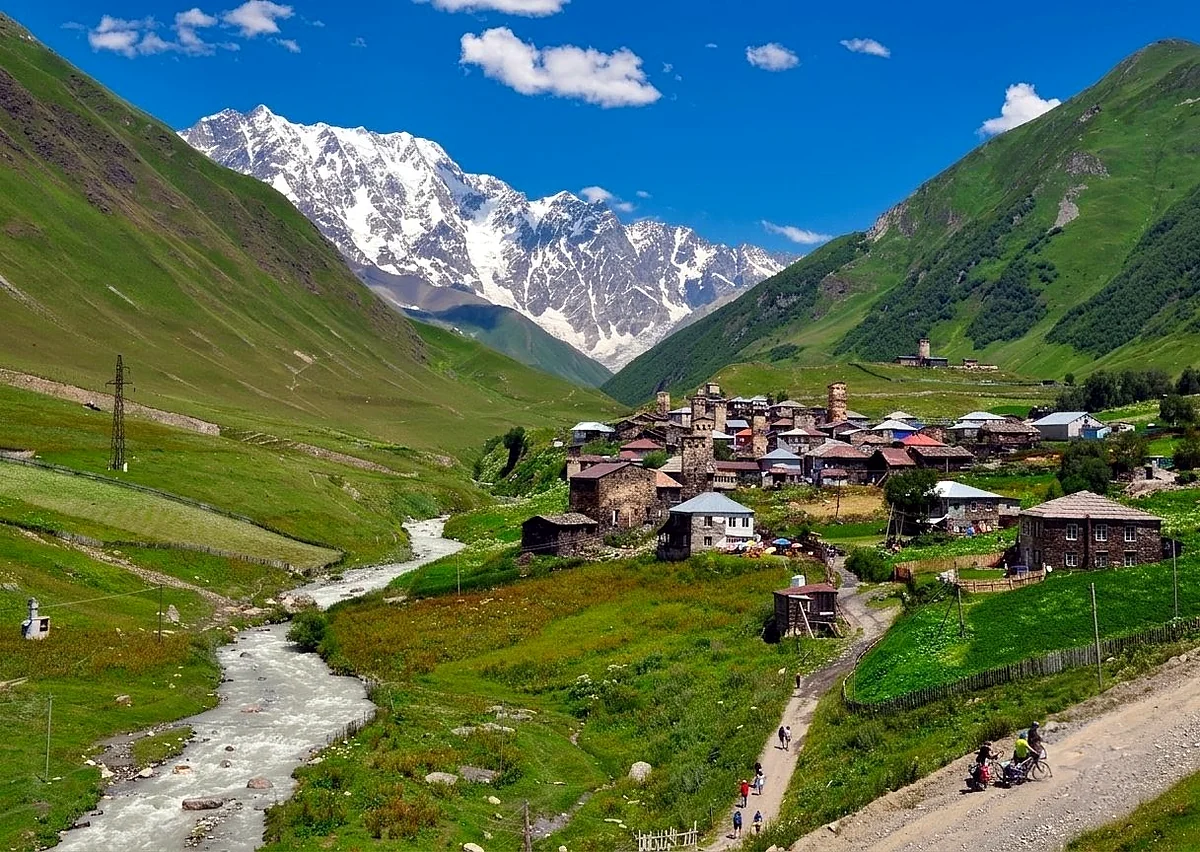
Upper and Lower Svaneti
The region divides into two main areas. Upper Svaneti, centered on Mestia and extending to the remote village cluster of Ushguli at the head of the Enguri valley, is the destination that draws visitors and the focus of this guide. It was designated a UNESCO World Heritage Site in 1996, the designation covering the medieval tower-villages of the upper Enguri valley, and it was a recognized center of outstanding cultural and natural heritage long before modern tourism arrived. Lower Svaneti, further down the Enguri gorge toward Zugdidi, is a less-visited and more agricultural area.
Geography and the mountain environment
The Enguri River drains the heart of Upper Svaneti, collecting glacier meltwater off the main Caucasus ridge and channeling it southward through a gorge that narrows and steepens as it descends toward the Black Sea lowlands. The upper valley — where Mestia sits at around 1,500 meters and Ushguli at roughly 2,200 meters — is a world of high meadows, dense conifer forest on the lower slopes, and bare rock and permanent snow above. The surrounding peaks are among the highest in the entire Caucasus: Mount Shkhara, at 5,193 meters, is the highest point in Georgia (it sits on the Georgia–Russia border, its northern side in Russia's Kabardino-Balkaria), and Tetnuldi, Ushba, and Laila ring the upper valley in a near-continuous wall of rock and ice that, on clear days, feels overwhelming rather than merely scenic.
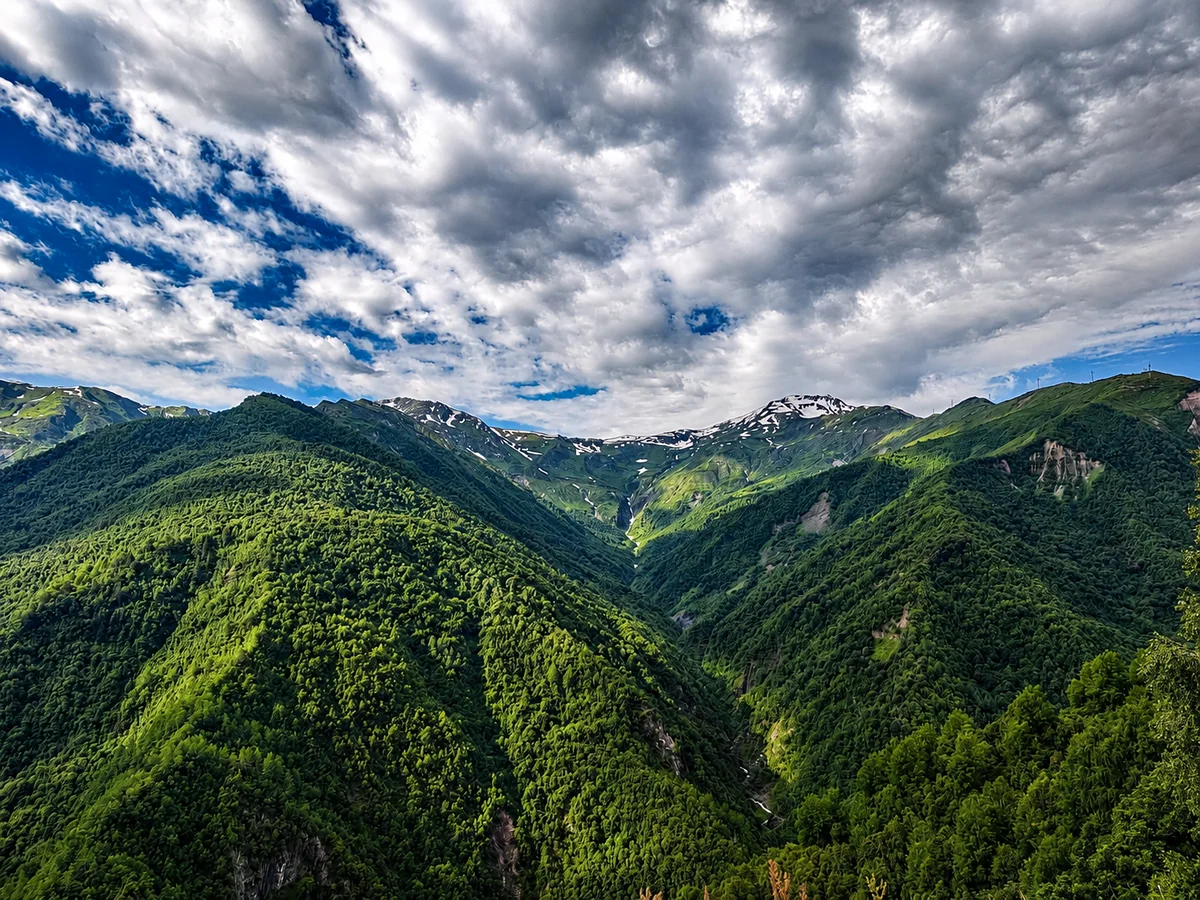
Ushba deserves particular mention. At 4,710 meters it isn't the highest peak in the area, but its twin summits and sheer north face have made it one of the most technically demanding and visually dramatic mountains in the Caucasus — the "Matterhorn of the Caucasus" — with a reputation among serious alpinists that reaches well beyond the region. From points throughout the upper Enguri valley, the silhouette of Ushba's double summit is one of the most striking sights in Georgian mountain scenery.
The glaciers descending from the main ridge define the upper-valley landscape. Several are easily visible from the road and the villages, and a number are reachable on foot as day hikes or as part of longer treks — the Chalaadi Glacier near Mestia and the glaciers above Ushguli are among the most visited. Like glaciers throughout the Caucasus and the wider Alpine world, they have receded significantly over the past century and continue to retreat, a change measurable in the valley landscape and in the living memory of older Svans.
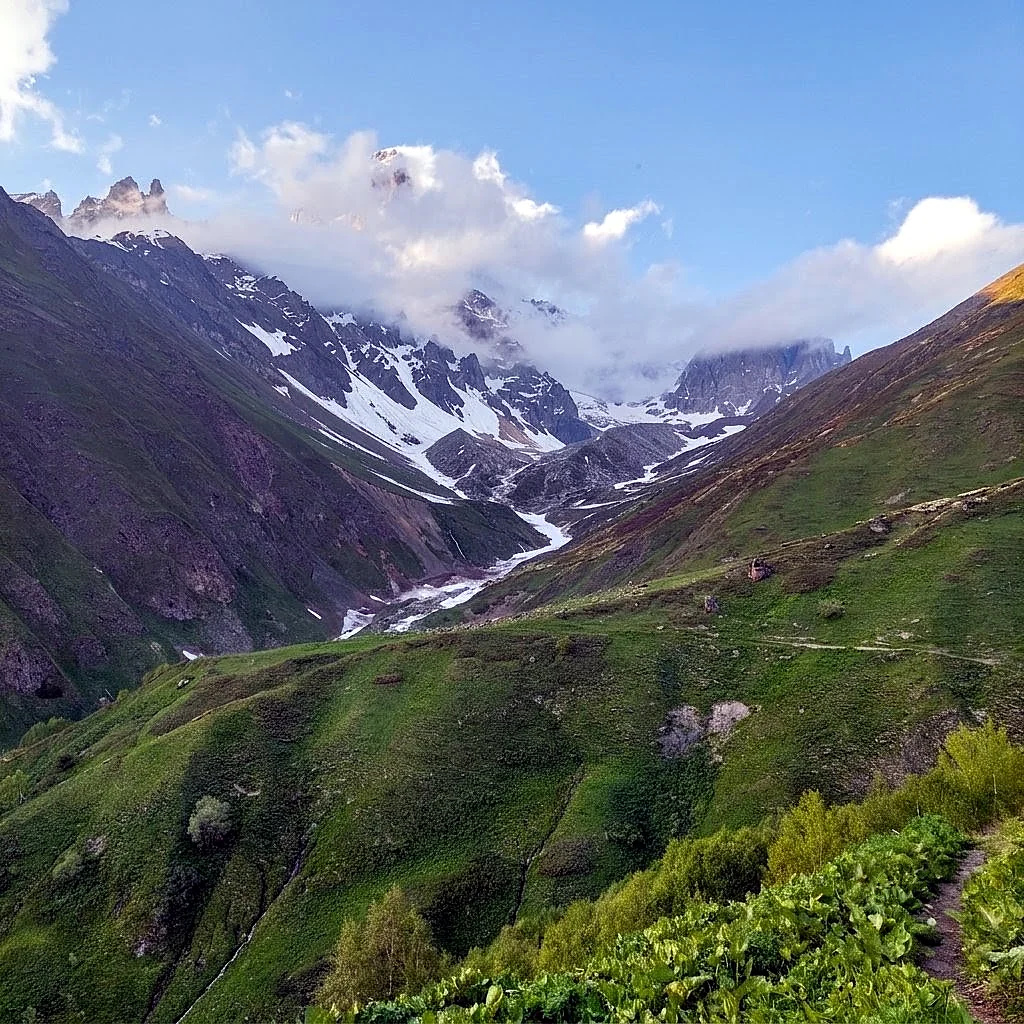
The towers
The medieval defensive towers of Svaneti are the region's most recognizable feature and one of the most distinctive vernacular architectural traditions anywhere in Georgia. Between the 9th and 13th centuries, Svan communities built these towers — typically 20 to 25 meters high, of local stone laid without mortar, tapering slightly toward the top — as defensive refuges for individual families during the clan conflicts and external raids that were constants of medieval mountain life. Each tower stood attached to or beside the family dwelling, forming a compound that could be sealed and defended. The towers held no permanent habitation; they were refuges of last resort, stocked with food and water for extended sieges, entered by a door set several meters above ground level and reached only by ladder.
What makes the Svan towers extraordinary is not only their individual quality — raising a 25-meter mortarless stone structure in a mountain valley with only local materials took considerable skill — but their collective density. In the villages of the upper Enguri valley, the towers rise in clusters of five, ten, or fifteen above the traditional stone houses, creating a skyline with no parallel anywhere else in Georgia or the broader Caucasus. Chazhashi, one of the four village clusters that make up the Ushguli community, has around twenty towers visible from a single viewpoint, standing against a backdrop of glaciated peaks — one of the most memorable views in the country. The towers were still in active use as late as the 19th century, and some remained inhabited into the Soviet period. Today they are preserved as historical monuments, many in remarkable condition for their age, and the UNESCO designation covers not just the towers but the entire cultural landscape of the village complexes around them.
Mestia
Mestia is the administrative center of Svaneti and the main practical base for visiting the region — a town of around 2,500 permanent residents whose tourism infrastructure has grown considerably over the past fifteen years. Its own cluster of medieval towers, rising above a center that mixes traditional Svan stone architecture with newer construction, makes it genuinely interesting in its own right rather than just a logistics hub.
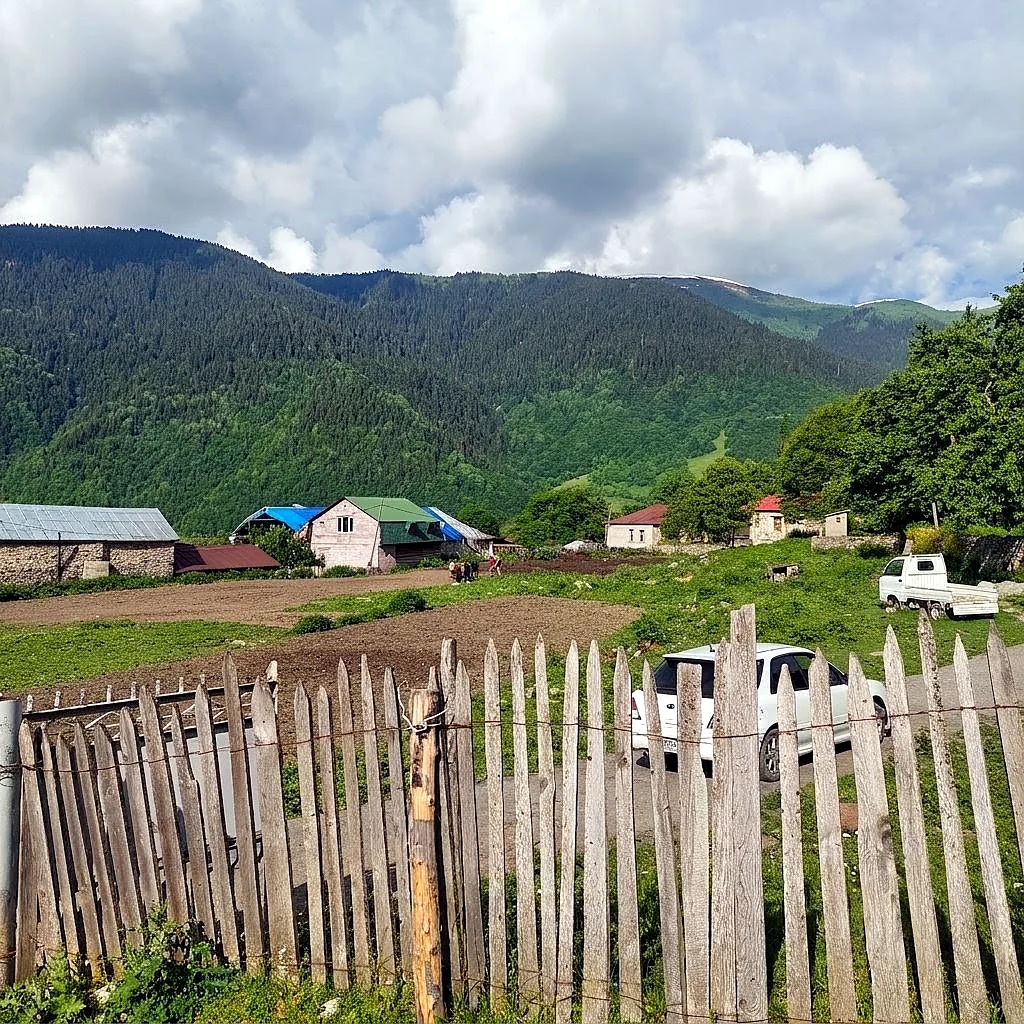
The Svaneti Museum of History and Ethnography in Mestia holds one of the most significant collections of medieval Georgian art outside Tbilisi, accumulated here over centuries precisely because of the region's isolation: treasures brought to Svaneti for safekeeping during the invasions and upheavals that swept the rest of Georgia were never reclaimed, remaining in Svan family and church collections. The collection includes medieval icons, crosses, illuminated manuscripts, and ecclesiastical metalwork of extraordinary quality, much of it from the Georgian Golden Age of the 12th and 13th centuries. For travelers interested in medieval Georgian art and culture, the Mestia museum alone justifies the journey. The town now has a growing range of guesthouses, hotels, restaurants, and outfitters serving the hiking and ski tourism that drives much of the local economy; the infrastructure is far more developed than a decade ago, though Mestia keeps enough of its original character to feel genuinely distinct from lowland Georgian towns. (Mestia has its own detailed guide in this series.)
Ushguli
Ushguli sits at the head of the Enguri valley about 45 kilometers from Mestia, at around 2,200 meters — one of the highest permanently inhabited communities in Europe. It consists of four village clusters spread along a wide mountain meadow, towers rising densely above each, with the Shkhara massif filling the eastern skyline in a wall of ice and rock that seems impossibly close. The combination of medieval village architecture, the tower clusters, the surrounding landscape, and the genuine sense of remoteness and altitude makes Ushguli one of the most extraordinary places in Georgia.
The villages are inhabited year-round by a small permanent community of Svan families who keep the traditional pattern of summer agriculture and winter near-isolation that has shaped life here for centuries. Horses and cattle move through the lanes. The church of Lamaria, one of the oldest in Svaneti, stands at the edge of the Chazhashi cluster above the river. The lanes between the stone houses and towers are unpaved and narrow, and the physical reality of the place matches and in some respects exceeds the expectations its photographs set. (Ushguli has its own detailed guide in this series.)
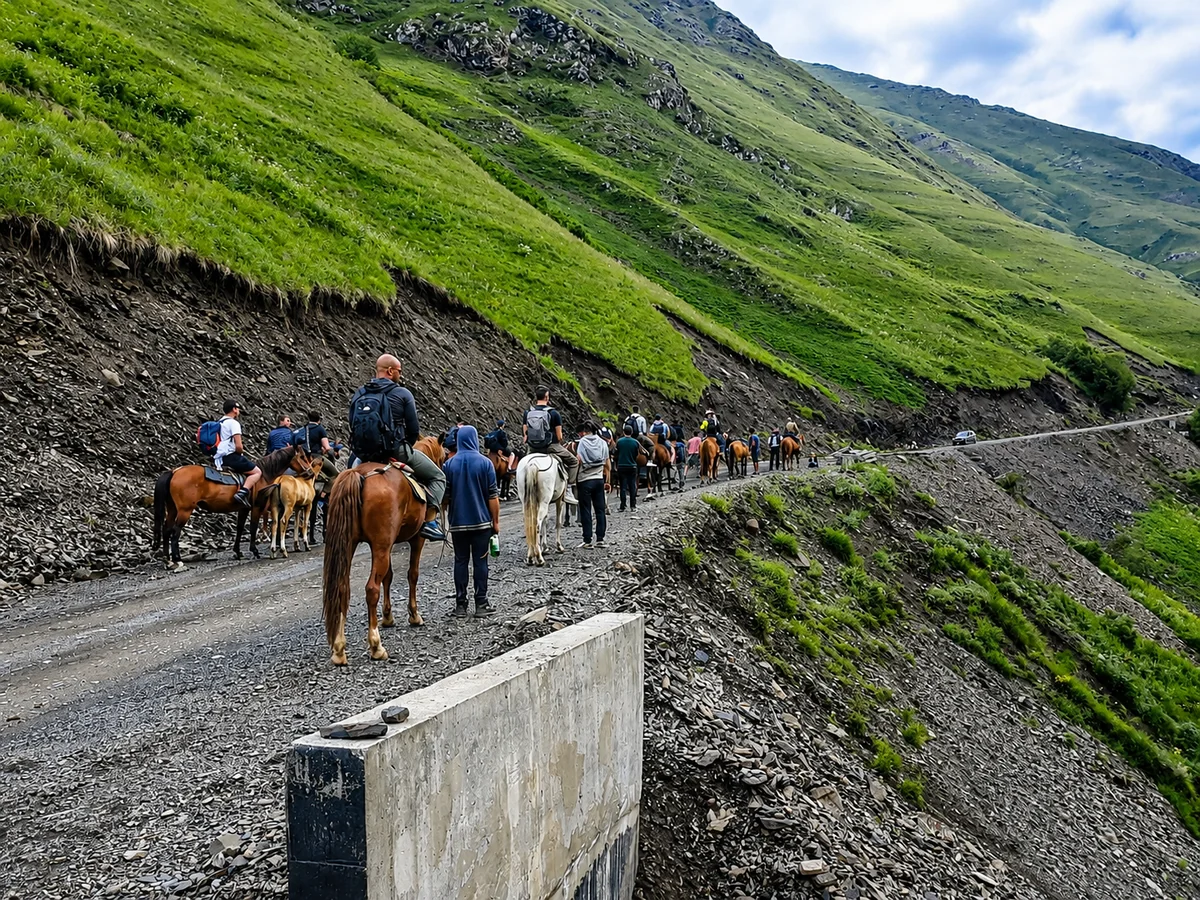
Access from Mestia is by a road that climbs through the upper Enguri valley, passing several smaller Svan villages and crossing high meadows with wide views of the peaks. Much of it is unpaved and needs a vehicle with reasonable ground clearance, especially after rain or in the transitional seasons when the surface can be difficult; the journey takes between one and a half and two and a half hours depending on conditions. In winter the road is frequently impassable for extended periods and Ushguli becomes genuinely cut off — the norm for the community for most of its history.
Hiking and trekking
Svaneti is among the best regions in Georgia for multi-day trekking, with routes ranging from half-day walks out of Mestia to serious alpine expeditions requiring multiple days, experience, and proper equipment.
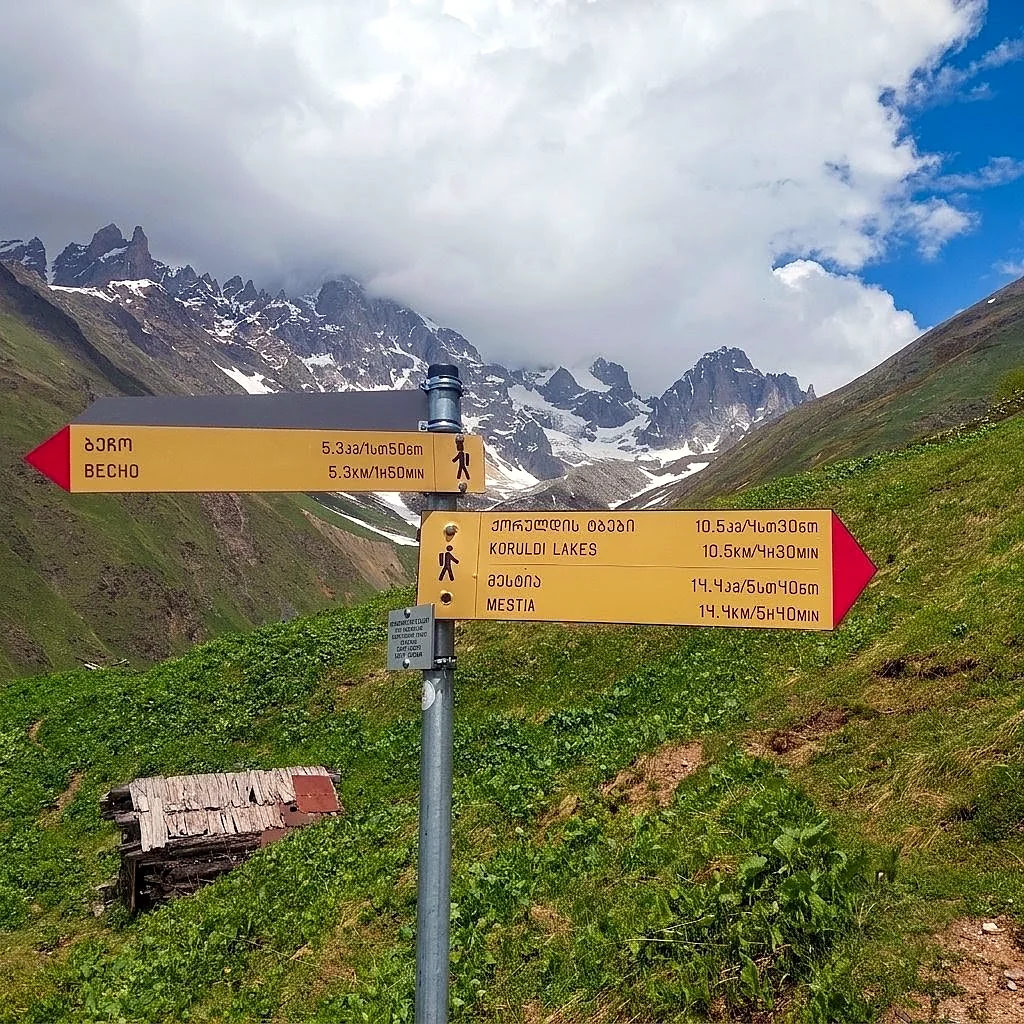
The Mestia-to-Ushguli trek is the most popular multi-day route in Svaneti and one of the most celebrated in the Caucasus. Depending on the variant, it covers roughly 45 to 55 kilometers, crosses two significant passes, and traverses the full length of the upper Enguri valley over three to four days, passing through inhabited Svan villages, climbing through high alpine meadows with continuous views of the main Caucasus peaks, and descending into Ushguli with the Shkhara massif as its endpoint. Village guesthouses along the way provide accommodation and meals, and the trail is well enough established that navigation is generally straightforward in good conditions — though mountain weather changes fast and the high passes need care after fresh snow.
Day hikes from Mestia include the Chalaadi Glacier, the Koruldi Lakes at around 2,700 meters (with panoramic views of Ushba), and various viewpoints over the valley and its tower clusters. The Tetnuldi area above the town offers further routes in higher terrain. Longer, more serious treks cross the main Caucasus ridge into Svaneti's less-visited northern reaches, and several routes connect the region with neighbors, including crossings east into Racha. Mountaineering here is for experienced alpinists only: the major peaks — Shkhara, Tetnuldi, Ushba — are serious technical objectives requiring the right skills, equipment, and acclimatization. Guides based in Mestia can be hired for both trekking and technical mountain routes.
Winter and the ski season
The Tetnuldi ski area, above Mestia at roughly 2,265 to 3,165 meters, has grown into a genuine ski destination over the past decade, with modern lift infrastructure and slopes across a range of difficulty. The high altitude and largely north-facing terrain give reliable snow from December through April, and the mountain scenery makes the skiing visually exceptional even by high-altitude standards. It remains less developed and less crowded than Gudauri, and the combination of skiing with the setting of Mestia and the surrounding Svan landscape gives winter visits a character distinct from any other ski destination in Georgia. Winter access to Mestia itself is weather-dependent: the main road from Zugdidi to the west is the primary approach and is maintained through the season, though heavy snowfall can cause temporary closures, while the eastern road through Racha is less reliable in winter.
The Svan people and cultural identity
The Svans are a distinct subgroup within the broader Georgian ethnic and cultural family, speaking Svan — a South Caucasian language related to but mutually unintelligible with Georgian — alongside Georgian, which serves as the language of education and public life. Svan is considered one of the oldest living languages in the Caucasus, with a complex grammar and a vocabulary preserving features lost in the other Georgian languages over centuries of contact with lowland cultures.
The particular intensity of Svan identity — the pride in the towers, the distinct traditions, the awareness of a history maintained in isolation against considerable external pressure — is hard to articulate precisely but easy to notice on arrival. The Svans have held their community together through conditions (repeated invasions, Soviet collectivization, post-independence economic collapse, demographic pressure from emigration to the lowland cities) that would have eroded a less resilient identity, and the sense that the region's character is the product of that resilience, rather than simply of scenic geography, gives Svaneti a depth that purely scenic mountain destinations rarely achieve.
Getting there
The main route to Mestia runs from Zugdidi in the west, climbing through the Enguri gorge on a road substantially improved in recent years that now takes about three hours from Zugdidi in normal conditions. Zugdidi connects to Tbilisi by road and rail, with the capital-to-Mestia journey taking roughly six to seven hours total by road, or slightly longer by train plus onward marshrutka. A small airport at Mestia operates seasonal flights to and from Tbilisi — around forty minutes by air versus six or seven hours by road — though the schedule is limited and weather-dependent, and the mountain setting makes delays and cancellations more common than at lowland airports, so checking current schedules and booking ahead is advisable.
When to visit
June through September is the primary season for hiking and trekking, with July and August the most settled for weather and the most crowded for accommodation. Late June, when the alpine wildflowers peak, and September, when the crowds thin and the light becomes cleaner and more dramatic, are generally the most rewarding months for experienced visitors. October brings autumn color to the lower forests and far fewer people, but the high passes can get early snow and the window for the Mestia-Ushguli trek narrows. Winter (December through March) is the Tetnuldi ski season and has its own appeal — the snow-covered towers and the winter silence of the valley make for a very different but equally powerful experience. Spring is transitional and can be difficult for high routes, with snow lingering on the passes and the lower roads prone to mud, but the region comes alive from May as the snow retreats and the grazing animals return to the high meadows.
Caucasus Travel FAQ
Svaneti is a remote highland region in northwestern Georgia, deep in the Greater Caucasus. It's famous for its medieval stone defensive towers, which cluster above the villages of the upper Enguri valley; for Mestia (its main town) and Ushguli (one of the highest permanently inhabited communities in Europe); and for trekking beneath some of the highest peaks in the Caucasus, including Mount Shkhara, the highest point in Georgia. Upper Svaneti is a UNESCO World Heritage Site.
They're medieval defensive towers, built between the 9th and 13th centuries from local stone without mortar, typically 20–25 meters tall. Each served as a refuge of last resort for a family during clan conflicts and raids. What makes them remarkable is their density — clusters of five, ten, or fifteen rising above the villages, with no parallel elsewhere in Georgia or the Caucasus. Chazhashi at Ushguli has about twenty towers visible from one viewpoint.
Mestia is reached from Zugdidi in the west, about a three-hour drive up the improved Enguri gorge road; total travel from Tbilisi is roughly six to seven hours by road, or a seasonal ~40-minute flight from Tbilisi to Mestia's small airport (weather permitting). Ushguli is a further 45 km from Mestia on a largely unpaved road needing decent ground clearance, taking 1.5–2.5 hours; in winter that road is often impassable.
It's a moderately demanding multi-day route — roughly 45–55 km over three to four days, crossing two passes through the upper Enguri valley, with village guesthouses along the way for food and lodging. The trail is well established and navigation is generally straightforward in good conditions, but it's still high mountain terrain: weather can change fast and the passes need care after fresh snow. It's best from June to September.
June through September for hiking, with late June (wildflowers) and September (thinner crowds, clearer light) often the most rewarding. December through March is the ski season at Tetnuldi, with a very different snow-bound atmosphere. Spring is transitional and tricky for high routes; October is quiet and colorful but the trekking window narrows as early snow arrives on the passes.