
Things to Do in Shida Kartli: Uplistsikhe, Gori, and Ateni Sioni
Shida Kartli, in central Georgia — the country in the South Caucasus — is a region built on history, with a depth of ancient and recent sites packed into a compact area close to Tbilisi. It's easy to fold into almost any itinerary, and although many travelers pass through on a quick stop, it rewards more: the rock-hewn city of Uplistsikhe, the layered 20th-century history at Gori, an exquisite early-medieval church in a quiet valley, and a working rural landscape between them. Here are the things most worth doing.
What are the best things to do in Shida Kartli?
The highlights are exploring the cave city of Uplistsikhe, visiting Gori and its fortress and Stalin Museum, and seeing the early-medieval Ateni Sioni church in its vineyard valley — with the nearby UNESCO monuments of Mtskheta a natural add-on. Between the sites, the wide Mtkvari valley and its farming villages reward slow travel. The region works equally well as a focused day trip from Tbilisi or a richer overnight for those interested in Georgian history.
Explore Uplistsikhe cave city
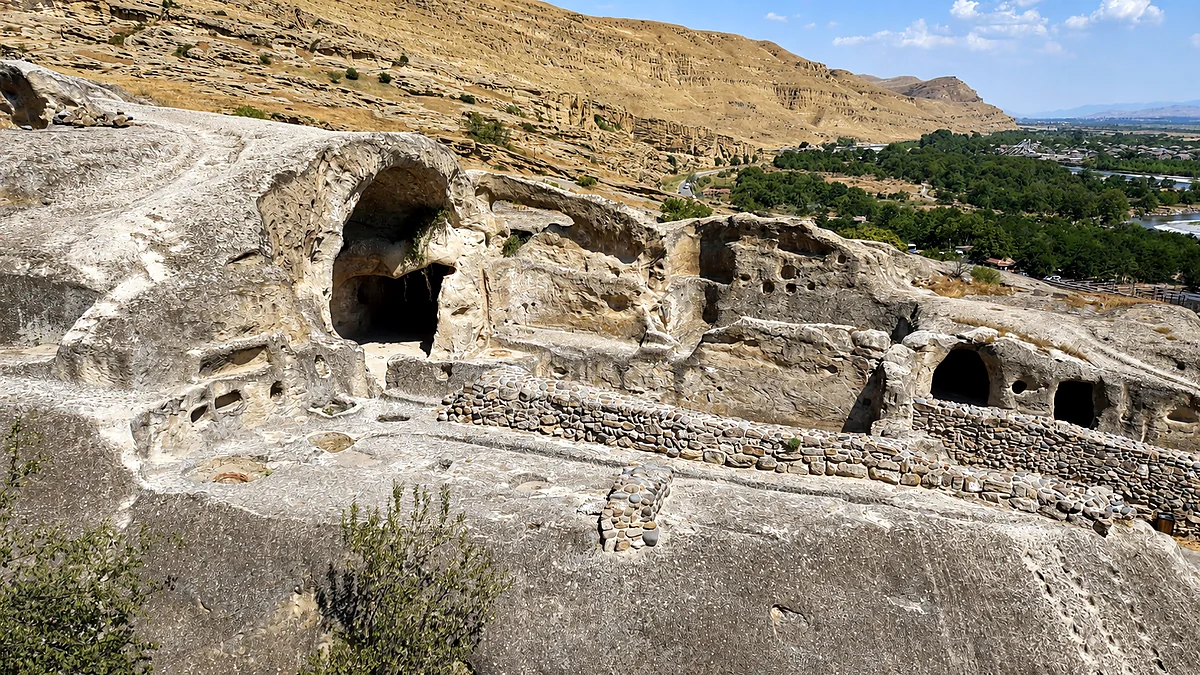
Uplistsikhe is the standout — one of the oldest cities in the Caucasus, carved into sandstone cliffs above the Mtkvari River about 10 kilometers east of Gori. Established around the first millennium BC, it was a major religious, political, and trading center for well over a thousand years, with streets, halls, tunnels, storage chambers, and wine-pressing spaces cut directly into the living rock. A large ceremonial hall has a carved stone ceiling that imitates a timber roof, and at the summit a 9th-century Christian basilica was built from stone salvaged from the earlier pre-Christian structures below — a vivid layering of religious eras. Walking the worn paths, ducking through the tunnels, and standing on the open plateau with its views over the Mtkvari valley gives a physical sense of early urban life no museum can match. The exposed sandstone gets very hot at midday in summer, so a morning visit is best in July and August.
Visit Gori and the Stalin Museum
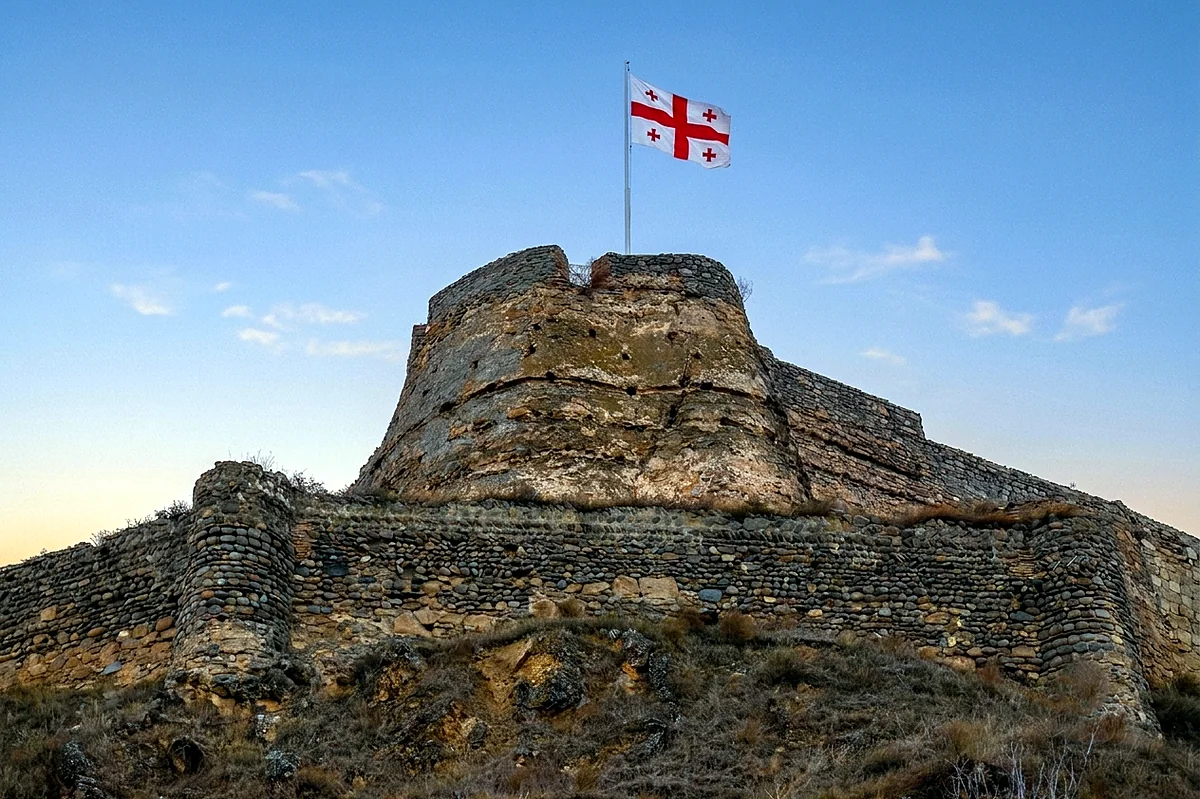
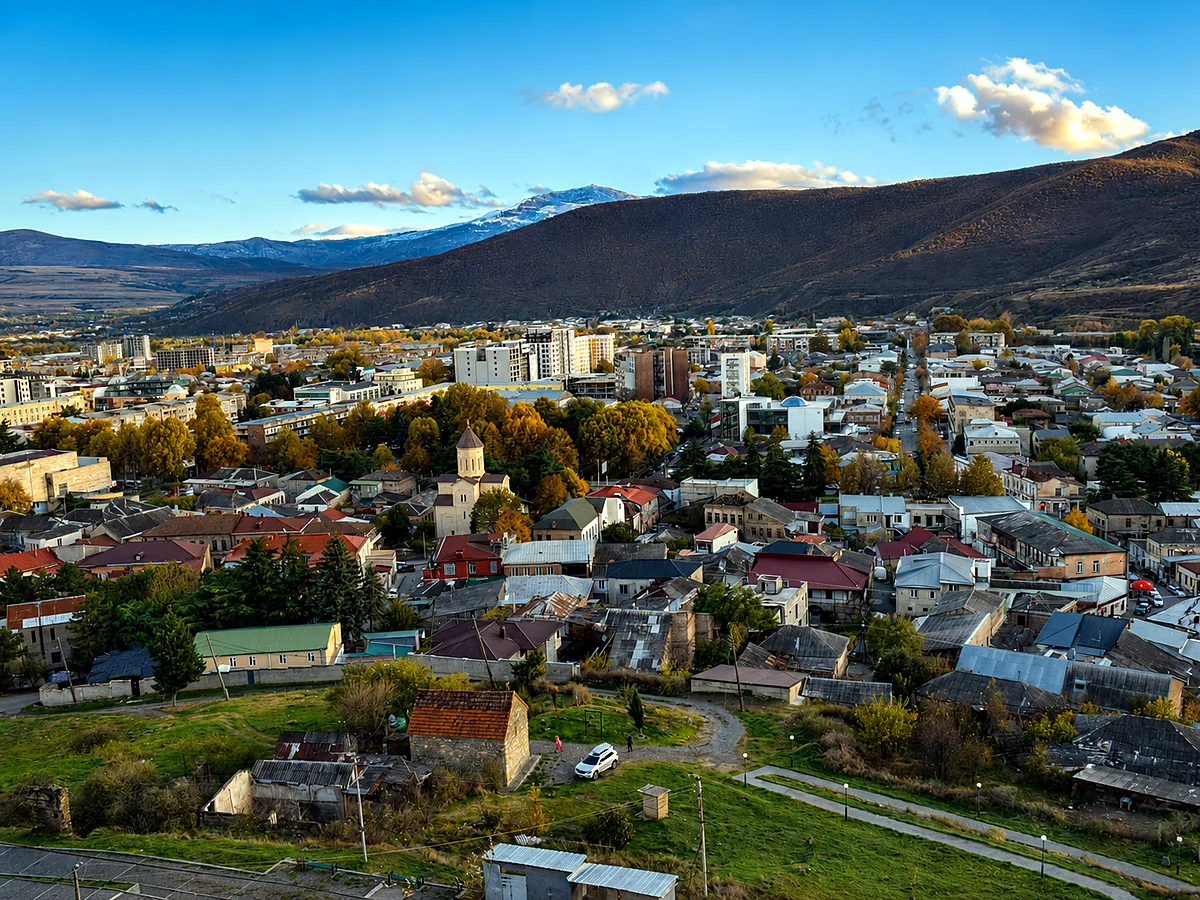
Gori, the regional capital, anchors the area's more recent history. Its medieval fortress, Gori Tsikhe, sits on the volcanic hill at the city's center and gives the best view over the Mtkvari valley. The Stalin Museum is the region's single most visited attraction, built around Stalin's preserved childhood house, his personal effects and documents, and his private railway carriage. Worth knowing before you go: the museum is essentially a Soviet-era shrine, largely celebratory in tone and notably quiet on the repression and mass deaths of the Stalin period, so it's best approached critically — as a window onto how that history was (and is) presented, rather than a balanced account. Engaging with it that way makes it a genuinely interesting and important stop. Beyond the museum, Gori is an ordinary, real regional city — markets, residential streets, cafés near the central square — that has weathered more than its share of upheaval.
Discover Ateni Sioni Church
About 12 kilometers south of Gori, the Ateni Sioni Church stands in a narrow, quiet valley of vineyards and orchards along the Tana River. Built in the first half of the 7th century, it's one of the earlier surviving examples of the cross-in-square plan that came to define Georgian church architecture, with fine exterior stone carving and significant portions of an interior fresco cycle (extended in the 11th century). The setting — river below, forested hills rising on both sides, a ruined fortress on the opposite slope reachable on foot — is much of the appeal, and it sees far fewer visitors than the better-known monuments, so a visit here is unhurried and atmospheric. A car or taxi from Gori is needed, as there's no regular public transport into the valley.
Travel through the Mtkvari valley and rural Shida Kartli
The region is as much about the landscape between the sites as the sites themselves. The wide, fertile Mtkvari valley creates a natural travel corridor, the drives between monuments passing open farmland, orchards, and vineyards with the hills and distant mountains beyond. The villages are compact and working — traditional farming, local markets, homegrown produce — and give an unfiltered picture of everyday central-Georgian life. It's a region that rewards looking out the window and stopping when something catches your eye, rather than rushing site to site.
Seek out the lesser-known sites
Beyond the headline attractions, Shida Kartli is dense with smaller, quieter places that add depth: rural churches and monasteries, archaeological remains, and historic villages largely untouched by mass tourism. They rarely appear on a standard itinerary, but for travelers with a little time and a car (or a good local guide), they offer a more personal sense of the region's long history.
Read the region's historical layers
One of Shida Kartli's real strengths is how many eras sit side by side in a small area. In a single day you can move from a pre-Christian cave settlement (Uplistsikhe), to early Christian architecture (Ateni Sioni), to medieval cultural sites, to 20th-century Soviet history (Gori) — a compression of two and a half thousand years of Georgian history that makes the region especially rewarding for travelers who want context, not just sights.
Combine it with Tbilisi, Mtskheta, and the road north
Shida Kartli sits right between major travel points, which makes it easy to include without adding much travel time. It combines naturally with Tbilisi (about an hour east), with Mtskheta (the ancient capital, on the same corridor and itself UNESCO-listed), and with the route north toward Kazbegi along the Georgian Military Highway. A common, satisfying day pairs Mtskheta, Gori, and Uplistsikhe; with more time, Ateni Sioni and the quieter valleys round it out.
A note on the South Ossetia boundary
The main sites — Uplistsikhe, Gori, Ateni Sioni, Mtskheta — are all well away from the administrative boundary with South Ossetia (the Tskhinvali region) and are visited normally year-round. The northern foothills near that boundary are a sensitive area and not somewhere to explore independently; if you're drawn to the more remote north of the region, go with local guidance.
Slow down and take it in
For all its history, Shida Kartli is an unhurried place. There are fewer crowds than in the headline destinations, the interactions are more relaxed and genuine, and even a half-day here adds real depth and context to a Georgia trip — a quieter, more reflective counterpoint to the busier regions. That balance is the point: Shida Kartli isn't about one highlight so much as understanding Georgia as a whole.
Caucasus Travel FAQ
Explore the rock-hewn cave city of Uplistsikhe, visit Gori with its fortress and Stalin Museum, and see the early-medieval Ateni Sioni church in its vineyard valley, with the UNESCO monuments of nearby Mtskheta a natural addition. Between the sites, the Mtkvari valley and its farming villages reward slow travel. It works as a day trip from Tbilisi or a richer overnight.
Yes — it's one of the oldest cities in the Caucasus and the region's standout site. Carved into sandstone cliffs above the Mtkvari about 10 km east of Gori, it has streets, halls, tunnels, and a ceremonial hall cut into the rock, plus a 9th-century church at its summit. Visit in the morning in summer, as the exposed rock gets very hot at midday.
It's the region's most visited attraction and an important point of engagement with 20th-century history — but it's essentially a Soviet-era shrine, largely celebratory and quiet on the repression of the Stalin era. Approached critically, as a window onto how that history is presented rather than a balanced account, it's a genuinely interesting stop.
Easily. Gori is about an hour west of Tbilisi with frequent trains and marshrutkas, and Uplistsikhe is a short hop beyond. A popular day combines Mtskheta, Gori, and Uplistsikhe; with a car you can add the quieter Ateni Sioni and the Tana valley.
An early-medieval church about 12 km south of Gori, built in the first half of the 7th century in the cross-in-square plan, with fine stone carving and interior frescoes. It sits in a beautiful, quiet vineyard valley with a ruined fortress on the hillside opposite — well off the main tourist routes and reached by car or taxi from Gori.