
Tsalka Canyon (Dashbashi Canyon): Georgia's Diamond Bridge
Tsalka Canyon — also known as Dashbashi Canyon, the two names used interchangeably for the same site — cuts through the volcanic plateau of the Tsalka district in southern Georgia, in the Kvemo Kartli region of Georgia, the country in the South Caucasus, roughly 90 kilometers from Tbilisi. Here the Ktsia (Khrami) River has carved a deep, dramatic gorge through the basalt of the Javakheti highlands. The canyon is ancient, but its profile as a destination is very recent: the government's opening of the Diamond Bridge and surrounding infrastructure in 2022 transformed a spot known mainly to locals into one of the most actively marketed natural attractions in the country — a genuinely impressive landscape now equipped with ambitious, unmistakably photogenic visitor infrastructure.
What is Tsalka (Dashbashi) Canyon?
Tsalka Canyon (Dashbashi Canyon) is a deep, green river gorge in the Tsalka district of Kvemo Kartli, southern Georgia, about 90 km (1.5–2 hours) from Tbilisi, carved by the Ktsia/Khrami River through volcanic basalt. It's best known for the Diamond Bridge — a roughly 240-meter glass-floored bridge with a diamond-shaped glass platform at its center housing a café, suspended high above the canyon — which opened in 2022 and made the site a social-media sensation. Below, a walking path descends into the gorge to its waterfalls. A protected natural monument with rich biodiversity, set in the highlands at around 1,100–1,700 m, it's one of the most popular day trips from Tbilisi, usually visited by car or organized tour. Spring and early summer bring the fullest waterfalls.
The canyon
The canyon walls drop steeply from the plateau surface to the river far below, the basalt faces covered in dense vegetation that follows the moisture of the gorge. Seasonal waterfalls descend the walls at various points — fullest in spring and early summer when the highland snowmelt and rain peak, reduced to trickles or absent in the drier late summer. The river at the base shows pale against the dark rock where the vegetation clears, and in deep winter, when temperatures drop below freezing, the main waterfall can freeze into a striking natural spectacle. The canyon is a designated natural monument, valued for its rarity and biodiversity as well as its drama.
The Diamond Bridge
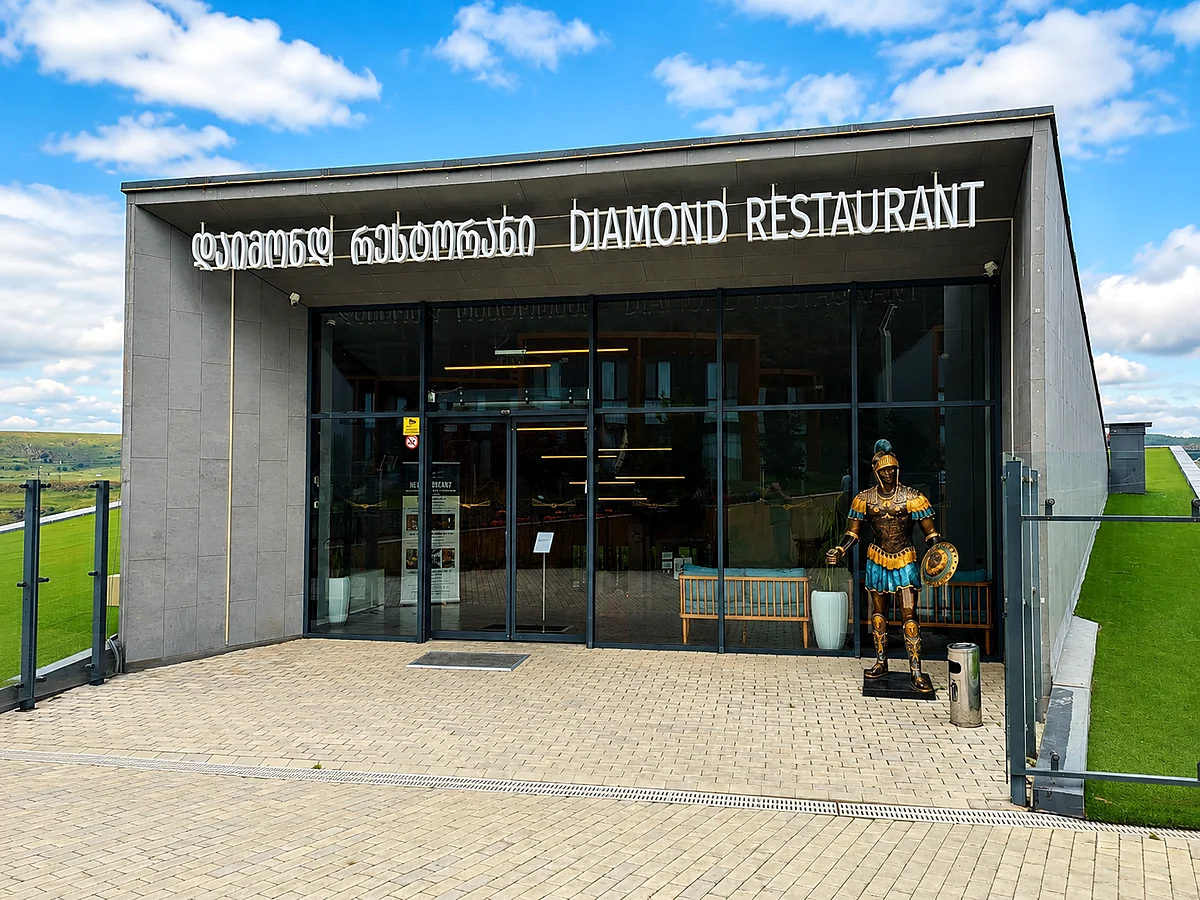
The Diamond Bridge is the engineering centerpiece and the feature most responsible for the canyon's rapid rise to fame on Georgian social media and travel platforms. The glass-floored bridge spans the canyon — roughly 240 meters long, high above the gorge floor — with a central diamond-shaped glass platform that extends outward from the main span, where you look directly down through the floor into the canyon below. Unusually, that central diamond houses a café/bar and restaurant, suspended over the drop — so you can sit and have a coffee with the gorge floor visible beneath your feet. The design — a transparent floor over a long fall, with the canyon walls in your peripheral vision on both sides and a 360-degree view from the platform — is calculated to produce the particular mix of vertigo and reward that glass bridges reliably generate.
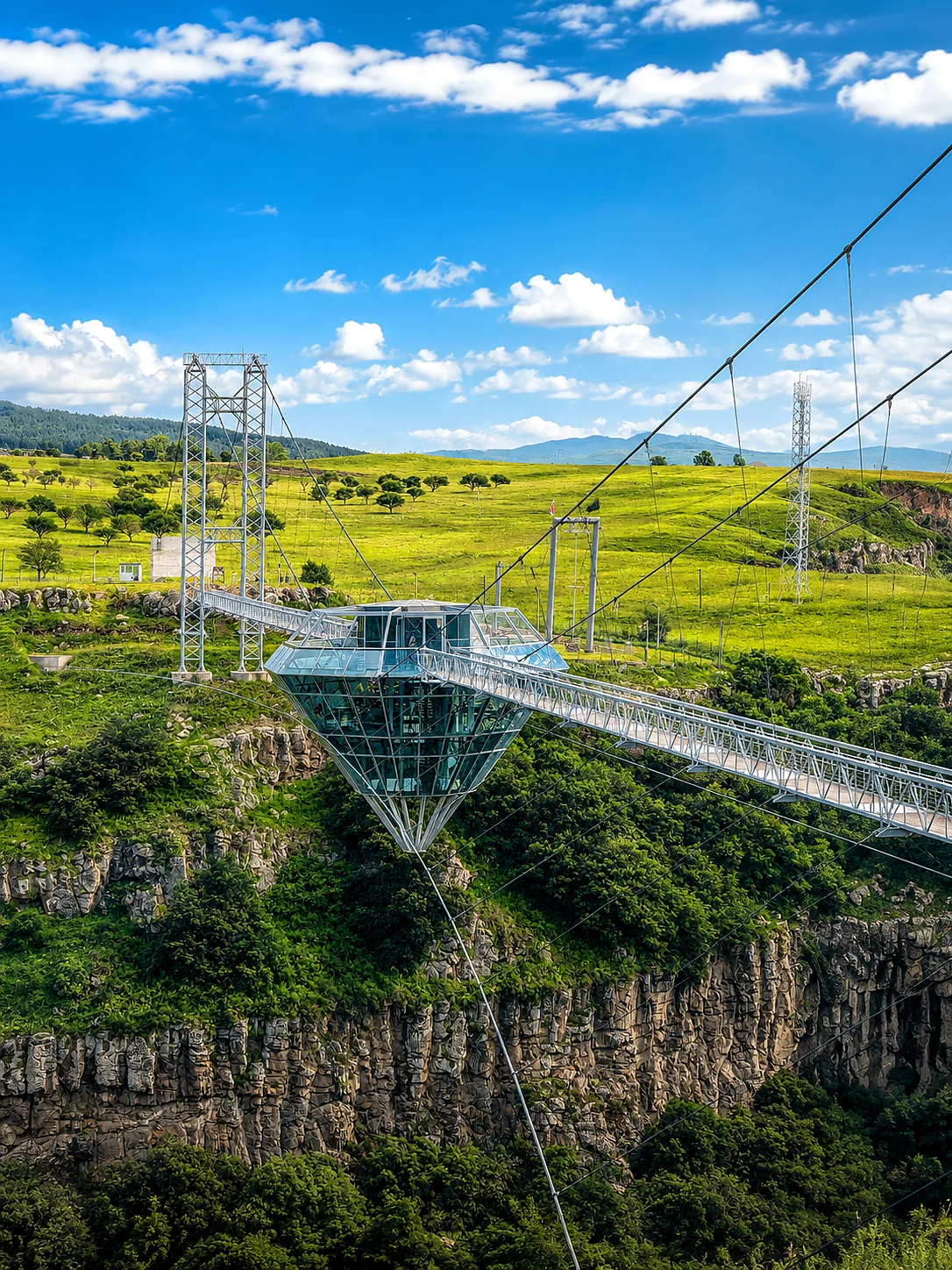
For most visitors, crossing the bridge and standing (or sitting) on the diamond platform is the emotional peak of the visit. The transparency underfoot, the depth of the drop, and the full canyon panorama create conditions that even people who consider themselves unbothered by heights find physically engaging. The structure is solidly engineered and entirely safe — the body responds to the visual information, not the structural facts — producing the intended experience of controlled exposure to height in a spectacular setting. (Because of the glass floor and height, it may still be uncomfortable for those with a real fear of heights, and children should be supervised.)
The canyon walk
Below the plateau, stairs and a maintained path descend into the canyon, giving access to the gorge floor and the waterfalls. The roughly 1.8-kilometer trail from the visitor center takes about an hour and is easy by hiking standards — no special equipment needed — leading down past the canyon's waterfalls to the main cascade. The descent is well built with stone steps and tended paths, and the walk gives a completely different perspective from the bridge view above: the walls rising on both sides, the vegetation dense and close, the sound of the water amplified by the enclosed gorge. The waterfall area at the base is the main destination for those who descend, and the combination of falling water, spray, and basalt walls is a sensory richness the plateau-level bridge can't provide. The return ascent takes more effort than the descent — factor it into your time and energy.
The Tsalka setting
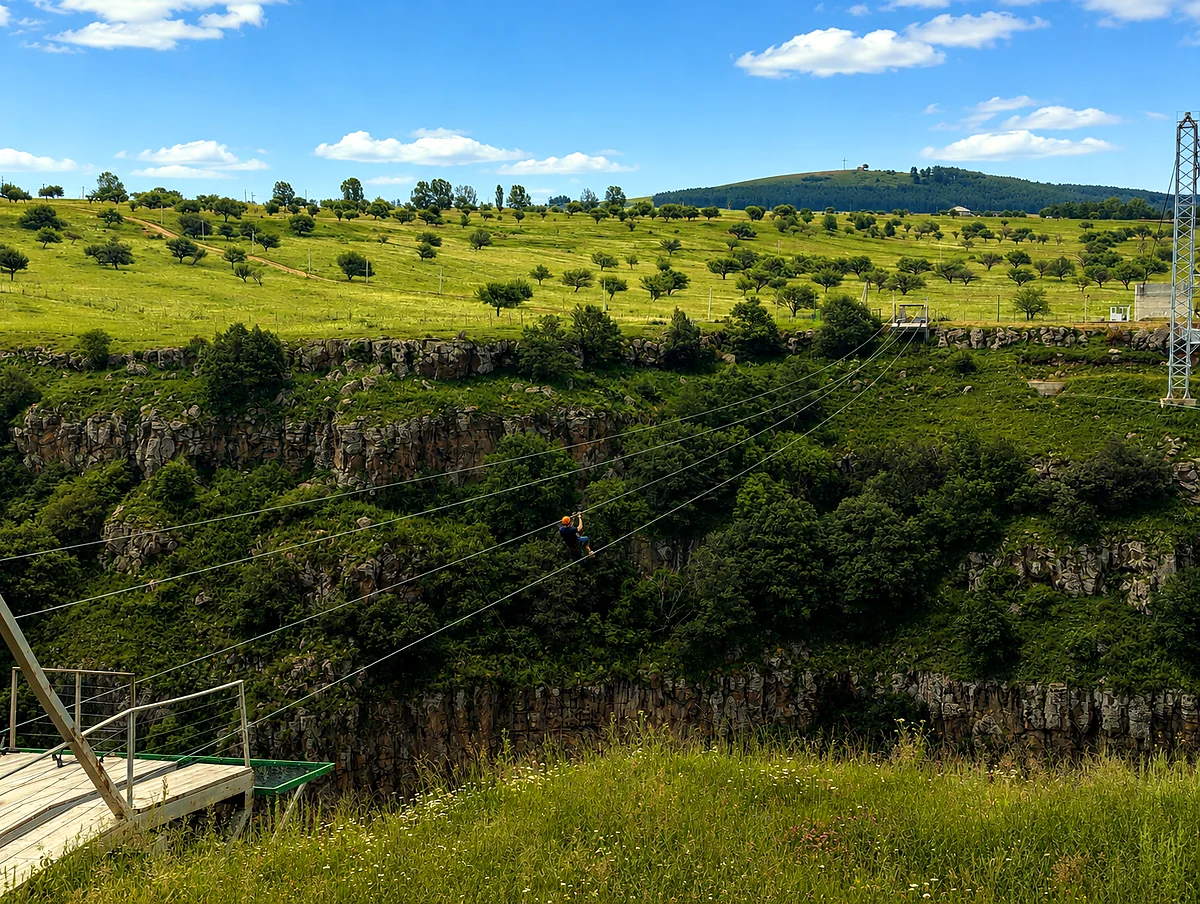
The canyon sits within the broader Tsalka plateau, an area of the southern Georgian highlands with the open, windswept character of volcanic plateau terrain. The plateau is part of the Javakheti volcanic zone that extends across southern Georgia into Armenia, and the same basalt geology that produces the canyon's cliffs covers the surrounding plateau for kilometers — open, relatively treeless, with wide views toward the southern mountains, distinctive enough to be worth attention on the approach.
The Tsalka district also has a notable Greek heritage — descendants of ethnic Greeks who settled here under Russian imperial settlement policies in the late 18th and 19th centuries — visible in village names and community character, a cultural layer the canyon infrastructure alone doesn't represent. (The district is ethnically mixed, also home to Armenian and Azerbaijani communities, reflecting the diversity of Kvemo Kartli.)
Getting there
Tsalka Canyon is roughly 90 km from Tbilisi, about 1.5 to 2 hours by car depending on the route, heading south through the Kvemo Kartli region; the nearest town is Tsalka, with the canyon a few kilometers on near Dashbashi village. There's a designated parking area and visitor center at the rim. Public transport is limited — marshrutkas run from Tbilisi (Navtlughi) to Tsalka, from which you'd continue to the canyon — so a private car or an organized tour is the most practical option for most visitors. The canyon features in many day tours from Tbilisi, often combined with other Kvemo Kartli or Javakheti destinations.
Practical information
- Location: Tsalka (Dashbashi) Canyon, Tsalka municipality, Kvemo Kartli region, southern Georgia; near Dashbashi village, ~90 km south of Tbilisi.
- Getting there: ~1.5–2 hrs from Tbilisi by car, taxi, or organized tour; limited marshrutka via Tsalka. Visitor center and parking at the rim.
- What's there: The Diamond Bridge (glass, ~240 m, with a central diamond café/restaurant); a ~1.8 km canyon trail (~1 hr) down to the waterfalls.
- Hours / Admission: Paid entry at the visitor center (the Diamond Bridge is included). Opening hours and ticket prices vary seasonally, so check the latest before visiting.
- Best time: Spring–early summer for the fullest waterfalls; the bridge and walk are accessible year-round in normal weather (frozen falls in deep winter). Bring shoes suitable for the descent and ascent.
Caucasus Travel FAQ
It's a deep, green river gorge in the Tsalka district of Kvemo Kartli, southern Georgia, about 90 km (1.5–2 hours) from Tbilisi, carved by the Ktsia/Khrami River through volcanic basalt. Once known mainly to locals, it became one of Georgia's most popular natural attractions after the government opened the Diamond Bridge — a glass-floored bridge with a diamond-shaped café at its center, high above the canyon — in 2022. A walking path descends into the gorge to its waterfalls. It's a protected natural monument and a favorite day trip from the capital.
The Diamond Bridge is a roughly 240-meter-long glass-floored pedestrian bridge spanning Dashbashi Canyon, with a distinctive diamond-shaped glass platform at its center that houses a café, bar, and restaurant — so you can have a coffee suspended over the gorge with the canyon floor visible beneath your feet. Opened in 2022, it offers a 360-degree view of the canyon and the controlled thrill that glass bridges are known for. It's solidly engineered and safe, though the glass floor and height may still be daunting for anyone with a real fear of heights, and children should be supervised. Crossing it is the highlight of most visits.
Yes. A roughly 1.8-kilometer path descends from the visitor center into the gorge, taking about an hour and leading past the canyon's waterfalls to the main cascade. It's easy by hiking standards — well-built stone steps and maintained paths, no special equipment needed — and gives a completely different, more immersive perspective than the bridge above, with the walls close on both sides and the sound of the water. Just remember the return climb back up takes more effort than the descent, so wear suitable shoes and pace yourself.
Spring and early summer are best for the waterfalls, when highland snowmelt and rain make them fullest; by late summer they reduce to trickles or dry up. The bridge and canyon walk are accessible year-round in normal weather, and deep winter has its own appeal — when temperatures drop below freezing, the main waterfall can freeze into a dramatic ice formation. Whatever the season, bring footwear suitable for the descent and ascent, and check current conditions and opening hours before you go.
It's about 90 km south of Tbilisi, roughly 1.5 to 2 hours by car, through the Kvemo Kartli region toward the town of Tsalka, with the canyon a few kilometers on near Dashbashi village; there's a visitor center and parking at the rim. Public transport is limited (marshrutkas run from Tbilisi's Navtlughi station to Tsalka, then you continue to the canyon), so a private car or an organized day tour is the easiest option for most visitors. It's frequently offered as a day trip from Tbilisi, sometimes combined with other Kvemo Kartli sites. Check current opening hours and ticket prices before visiting.