
Things to Do in Kvemo Kartli: Dmanisi, the Diamond Bridge, and Bolnisi
Kvemo Kartli, in southern Georgia — the country in the South Caucasus — combines world-class archaeology, dramatic natural scenery, and a genuinely multicultural character into a region that sits right on Tbilisi's doorstep yet feels far from the main tourist routes. It's one of the country's most underrated regions, ideal for travelers who want deep history, distinctive landscapes, and a quieter, more local experience. Here are the things most worth doing.
What are the best things to do in Kvemo Kartli?
The highlights are the Dmanisi archaeological site, where the oldest human-ancestor fossils outside Africa were found; the Dashbashi (Tsalka) Canyon with its glass Diamond Bridge; and the 5th-century Bolnisi Sioni Cathedral, home to some of the earliest Georgian inscriptions. Beyond these, the region offers open plateau landscapes, a mix of Georgian, Azerbaijani, and Armenian communities, and easy day-tripping from Tbilisi. It rewards travelers who want to go beyond Georgia's usual highlights.
Explore the Dmanisi archaeological site
Dmanisi, about 90 kilometers southwest of Tbilisi, is the region's most significant site and one of the most important prehistoric sites in the world. It's where 1.8-million-year-old hominin fossils and stone tools were found — the oldest evidence of human ancestors outside Africa, a discovery that reshaped the understanding of early human migration by showing that small-brained, technologically simple early humans had reached the Caucasus far earlier than once thought. Visiting brings you face to face with the origins of humanity outside its African cradle, on the actual site of the excavations, alongside a medieval town that grew up on the same hill much later. (Dmanisi has its own detailed guide in this series.)
Visit Dashbashi Canyon and the Diamond Bridge
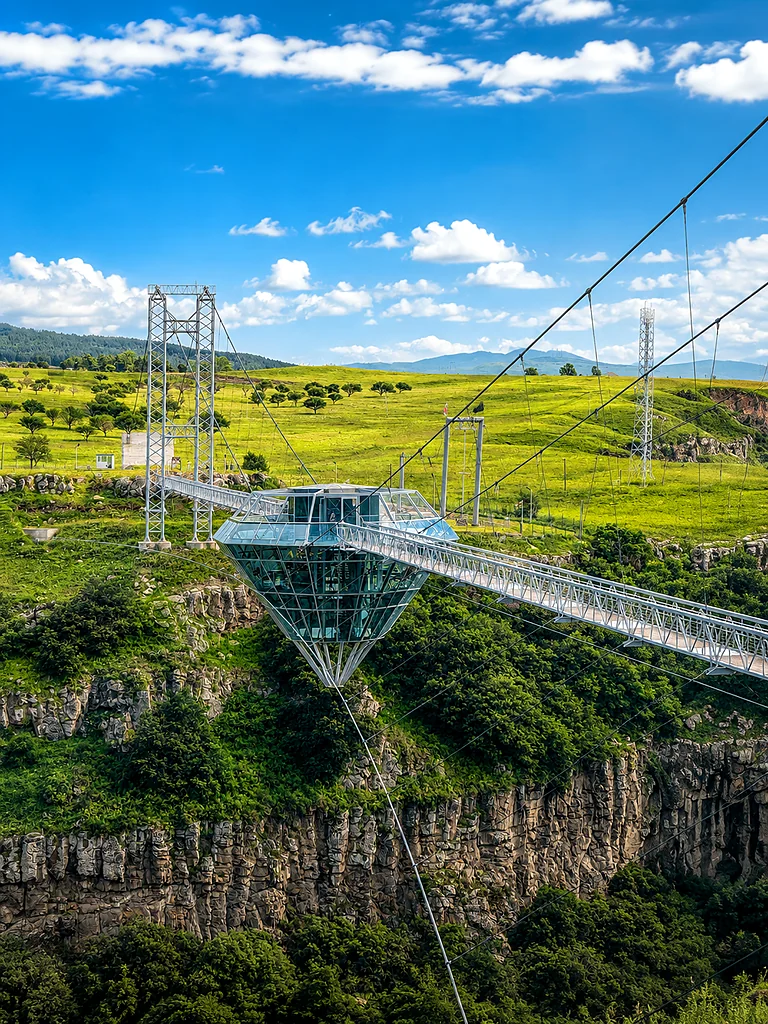
Near the town of Tsalka in the western uplands, the Dashbashi Canyon — now often called Tsalka Canyon — is the region's most visually striking natural site. The Khrami River has cut an 8-kilometer gorge through a volcanic plateau, its green slopes laced with cascading waterfalls, and the headline attraction is the glass "Diamond Bridge": a 240-meter walkway suspended high above the canyon, with a diamond-shaped glass café at its center, opened in 2021. An easy walking trail leads from the visitor center past the waterfalls and the canyon viewpoints. Worth knowing before you go: it's a developed, ticketed private attraction rather than wild nature, and it's busy in peak season — but the combination of the bridge, the gorge, and the falls makes a genuinely dramatic half-day, about two hours from Tbilisi.
Discover Bolnisi and its early Christian heritage
In the Mashavera valley, the town of Bolnisi is home to the Bolnisi Sioni Cathedral, a 5th-century basilica of green basalt and one of the oldest churches in Georgia. Its real significance is epigraphic: the inscriptions carved around its windows are among the oldest known examples of the Georgian alphabet, direct evidence of the early development of Georgian writing. The site is quiet and rarely crowded, which suits a monument of this age. Bolnisi itself adds an unexpected layer — visible German colonial architecture from its 19th-century history as the settlement of Katharinenfeld, sitting in an ethnically mixed agricultural valley. (Bolnisi has its own guide in this series.)
Experience the region's multicultural character
Kvemo Kartli is Georgia's most ethnically diverse region, and that's a large part of its character. Bordering both Armenia and Azerbaijan, it's home to long-established Azerbaijani communities in the southeast (the largest ethnic minority in Georgia) and Armenian communities in the southwest, alongside ethnic Georgians. The result is a landscape where Orthodox churches, mosques, and Armenian khachkars appear within short distances of each other, and where markets, food, and daily life reflect a genuine mixing of South Caucasian traditions. Travelling through it gives a sense of Georgia's diversity that the more homogeneous regions don't.
Travel through the open plateau landscapes
The scenery here is a deliberate contrast to mountainous Georgia. Kvemo Kartli's wide plains, rolling hills, and open agricultural land — much of it at modest elevation, some rising toward the Trialeti uplands — give the region a spacious, big-sky feel, and the quiet secondary roads make for relaxed driving between the sites. It's a different kind of Georgian landscape, and part of the appeal of exploring the region by car.
Seek out the lesser-known sites
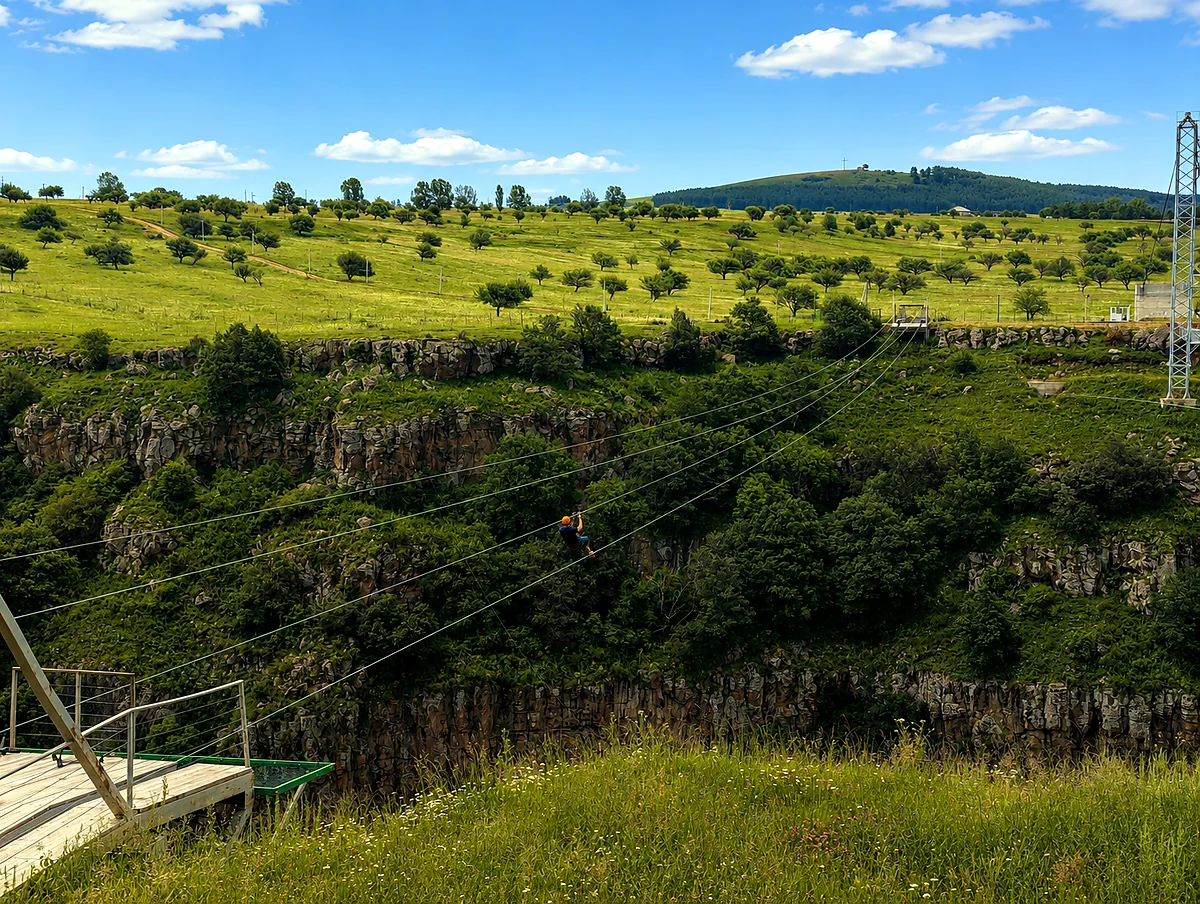
Beyond Dmanisi, Bolnisi, and the canyon, the region is dotted with smaller, rarely visited places: rural churches and monasteries, historic ruins and settlements, and further archaeological remains (the Bronze Age Trialeti culture, whose goldwork is now in the Georgian National Museum, flourished in these uplands). They don't appear on standard itineraries, but for travelers with a car or a local guide they offer a quieter, more personal sense of the region's layered history.
Make it a day trip from Tbilisi
Kvemo Kartli's biggest practical advantage is its closeness to the capital. Distances are short, access by car is easy, and a single day can combine history and nature — a common route pairs Bolnisi, Dmanisi, and Dashbashi Canyon, though the sites are dispersed enough that a car or an organized tour gives the most flexibility. Rustavi is under an hour by public bus, and Bolnisi about 1–1.5 hours by marshrutka, if you're relying on public transport for part of the trip.
Combine it with a wider southern itinerary
The region also slots into a broader trip. It connects naturally with the rest of southern Georgia and sits on the corridor toward Armenia — the main Sadakhlo / Bagratashen crossing to Yerevan is in Kvemo Kartli — so it works well as part of a cultural and historical route rather than only a standalone day out. (Note that the Azerbaijan land border is a different matter — see our border-crossing guides for current status.)
Enjoy a quieter, less-touristed Georgia
For all its significance, Kvemo Kartli sees relatively few international visitors, which is much of its appeal: fewer crowds, more direct interaction with local communities, and a relaxed pace. It's a region that adds real depth and variety to a Georgia trip — world-class archaeology, a striking canyon, early Christian heritage, and an authentic multicultural countryside — and it's at its best for travelers happy to go a little beyond the usual highlights.
Caucasus Travel FAQ
Visit the Dmanisi archaeological site (the oldest human-ancestor fossils outside Africa), cross the glass Diamond Bridge at Dashbashi (Tsalka) Canyon, and see the 5th-century Bolnisi Sioni Cathedral with its early Georgian inscriptions. Add the region's open plateau landscapes and its mix of Georgian, Azerbaijani, and Armenian communities, all within easy reach of Tbilisi.
Yes, especially for anyone interested in history and human origins. It's where 1.8-million-year-old hominin fossils were found — the oldest evidence of early humans outside Africa — and you can visit the actual excavation site, with a later medieval town on the same hill. It's about 90 km southwest of Tbilisi and has its own dedicated guide.
Walk the 240-meter glass Diamond Bridge suspended high above the gorge, with its diamond-shaped glass café, then take the easy trail past the canyon's cascading waterfalls and viewpoints. It's near Tsalka, about two hours from Tbilisi, and is a ticketed, developed site — striking, but busy in peak season.
Yes — it's ideal for it. The region is close to the capital with short distances between sites, and a day by car can combine Bolnisi, Dmanisi, and Dashbashi Canyon. Rustavi is under an hour by bus and Bolnisi about 1–1.5 hours by marshrutka; a car or organized tour is best for the more dispersed sites.
It's Georgia's most ethnically diverse region, bordering Armenia and Azerbaijan, with long-established Azerbaijani and Armenian communities alongside ethnic Georgians. Orthodox churches, mosques, and Armenian khachkars appear close together, and the markets, food, and daily life reflect a genuine blend of South Caucasian cultures.