
Ureki Beach: Georgia's Magnetic Black-Sand Coast
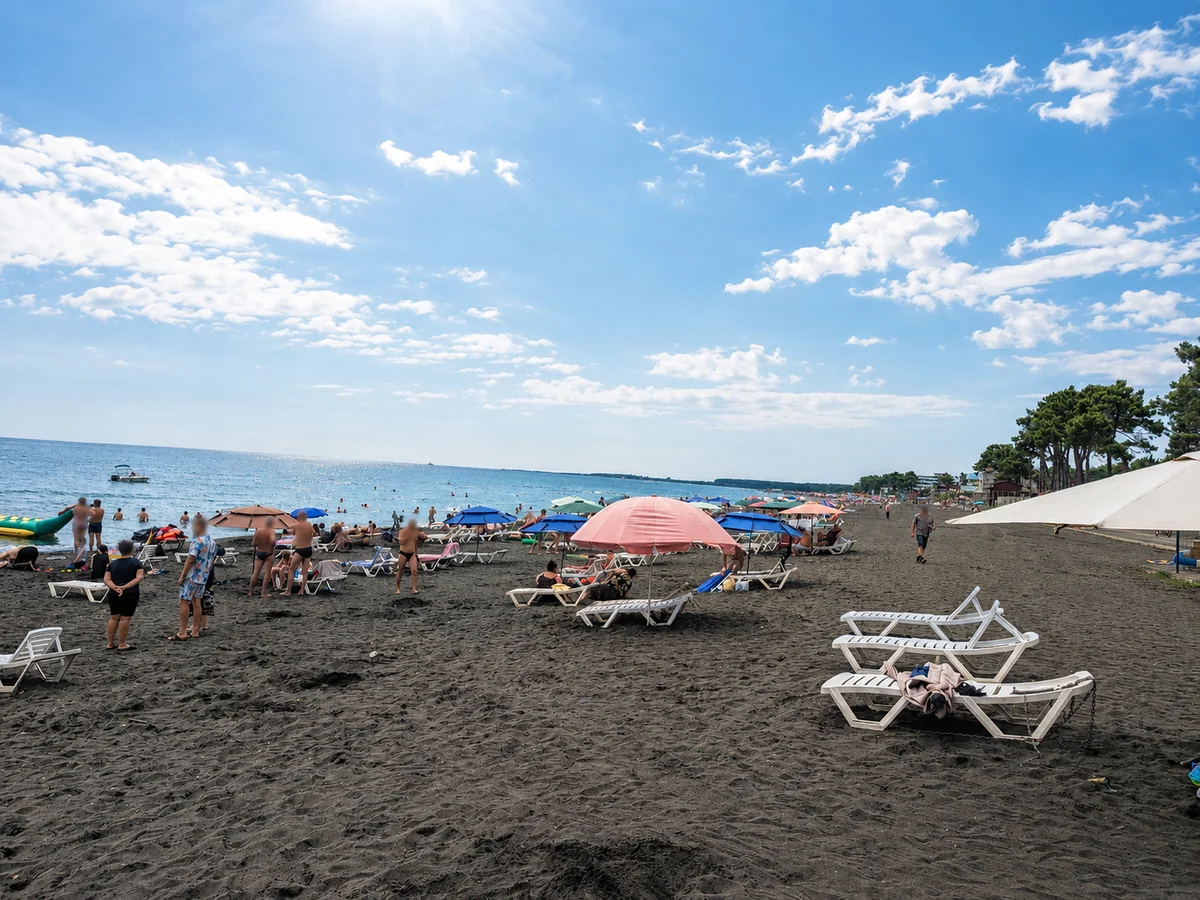
Ureki Beach occupies a stretch of the Black Sea coast in the Guria region of Georgia — the country in the South Caucasus — about 50 kilometers north of Batumi, and it's immediately distinguishable from any other beach on the Georgian coast by the color of its sand. The beach at Ureki is dark — almost black in some light — its sand composed largely of magnetite and other iron-bearing minerals eroded from the volcanic highlands of the Caucasus and carried to the coast by the rivers draining into this section of the sea. The magnetic properties are real and measurable: a magnet drawn across the surface picks up visible quantities of the dark mineral. Estimates of how much magnetite the sand actually contains vary widely between sources, but the iron-rich fraction is unusually high for a beach. That geological peculiarity, combined with the calm, shallow sea along this stretch, has given Ureki its particular identity as a wellness and family destination within Georgian coastal tourism — it's the country's best-known stretch of true sandy (rather than pebble) beach.
What is Ureki Beach?
Ureki Beach is a roughly 5-kilometer stretch of dark, fine, magnetite-rich "magnetic sand" on Georgia's Black Sea coast in the Guria region, about 50 km north of Batumi. Unlike the pebble beaches of Batumi and Kobuleti, it's true soft sand, and its shallow, calm water makes it one of the most family-friendly beaches in the country. Long a Soviet-era health resort, it's associated with traditional therapeutic claims about the magnetic sand (more folk tradition than proven medicine). It's quieter, more local, and cheaper than Batumi, with a pine forest behind the beach, and is easy to reach by train.
The magnetic sand
The sand at Ureki is soft underfoot — its fine-grained volcanic-mineral composition (magnetite, ilmenite, and other iron- and titanium-bearing minerals) producing a texture quite unlike the coarse pebble beaches that dominate much of the Georgian coast, including the well-known stretches at Batumi and Kobuleti. This softness is one of the beach's most immediately noticed advantages, particularly for families with young children, for whom pebble beaches are an obvious discomfort. A fun, genuinely real party trick: run a magnet through the sand and it comes up coated in dark grains. One practical note — the dark sand absorbs heat readily, so the surface can get considerably hotter than the air in direct summer sun; footwear for crossing the beach at midday is wise.
The beach has been associated with therapeutic traditions since the Soviet period, when Ureki was developed as a sanatorium resort for conditions — cardiovascular problems, musculoskeletal and joint disorders, disorders of the peripheral nervous system — for which the magnetic sand was believed beneficial (sand baths, lying in the warm sand). It's worth being clear-eyed about this: the medical case for specific therapeutic effects from the magnetic sand is not established clinical consensus — scientific evidence is limited, and the claims are best understood as a deeply embedded Georgian wellness tradition rather than proven medicine. That said, the tradition genuinely draws visitors who come for the perceived benefits, and the combination of warm summer sun, soft dark sand, calm sea, and pine-forest air is restorative for most people regardless of the specific mechanisms.
The beach and the sea
The sea at Ureki is generally calm and shallow for a good distance from shore, which makes it among the most child-friendly swimming environments on the Georgian coast — the flat, gently shelving bottom means shallow water extends far out, reassuring for families and non-swimmers. The Black Sea here warms to comfortable swimming temperature by June and holds it through September, and the reduced wave action compared with more exposed stretches makes the water pleasant throughout the summer without particular caution in normal conditions.
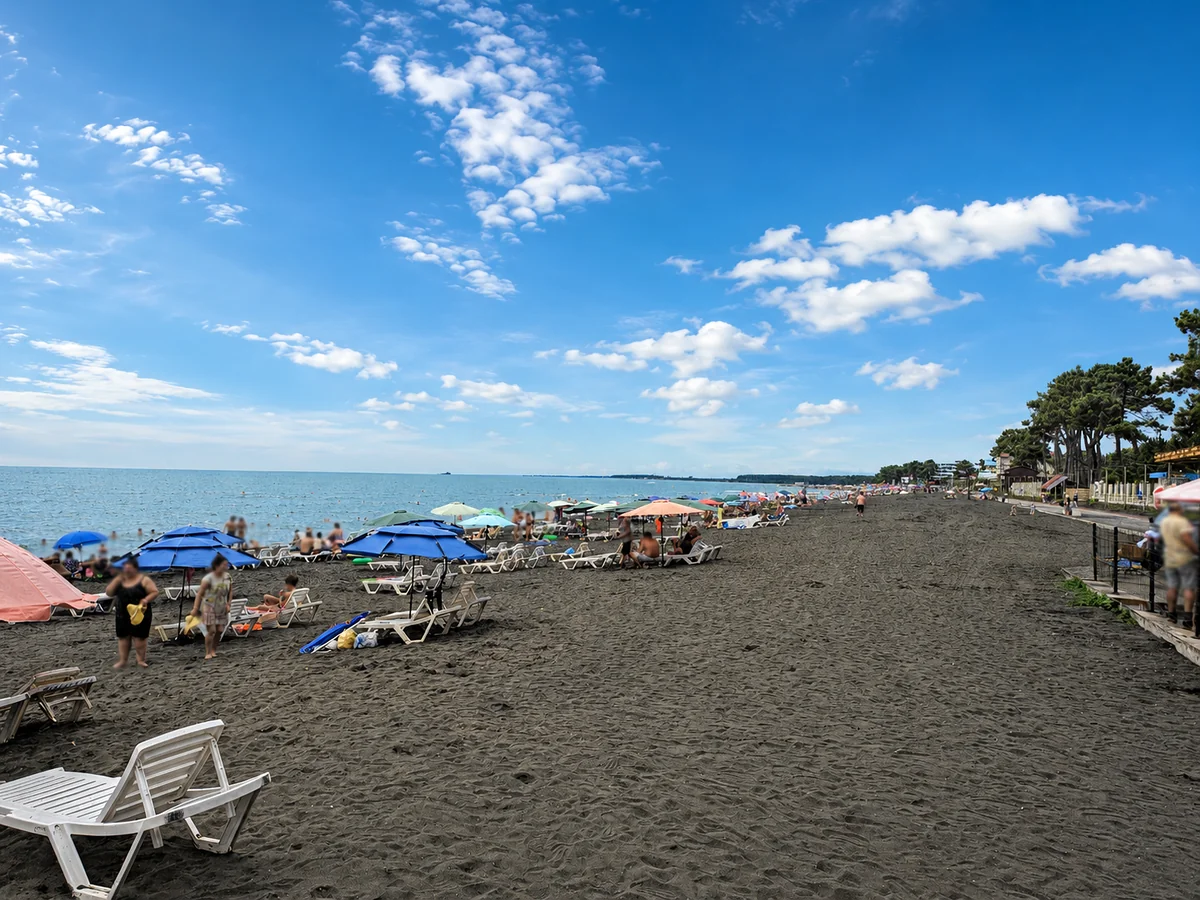
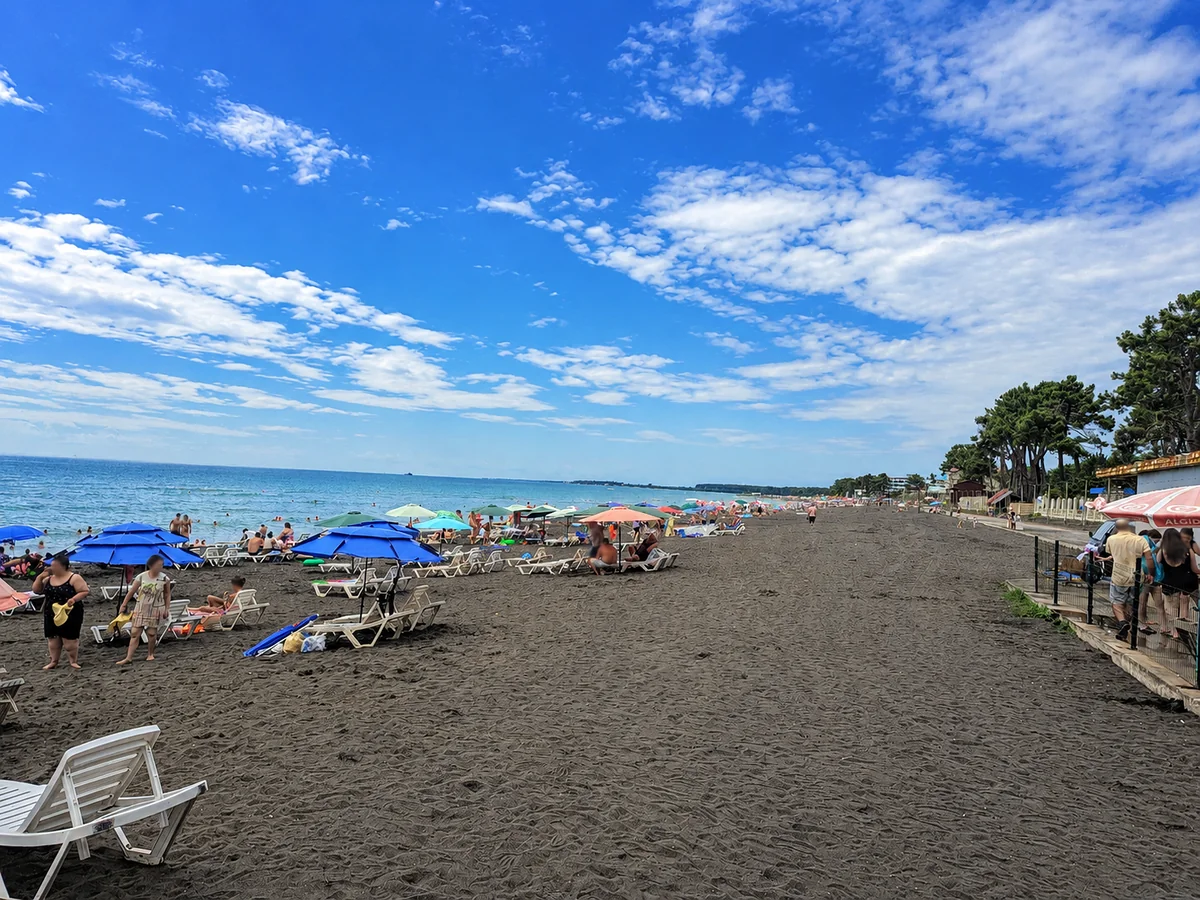
The beach runs for several kilometers in both directions from the main resort center, and the full length is walkable — a long beach walk with the pine forest behind the sand and the sea to the horizon is one of the more pleasant simple pleasures here. The pine trees lining the back of the beach provide shade within a short walk of the waterline, and the mix of beach, forest edge, and sea gives the environment a variety that open beaches lack.
The resort town
Ureki is a modest Black Sea resort town without the scale, architectural ambition, or international infrastructure of Batumi to the south. Accommodation ranges from basic guesthouses and small hotels to larger sanatorium-style facilities reflecting the town's therapeutic heritage, and the restaurants and cafés along the strip serve the standard range of Georgian coastal cooking — fresh fish, the full Georgian menu, seasonal produce — at prices generally lower than Batumi (family guesthouses are notably affordable). The atmosphere is local and family-oriented rather than cosmopolitan; in peak summer it's busy and a bit chaotic, with vendors selling inflatables and churchkhela along the front. Visitors expecting Batumi's energy and variety will find something much more relaxed and much less curated — which is exactly the right expectation, since Ureki's appeal is its simplicity and its specific beach quality rather than urban entertainment.
The pine forest behind the beach is a distinctive feature most resorts of this size lack. It provides shade for walking and for escaping the exposed beach in the hottest part of the day, and the mix of salt air and resinous pine gives Ureki an atmosphere of freshness that is a genuine pleasure beyond the beach itself.
Getting there
Ureki is about 50–55 kilometers north of Batumi on the main coastal road and railway; the drive from Batumi takes around an hour. The train is the standout option — Ureki has its own station on the Tbilisi–Batumi mainline, and the trip from Batumi is roughly 45 minutes, making it one of the easier Georgian coastal destinations to reach without a car (it works well as a day trip from Batumi, with several trains back). From Tbilisi the journey is around four to five hours by train. Marshrutkas on the coastal route between Batumi and Kutaisi also stop at Ureki. The Shekvetili attractions (the Dendrological Park, Musicians Park, and Tsitsinatela) are just to the south, easily combined with an Ureki stay.
Practical information
- Location: Ureki, Ozurgeti Municipality, Guria, on the Black Sea coast about 50–55 km north of Batumi.
- Getting there: ~1 hour by car from Batumi; ~45 minutes by train (Ureki has its own station on the Tbilisi–Batumi line); marshrutkas on the Batumi–Kutaisi coastal route also stop here.
- Beach: ~5 km of soft, dark magnetite "magnetic sand"; calm, shallow, family-friendly sea; pine forest behind.
- Hours/Admission: Beach freely accessible at all times; free. Sun-lounger rental, facilities, and accommodation charged separately. Main season June–September.
- Good to know: Sand gets hot underfoot at midday (bring footwear); busy in peak summer; quieter and pleasant in early September–October with the sea still warm.
Caucasus Travel FAQ
Ureki is famous for its dark, fine "magnetic sand" — sand unusually rich in magnetite and other iron minerals (run a magnet through it and dark grains stick to it). It's one of the few genuinely sandy beaches on Georgia's mostly pebbly Black Sea coast, with soft sand and calm, shallow water that make it especially family-friendly. It's about 50 km north of Batumi in the Guria region, and has a long history as a health resort.
The magnetism is real and measurable, but the medical claims are another matter. Since the Soviet era, Ureki has been a health resort where the warm magnetic sand was used to treat cardiovascular, joint, and nervous-system conditions, and many Georgians hold strong beliefs about its benefits. However, rigorous scientific evidence for specific therapeutic effects is limited — it's best understood as a long-standing wellness tradition rather than proven medicine. Many visitors find the experience restorative regardless.
Yes — it's one of the most family-friendly beaches in Georgia. The sand is soft (far more comfortable than the pebbles at Batumi or Kobuleti), and the sea is calm and shallow, with a flat bottom that keeps the water shallow a long way out — reassuring for young children and non-swimmers. The town is relaxed, local, and affordable, and there's pine-forest shade behind the beach. Note the dark sand gets hot at midday, so bring footwear.
It's about 50–55 km north of Batumi. The easiest way is the train — Ureki has its own station on the Tbilisi–Batumi line and the trip from Batumi takes around 45 minutes, so it works well even as a day trip. By car it's about an hour, and marshrutkas on the coastal route between Batumi and Kutaisi also stop at Ureki. From Tbilisi, the train takes roughly four to five hours.
The main season is June through September, when the sea is warm (it's said to be among the warmest on the Black Sea) and the town is fully active — though July and August are busy and can feel crowded. Early September into October is a rewarding quieter window, with the sea still warm and pleasant temperatures. The beach itself is free and open year-round, but the resort facilities operate mainly in summer.