
Things to Do in Guria: Tea Farms, Gomi Mountain, and the Coast
Guria, in western Georgia — the country in the South Caucasus — packs tea culture, green landscapes, a quiet stretch of Black Sea coast, and a remarkable mountain viewpoint into one of the country's smallest regions. Travel here feels slower and more local than in the better-known destinations: less structured, less crowded, and built more around daily life and nature than around tourist infrastructure. Tea is the thread running through it all. Here are the main things to do.
What are the best things to do in Guria?
The highlights are visiting a family tea farm and tasting Georgian specialty tea; catching the "sea of clouds" from the Gomi ridge at dawn; relaxing on the magnetic black-sand beach at Ureki; and travelling slowly through the green tea-growing hills and traditional villages. Guria's appeal is its combination of mountains, coast, and tea in a small area, with very few other tourists around.
Visit a tea farm and taste Georgian tea
The single best reason to come to Guria is its tea. This is the birthplace of Georgian tea cultivation, and the region is now at the heart of a specialty-tea revival built on small family farms rather than the old Soviet industrial plantations. A visit usually means walking the plantation — the low, dense bushes covering the hillside — seeing or joining the hand-picking, and following the leaf through withering, rolling, oxidation, and drying before tasting the finished tea with the people who made it. It's informal and personal, often combined with homemade local food, and closer in spirit to a Kakheti family-cellar wine visit than to a commercial tour. The harvest runs May through October, with the spring first flush rated the finest of the year.
Because these are working family farms rather than set-up visitor centers, a tea visit is best arranged in advance rather than dropped in on.
See the "sea of clouds" from Gomi Mountain
In eastern Guria, the Gomi ridge rises to close to 2,000 meters and is known for a striking weather phenomenon: cloud fills the valleys below while the ridge stays clear above, so the forested hills and the distant coast vanish under a white surface and the ridge seems to float above it. It's most likely around sunrise and sunset, when the temperature difference between warm valley air and the cooler ridge forms the fog layer. Simple guesthouses and wooden cottages operate up there in the warmer months, which is what lets you be on the ridge at dawn when the effect is most likely, and the surrounding subalpine meadows and forest are good for walking, with long views toward the Greater Caucasus and the Adjarian highlands on clear days.
Worth setting expectations honestly: the cloud sea is a weather event, not a guarantee — it appears under the right conditions and not on demand, so an overnight stay improves your chances far more than a quick day trip.
Relax on the black sands of Ureki
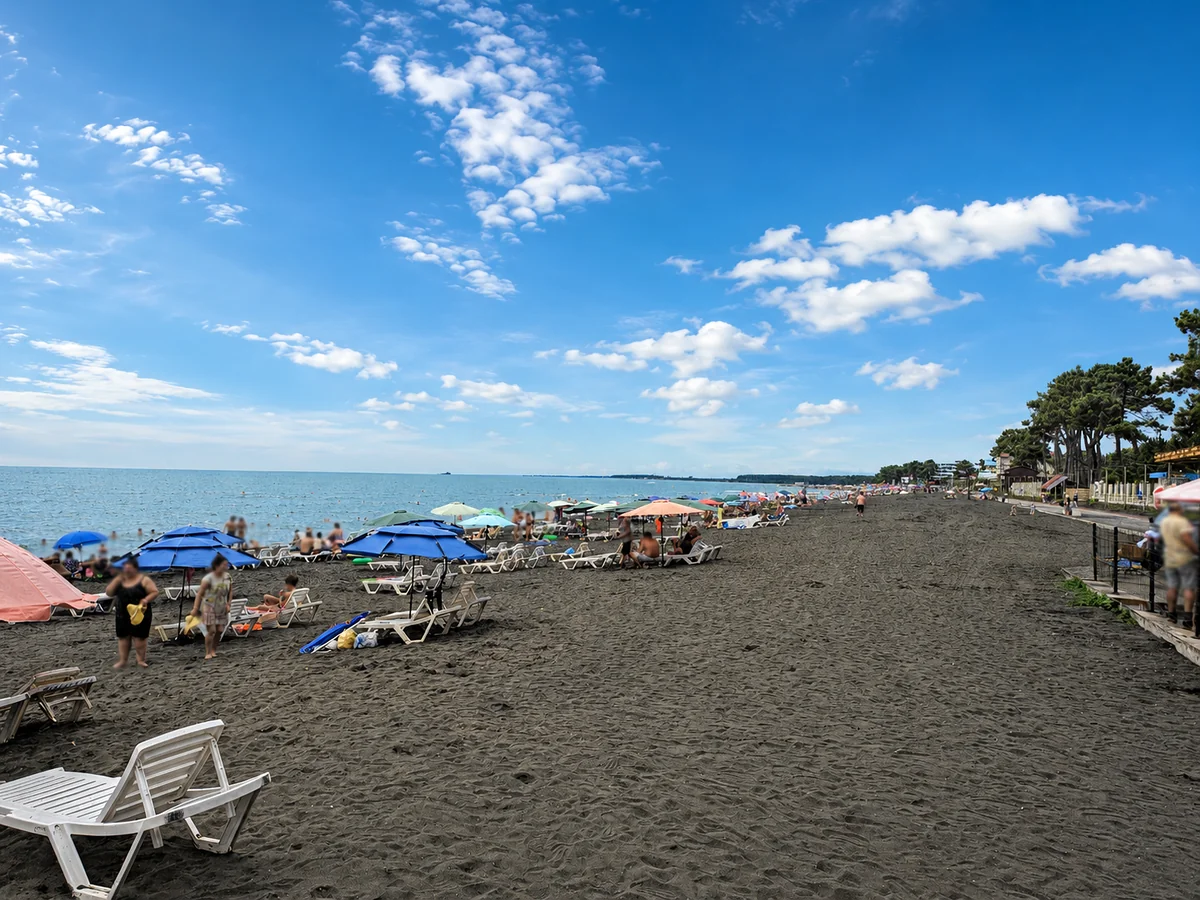
On Guria's coast, the resort town of Ureki is known across Georgia for its dark, iron-rich beaches, whose volcanic sand has measurable magnetic properties. It's a calm, family-friendly seaside spot — sheltered water, gentle waves, modest but improving infrastructure, and a lively, unpretentious summer atmosphere, drawing mostly Georgian visitors and a growing number from neighboring countries. A health-tourism tradition dating to the Soviet sanatorium era attributes various benefits to the sand; the magnetism is real in a mineralogical sense, but those medical claims aren't established, so it's best enjoyed as a distinctive beach rather than a treatment. The combination of black sand, Black Sea water, and the green Gurian hills inland gives it a look unlike the lighter beaches elsewhere on the coast.
Travel slowly through the green hills and villages
Much of Guria's appeal is simply moving through it. The countryside is among the greenest and rainiest in Georgia — rolling hills under tea plantations, dense forest, full rivers, and quiet rural roads with very little traffic. The villages between Ozurgeti, Lanchkhuti, and the coast keep the traditional domestic architecture of western Georgia: wooden houses on stone foundations with carved decorative detail, set among gardens of fruit trees and tea bushes, with old village churches scattered through them. Walking these settlements and seeing the rhythm of agricultural life — tea cultivation above all — is a low-key pleasure that suits the region's slow pace.
Experience Gurian hospitality
Hospitality is a genuine highlight here, and it carries a local flavor. Meals are homemade from local ingredients, the tea is served straight from nearby production, and the welcome is personal — you're often a guest in a family's home rather than a customer. Gurians also have a long-standing reputation in Georgian cultural lore for sharp wit and quick verbal humor, a contrast to the more formal hospitality traditions of eastern Georgia. It's hard to verify on a short visit, but it's consistently reported by Georgians who know the region, and it gives encounters here a particular character.
Combine mountains and coast in one short trip
One of Guria's real advantages is how much variety sits within a small area. In a short itinerary you can move from tea plantations in the hills, to a mountain viewpoint like Gomi, to the Black Sea at Ureki, without long drives between them. How you do it depends on your time:
A short visit can pair a tea farm with a coastal stop at Ureki. With one to two days, you can combine tea, Gomi Mountain, and a couple of villages, ideally staying overnight near Gomi for the dawn cloud sea. With longer, the point is to slow down — more tea farms, more walking, more time on the coast, at the unhurried pace the region rewards.
Why visit Guria
Guria offers a more local, less-touristed perspective on Georgia. It's one of the country's key tea regions, with green and lush landscapes, a genuinely unusual mountain viewpoint at Gomi, Black Sea coastal access at Ureki, and a slower, more authentic feel than the main tourist routes. It suits travelers who want to step off the standard circuit and experience western Georgia at a gentler tempo — and it pairs naturally with neighboring Adjara to the south and Imereti to the east.
Caucasus Travel FAQ
Visit a family-run tea farm and taste Georgian specialty tea, watch the "sea of clouds" from the Gomi ridge at sunrise or sunset, relax on the magnetic black-sand beach at Ureki, and travel slowly through the green tea hills and traditional villages. The draw is combining tea, mountains, and coast in a small, uncrowded region.
Yes — it's the signature experience. Small family producers welcome visitors to walk the plantation, see the hand-picking and processing, and taste the tea, often with homemade local food. It's informal and personal rather than commercial, so arrange visits in advance. The harvest season is May to October.
For the cloud-sea view, yes — it's one of western Georgia's most memorable viewpoints, with cloud filling the valleys below the roughly 2,000-meter ridge. It depends on the right weather, though, so it isn't guaranteed; staying overnight in a ridge guesthouse and being there at dawn gives the best chance.
Yes. Ureki is a calm, family-friendly Black Sea resort with sheltered, shallow water and distinctive dark, magnetic sand. It's relaxed and unpretentious in summer. The traditional health claims around the sand aren't medically established, so enjoy it as a pleasant, unusual beach rather than a treatment.