
Things to Do in Ambrolauri, Georgia: Wine, Nikortsminda, and Racha
Ambrolauri is the main gateway to Racha, one of the least explored regions of Georgia — the country in the South Caucasus. The appeal here isn't a list of big attractions; it's the landscape, the wine, and a slower way of traveling. Most of what you'll do involves short drives into the surrounding region, where small villages and mountain scenery set the pace. If you want headline sights, this isn't the place. If you want a quieter, rural side of Georgia, it is.
What is there to do in Ambrolauri?
The main things to do in and around Ambrolauri are tasting Khvanchkara wine at small family wineries in the nearby villages, visiting the 11th-century Nikortsminda Cathedral with its detailed stone carving, walking around the forested Shaori Lake, and driving through the Racha villages. Add a riverside walk along the Rioni and local food, and you have a full but unhurried two days. This is a base for slow exploration rather than a checklist destination.
Taste wine in the Khvanchkara area
Tasting Khvanchkara wine is the main reason most travelers come to Ambrolauri. The vineyards sit in villages near town, where small producers still make wine by traditional methods. Compared with Kakheti, the experience is more personal and less commercial: tastings usually happen at family-run wineries, where you can see small-scale production, try local varieties, and talk directly with the people who made the wine.
That intimacy is the appeal, but it comes with a practical catch — these aren't walk-in tasting rooms, so visits generally need to be arranged ahead. Ask about the lesser-known Racha wines too, not only the famous semi-sweet red.
Visit Nikortsminda Cathedral
Nikortsminda Cathedral is one of the most significant historical and architectural landmarks in Racha. Built in the 11th century, it's known for the detailed stone relief carvings across its exterior and the frescoes preserved inside, and it sits in a quiet rural setting about 12 kilometers east of Ambrolauri. Compared with the larger religious sites elsewhere in Georgia, Nikortsminda is isolated and uncrowded, which makes for a more focused visit. It's still an active church.
Walk around Shaori Lake
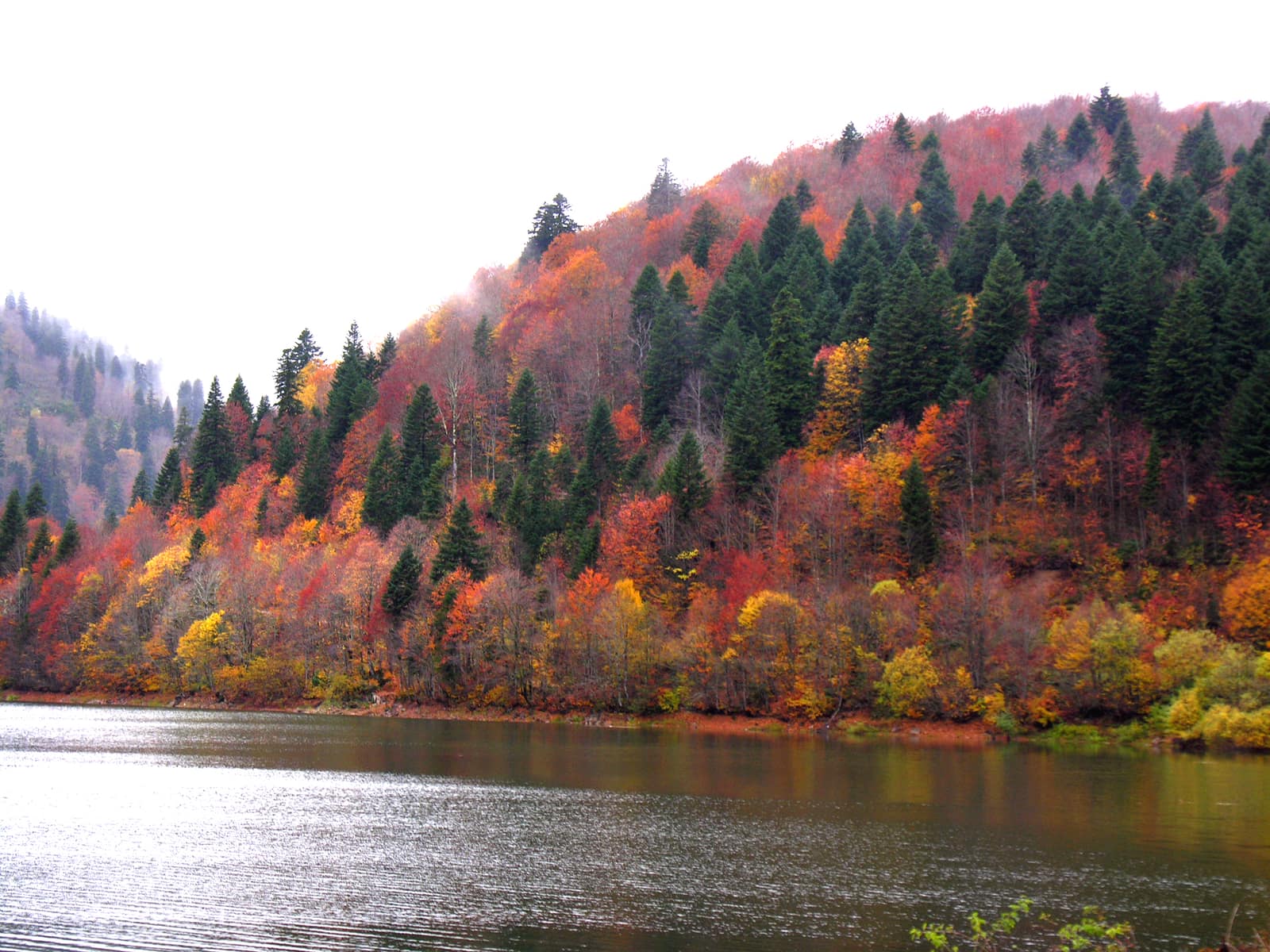
Shaori Lake is one of the more scenic spots in Racha, roughly 20–30 minutes from Ambrolauri. Ringed by forest and mountains, it's a calm, open landscape that suits a shore walk, time in nature, or a short stop on a regional drive. Autumn is the standout, when the surrounding forests change color. One note: this is a Soviet-era reservoir rather than a natural lake, though the setting hides that well.
Drive through the Racha villages
The villages around Ambrolauri are a real part of the experience. Driving through Racha, you pass small settlements, vineyards, and traditional houses. There's no single "must-see" village — the point is the area as a whole and the sense of how people live in this corner of Georgia. Roads to the more remote villages and upper valleys vary in condition and are best with a vehicle that has reasonable ground clearance.
Walk along the Rioni River
The Rioni River runs through Ambrolauri and shapes the landscape around it. A walk along the river is a simple, pleasant way to spend part of an afternoon, with views of the surrounding hills and access to quieter parts of town. It's a low-key activity rather than a sight, which fits the place.
Try the local food
Food in Racha reflects the region's rural character: meals built on local ingredients and traditional recipes, with the emphasis on simplicity rather than presentation. Paired with the local wine, a meal becomes one of the better parts of a stay here. If you've been eating in Tbilisi or Kakheti, expect something plainer and more home-style.
Slow down and take in the atmosphere
Ambrolauri is, frankly, a place to do less. There are no large attractions or busy areas, and that's the appeal — time in nature, watching daily life go by, and a quieter environment than almost anywhere on the main Georgia routes. Whether that's a feature or a drawback depends on what you came for; it's worth being clear with yourself before the four-to-five-hour drive from Tbilisi.
Best time to visit Ambrolauri
The best time to visit Ambrolauri is May through October. Summer brings green landscapes and comfortable mountain weather, while September and October coincide with the grape harvest and are ideal if wine is your priority. October is also when the forests are at their most colorful. Winters are cold and snowy, and the access road can be difficult from December through March.
Why Ambrolauri is worth visiting
Ambrolauri offers a different kind of trip: authentic, small-scale wine culture; quiet, uncrowded landscapes; access to the wider Racha region; and a slower pace of exploration. It suits travelers looking for something beyond the main tourist routes — and who don't mind that the reward is atmosphere rather than landmarks.
Caucasus Travel FAQ
Taste Khvanchkara wine at small family wineries in nearby villages, visit the 11th-century Nikortsminda Cathedral, walk around the forested Shaori Lake, drive through the Racha villages, and walk along the Rioni River. It's a base for slow, rural travel rather than a checklist of big sights.
At small family-run wineries in the villages around Ambrolauri, where producers still use traditional methods. The experience is more personal than Kakheti's larger wineries, but tastings usually need to be arranged ahead rather than dropped in on.
Yes. The 11th-century cathedral, about 12 km east of Ambrolauri, is known for its detailed stone carvings and preserved frescoes, and its quiet rural setting makes it far less crowded than larger sites elsewhere in Georgia.
About 20–30 minutes by road. It's a Soviet-era reservoir in a forested mountain setting, good for a shore walk or a short stop, and especially scenic in autumn.
May through October. September and October are best for the grape harvest and wine, and October for autumn color. Winters are cold and snowy, with a difficult access road from December through March.