
Things to Do in Akhaltsikhe, Georgia: Rabati, Vardzia, and Nearby Sites
Akhaltsikhe is a small city in the Samtskhe-Javakheti region of southern Georgia — the country in the South Caucasus — and most people come for its position rather than its size. It's the main base for some of the most significant historical sites in the country, with Rabati Castle in the city itself and Vardzia, Khertvisi, Sapara, and Borjomi all within a short drive. The city is calm and quickly walked; the surrounding region is the reason to stay.
What is there to do in Akhaltsikhe?
The main things to do in and around Akhaltsikhe are visiting Rabati Castle in the city, taking the day trip to the Vardzia cave monastery (about an hour and a half away, with Khertvisi Fortress on the route), visiting the quiet Sapara Monastery in the hills, and combining the area with the mineral-water town of Borjomi. Akhaltsikhe works best as a hub: you can see the castle in a morning and use the rest of your time for the sites nearby.
Visit Rabati Castle
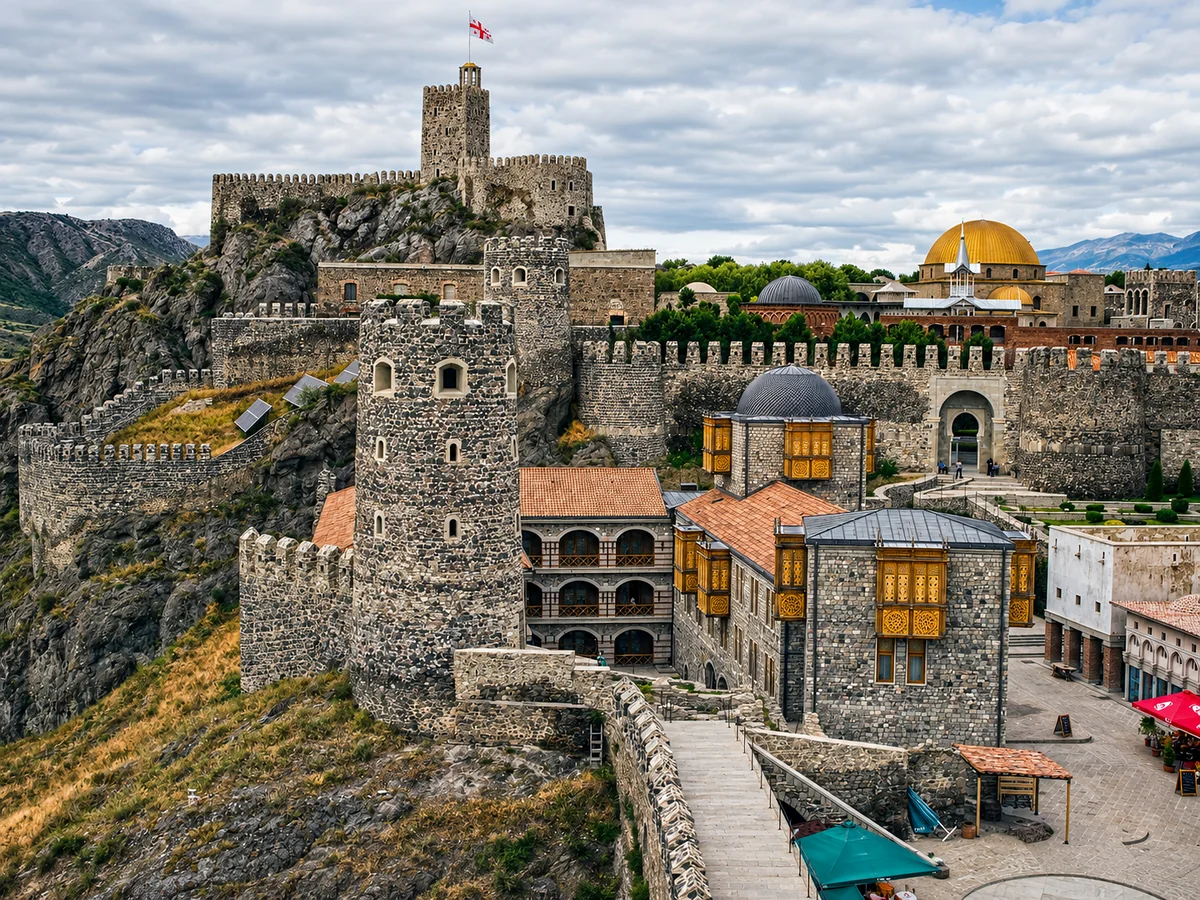
Rabati Castle is the main landmark in Akhaltsikhe and one of the more distinctive fortified complexes in Georgia. The fortress dates back to the 9th century and passed through Georgian, Ottoman, and Russian periods, and that layered history is visible across the complex. Inside the walls you'll find a mosque, a church, defensive walls and towers, and a series of courtyards and terraces.
One thing to know before you go: Rabati was heavily restored in a project completed in 2012, which makes it well organized and easy to walk but also means large parts are effectively rebuilt rather than original. If you're after raw, untouched ruins, this isn't that — but as a clear, complete overview of the region's history, it works well. It's worth seeing both by day and after dark, when the complex is lit and the minaret and church tower are visible across the city.
Explore the Vardzia cave monastery
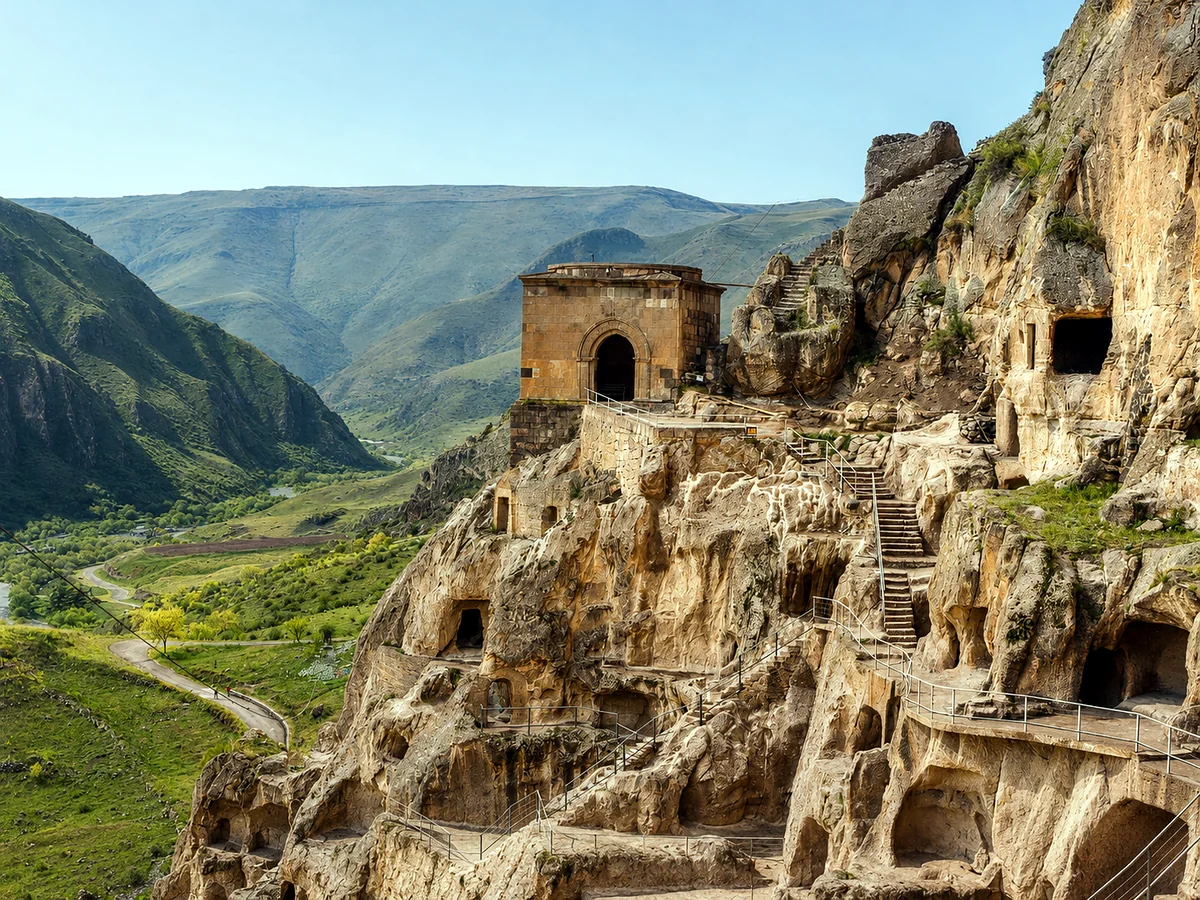
Vardzia is the single biggest reason many travelers base themselves in Akhaltsikhe. The cave monastery sits about an hour and a half from the city and is carved directly into a cliff face above the Mtkvari River gorge. It was built in the 12th century under Queen Tamar and served as a religious, residential, and defensive site at once.
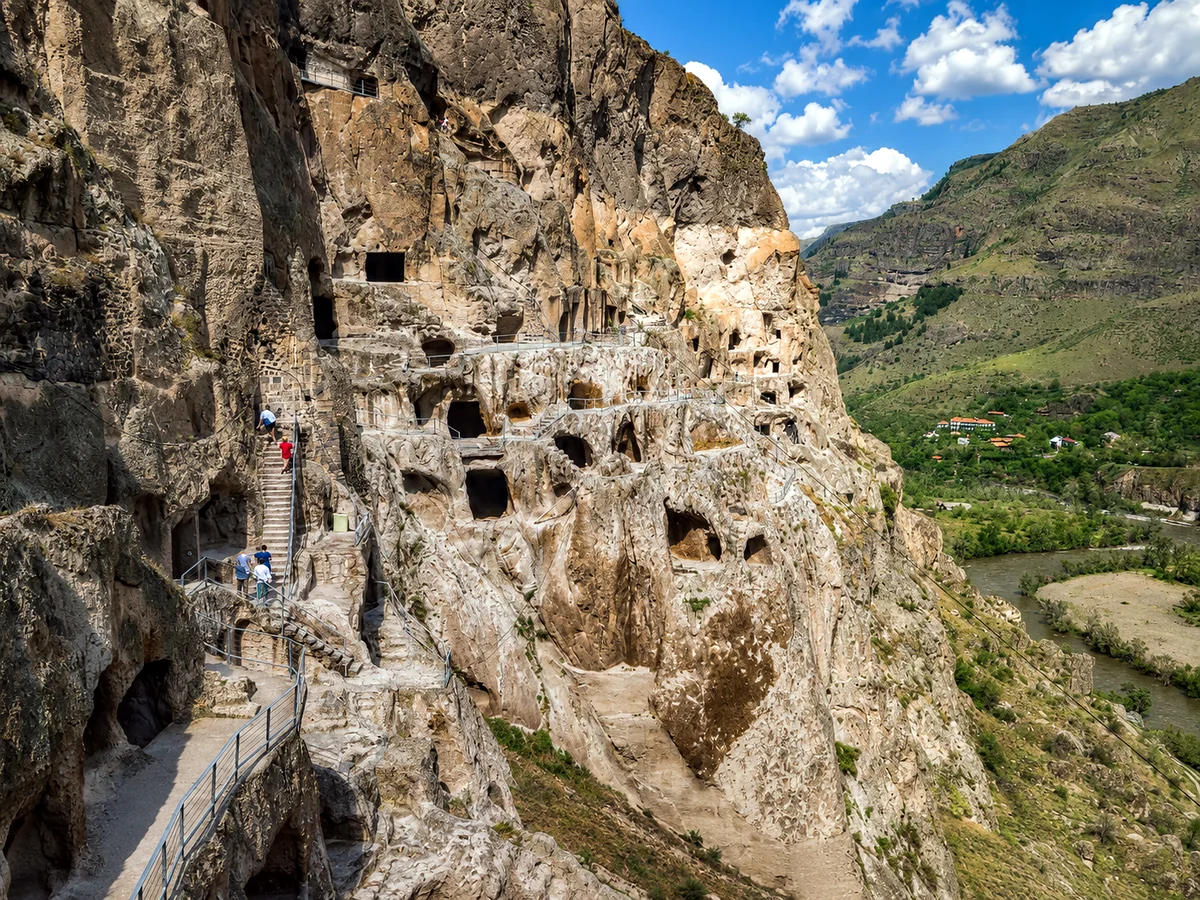
Walking through Vardzia, you move along tunnels and stairways, past living quarters cut into the rock, into churches that still hold preserved 12th-century frescoes, and out onto terraces above the valley. The scale is what makes it remarkable — it isn't a single monument but an entire carved city. Plan at least a half day including travel, and wear shoes with grip, since the visit involves steps and narrow rock passages.
Stop at Khertvisi Fortress on the way
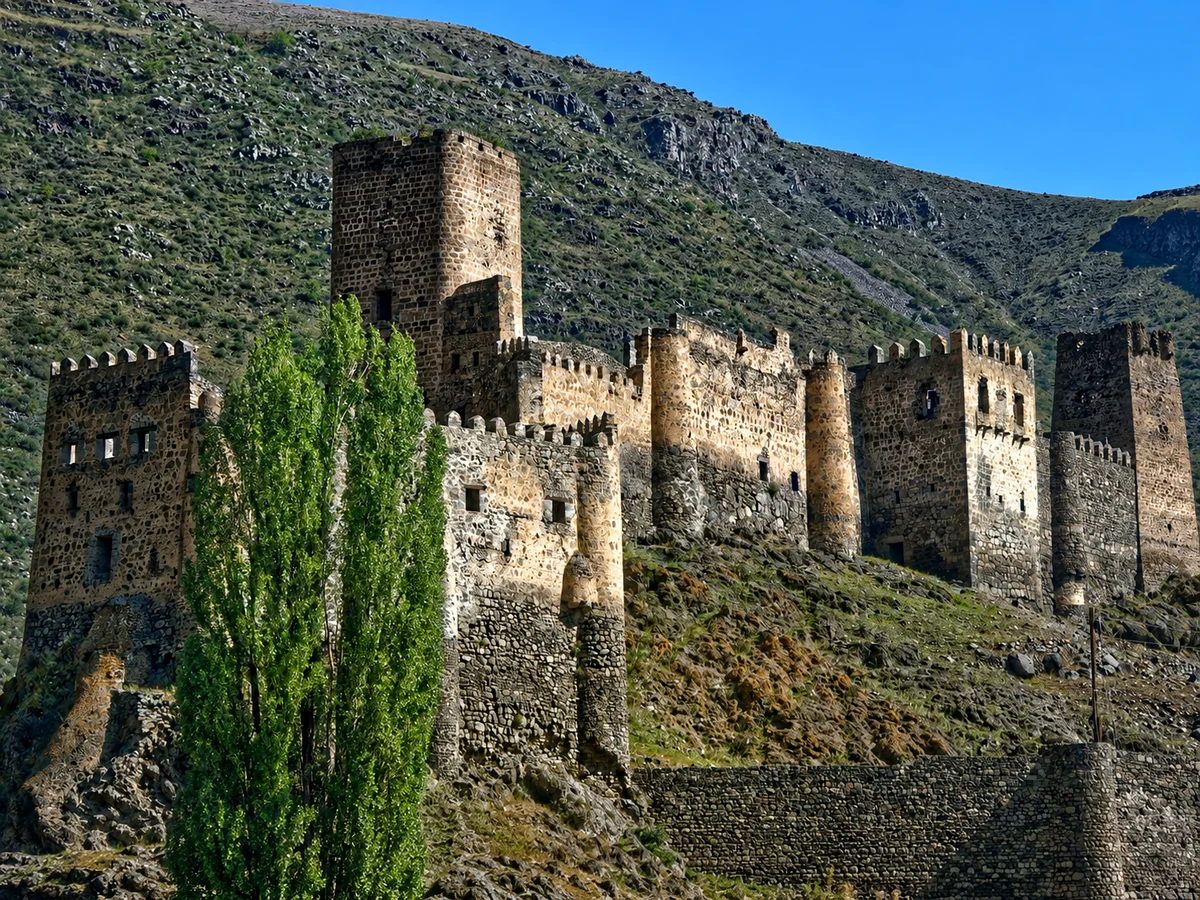
Khertvisi Fortress sits on the road to Vardzia, at the meeting point of two rivers, and is one of the oldest fortifications in Georgia. Its strategic position above the river junction makes it worth a short stop even if you only have a few minutes. Unlike Rabati, Khertvisi has been left largely unrestored, so it has a more authentic, weathered feel — a useful contrast to see on the same day.
Visit Sapara Monastery
Sapara Monastery, in the forested hills near Akhaltsikhe, is a different experience from Rabati. It's quiet, far less visited, and surrounded by woodland. The monastery dates to the medieval period and is known for its well-preserved frescoes. The setting is remote and peaceful, which makes it one of the more atmospheric sites in the region — and a good antidote if the restored, busier feel of Rabati left you wanting something older and stiller. The access road is narrow and winding.
Walk through Akhaltsikhe city
The city itself is small, but it's worth an hour or two on foot. You'll pass local streets and residential lanes, small shops and cafés, and a mix of architectural influences left by the area's different historical periods. It's a low-key walk rather than a sightseeing circuit, and it gives a sense of everyday southern Georgia between the bigger sites.
Combine Akhaltsikhe with Borjomi
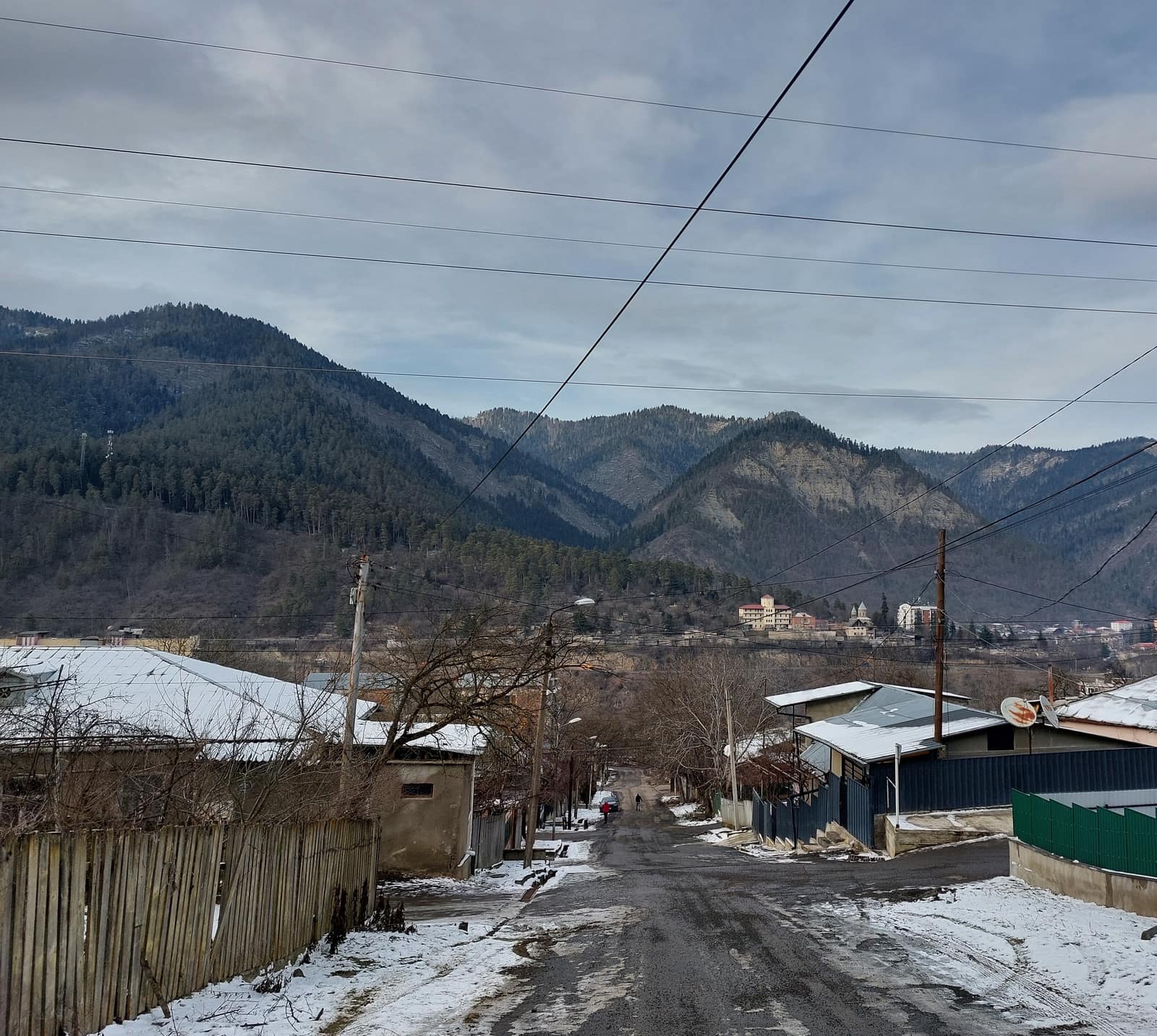
Akhaltsikhe pairs naturally with Borjomi, about an hour away. Borjomi is known for its mineral water springs, its forested setting, and access to national parks, so it balances the history-heavy sites around Akhaltsikhe with nature and a slower pace. One honest note: the mineral water at the source is warm and strongly mineral, and not everyone enjoys drinking it straight.
Experience local food
Samtskhe-Javakheti has its own culinary traditions, shaped by both Georgian and Armenian cooking. Meals here tend to be simple, local, and built on regional ingredients, and dining feels more traditional and less adapted for visitors than in the busier tourist areas. If you've been eating in Tbilisi, the difference is noticeable.
Why Akhaltsikhe is worth visiting
Akhaltsikhe is less about the city and more about what surrounds it: direct access to Vardzia, one of Georgia's highlights; a genuine mix of cultures and history; sites that are far less crowded than the main routes; and a strong regional identity. For anyone building a route through southern Georgia, it's the link that connects this part of the country to the classic itineraries and adds depth beyond them.
Caucasus Travel FAQ
Visit Rabati Castle in the city, take the day trip to the Vardzia cave monastery (about 1.5 hours away, with Khertvisi Fortress on the route), see the quiet Sapara Monastery in the hills, and combine the area with Borjomi for nature and mineral springs.
Yes. It gives a clear, walkable overview of the region's Georgian, Ottoman, and Russian history. Note that a 2012 restoration rebuilt large parts, so it's well organized rather than a raw ruin. It looks especially good lit up at night.
About an hour and a half by road, passing Khertvisi Fortress on the way. Allow at least a half day for the visit including travel, and wear shoes with grip for the rock-cut steps and passages.
Sapara is quiet, remote, and surrounded by forest, with well-preserved medieval frescoes — the opposite of Rabati's restored, more visited feel. It's one of the most atmospheric sites in the region.
Yes. Borjomi is about an hour away and adds mineral springs, forest, and national park access, which balances the history-focused sites around Akhaltsikhe.