
Things to Do in Mtskheta, Georgia: Cathedrals, Monasteries, and Ancient History
Mtskheta is one of the oldest cities in Georgia — the country in the South Caucasus — and holds a central place in the country's history and identity. Just 20 minutes from Tbilisi, it's often visited as a day trip, but its historical importance goes far beyond its size. As the former capital of the Kingdom of Iberia, Mtskheta played a key role in the early development of Georgian statehood and Christianity, and today its monuments are a UNESCO World Heritage Site, making it one of the most important cultural destinations in the country. The town is compact and easy to explore, with its main landmarks close together, each offering a different perspective on Georgia's past.
What is there to do in Mtskheta?
The main things to do in and around Mtskheta are visiting the UNESCO-listed Svetitskhoveli Cathedral and the clifftop Jvari Monastery, the Samtavro Monastery associated with St. Nino, and the ancient Armaztsikhe-Bagineti citadel. Nearby, the secluded Shio-Mgvime and forested Zedazeni monasteries and the ruined Bebristsikhe fortress reward those who want to go beyond the standard route. It's an easy day trip from Tbilisi, best for travelers interested in early Christian history and architecture, and a natural first stop on the Georgian Military Highway.
Visit Svetitskhoveli Cathedral
The Svetitskhoveli Cathedral is the main landmark of Mtskheta and one of the most important religious buildings in Georgia. The current structure was built in the 11th century and, by tradition, stands on the site where Christ's robe was buried, which makes it a place of deep spiritual significance; for centuries it has been one of the main religious centers of the Georgian Orthodox Church. It's part of the UNESCO World Heritage listing, reflecting both its historical importance and architectural value, and inside you'll find frescoes and a spacious, calm, balanced interior. Even without a strong religious interest, the cathedral gives real insight into the role of Christianity in shaping Georgian culture. As an active cathedral, modest dress is expected, and women are generally asked to cover their heads.
Visit Jvari Monastery
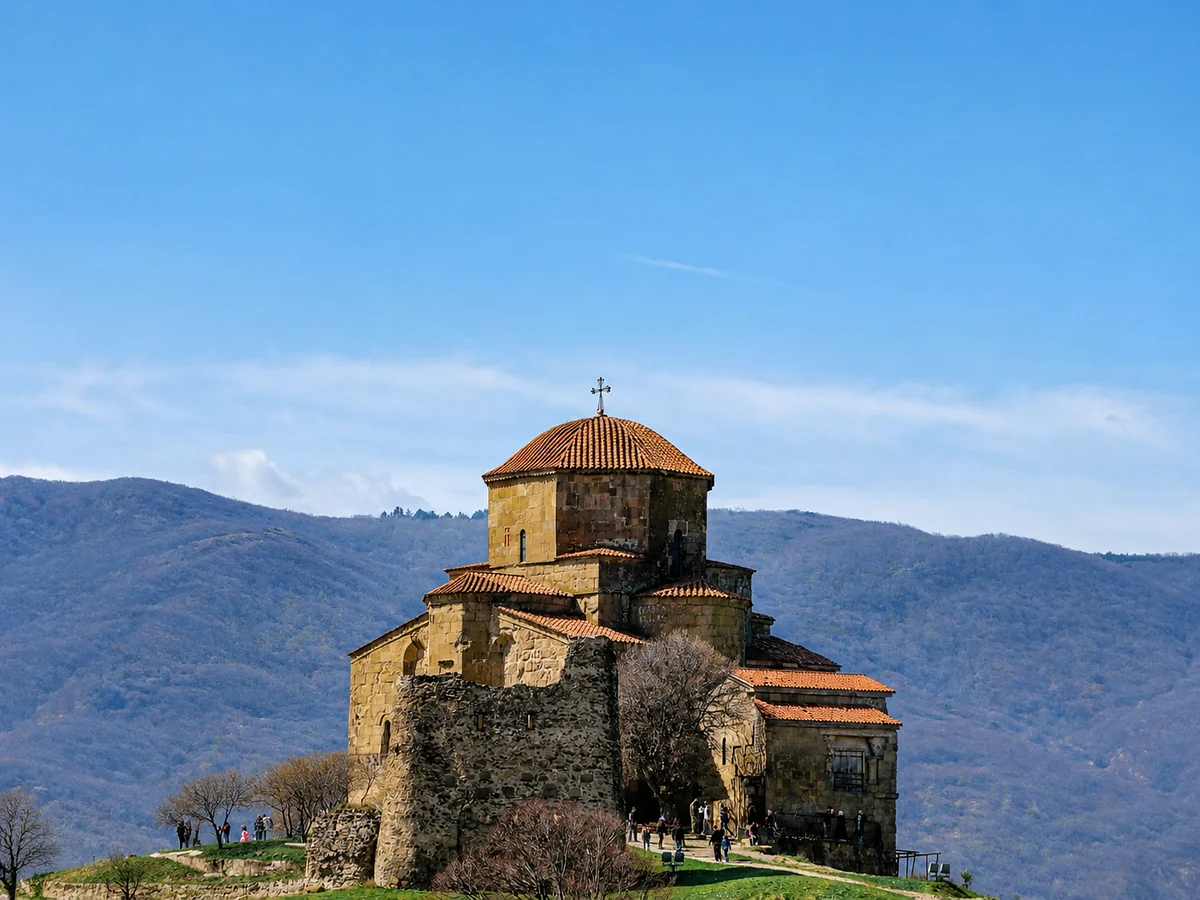
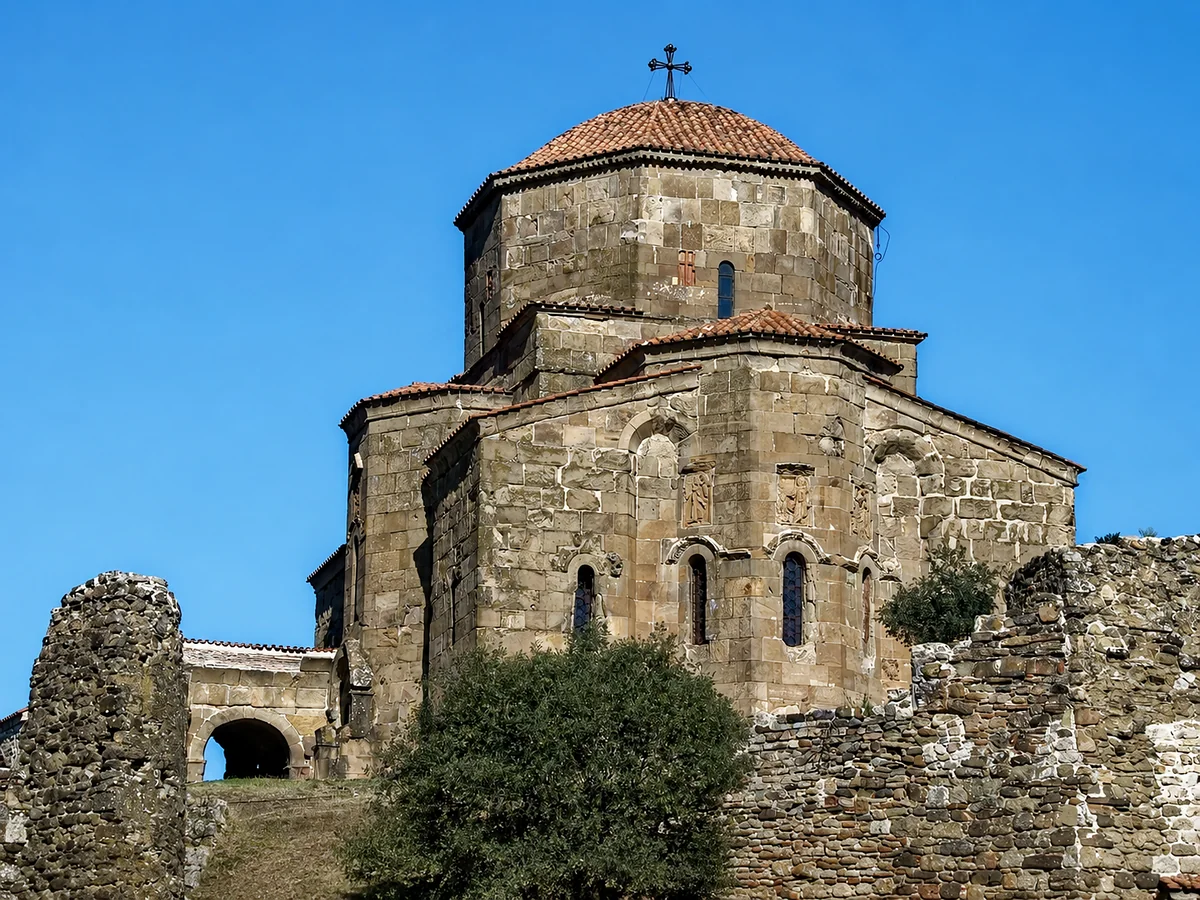
The Jvari Monastery sits on a hill above Mtskheta and offers one of the most iconic views in Georgia. From here you look out over the confluence of the Mtkvari and Aragvi rivers, a view described in literature and symbolic of the country. The monastery itself dates to about the 6th century and is one of the finest examples of early Georgian Christian architecture — simple in design, but given a strong presence by its location. The combination of landscape and history makes Jvari one of the most memorable stops near Tbilisi. It's reached by taxi or a roughly 30-minute uphill walk from the town, and as an active monastery, modest dress is expected.
Walk through Mtskheta old town
Mtskheta's old town is compact and easy to explore on foot. The streets around Svetitskhoveli Cathedral are full of small shops, local cafés, and traditional products. It's more touristic than some other towns, but still keeps a calm, approachable atmosphere, and walking here lets you slow down and experience the town at your own pace.
Visit Samtavro Monastery
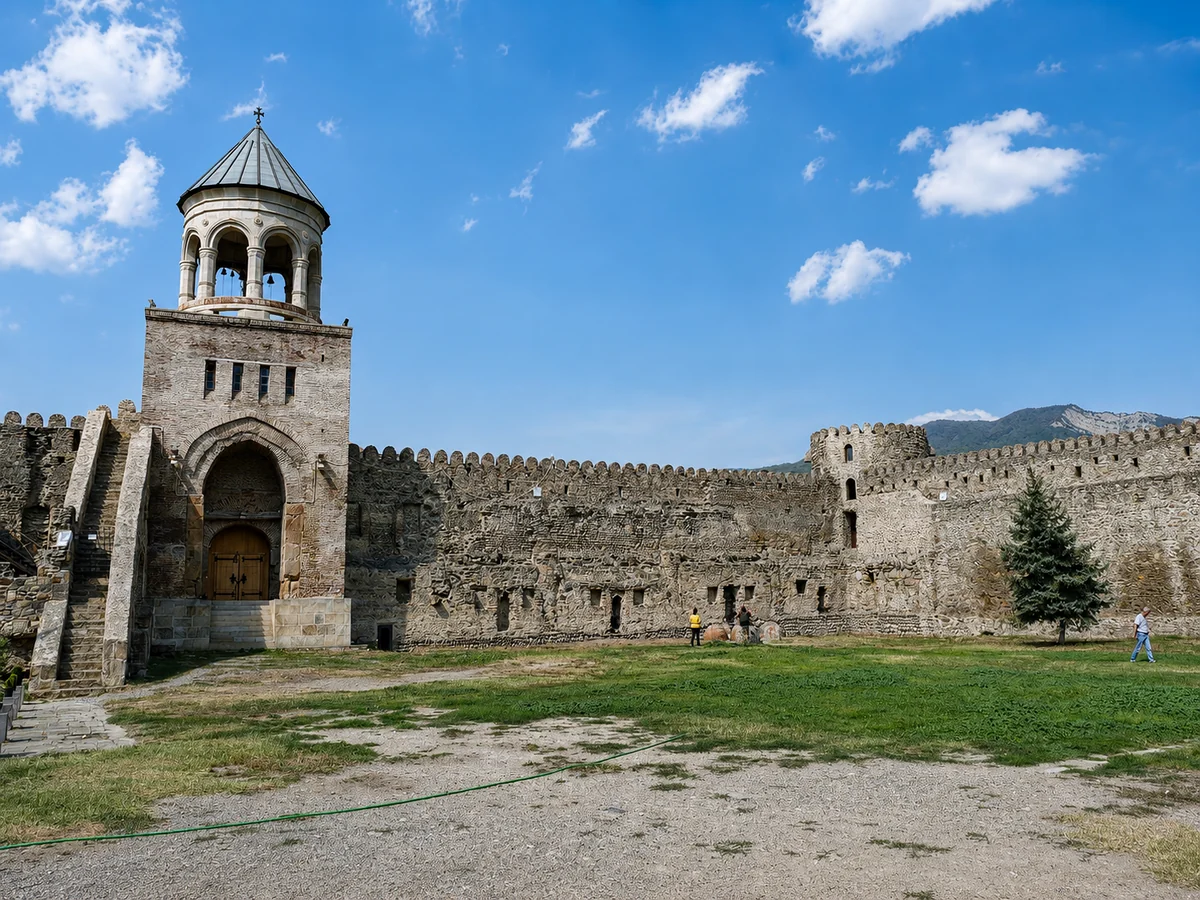
The Samtavro Monastery is another important religious site in Mtskheta, associated with St. Nino, who played a key role in bringing Christianity to Georgia. The complex includes a church, a convent, and a peaceful garden, and the first Christian monarchs of Iberia, King Mirian III and Queen Nana, are buried in the main church. Compared with Svetitskhoveli, Samtavro feels quieter and more intimate, which makes it a good place to experience the spiritual side of the city. As an active nunnery, modest dress is expected.
Visit Shio-Mgvime Monastery
The Shio-Mgvime Monastery is one of the most atmospheric places near Mtskheta. Founded in the 6th century by St. Shio, one of the Assyrian Fathers, it sits in a narrow limestone gorge not far from the town, and its setting is the main reason to visit. Unlike Jvari, known for its open panoramic position, Shio-Mgvime feels enclosed, quiet, and secluded. The complex grew around a monastic life deliberately isolated from the outside world, and even today the cliffs, the stone buildings, and the absence of urban noise give it a calm, withdrawn atmosphere quite different from the busier central monuments. For travelers who want to go beyond the standard route, it adds a more contemplative side to the area.
Explore Armaztsikhe-Bagineti
To understand Mtskheta beyond its Christian landmarks, Armaztsikhe-Bagineti is one of the most important places to include. This archaeological site holds the remains of the ancient citadel of Kartli and helps explain what existed here before Mtskheta became known mainly as a Christian center — it was the fortified acropolis of the Iberian capital, rediscovered through excavation. On Bagineti hill near Mtskheta, it includes remains linked to royal and urban life in antiquity. It isn't as visually immediate as Jvari or Svetitskhoveli, but it adds real depth to the story of the city, showing that Mtskheta is about the political and archaeological foundations of early Georgia as much as its churches. For travelers interested in ancient history, it's one of the most meaningful stops in the area, especially combined with the religious monuments.
Visit Zedazeni Monastery
Zedazeni Monastery, on the Saguramo Range in a forested mountain setting, is another strong addition near Mtskheta. Connected to the early spread of Christianity in Georgia and generally dated to the 6th century and the Assyrian Fathers, its appeal is largely its location: more remote and elevated than the central monuments, with a road and final approach that already feel different and a setting that gives a stronger sense of retreat. It's a good option for travelers who've seen the main sites and want something quieter and more landscape-oriented.
Visit Bebristsikhe Fortress
On a hill just outside the town, the Bebristsikhe Fortress offers a more rugged, less visited experience. Partly ruined, it gives views over the surrounding landscape and the entrance to the valley, and it's a good stop for travelers interested in medieval defensive structures and quieter viewpoints away from the main monument crowds.
Enjoy the view of the rivers
One of the defining features of Mtskheta is the meeting point of the Mtkvari and Aragvi rivers. This natural feature shaped the city's development and is one of the most photographed views in Georgia, best seen from the Jvari Monastery above, where you get the clearest sense of how the landscape and the town fit together.
Combine Mtskheta with nearby destinations
Mtskheta is often combined with the Ananuri Fortress and Stepantsminda (Kazbegi), and it's the natural first stop when traveling north along the Georgian Military Highway. That makes it easy to fold into a longer mountain itinerary rather than treating it only as a standalone day trip.
Why Mtskheta is one of Georgia's most important destinations
Mtskheta stands out for its historical and cultural importance. It offers UNESCO World Heritage monuments, early Christian history, easy access from Tbilisi, and a compact, walkable layout. It's one of the most essential destinations for understanding Georgia — and with the lesser-known monasteries and the Armaztsikhe site nearby, it rewards more than the quick cathedral-and-viewpoint visit most day-trippers give it.
FAQ Voyage dans le Caucase
Visit the UNESCO-listed Svetitskhoveli Cathedral and the clifftop Jvari Monastery, the Samtavro Monastery, and the ancient Armaztsikhe-Bagineti citadel. The secluded Shio-Mgvime and forested Zedazeni monasteries and the ruined Bebristsikhe fortress reward those wanting to go beyond the standard route.
By tradition it stands on the site where Christ's robe was buried, and it has been one of the main centers of the Georgian Orthodox Church for centuries. Built in the 11th century and part of the UNESCO World Heritage listing, it was the coronation and burial church of the Georgian kings.
Yes — it's one of the most memorable stops near Tbilisi. The roughly 6th-century church is a fine example of early Georgian architecture, but the main draw is the iconic view over the confluence of the Mtkvari and Aragvi rivers from its hilltop position above Mtskheta.
Visit the secluded Shio-Mgvime Monastery in a limestone gorge, the forested Zedazeni Monastery on the Saguramo Range, the ruined Bebristsikhe fortress, and the Armaztsikhe-Bagineti archaeological site — the ancient pre-Christian citadel of Kartli.