
Khvamli Mountain: Myth, Caves, and Views in Lechkhumi
Khvamli (also known as Khomli) is a limestone massif rising to about 2,002 meters in the Lechkhumi region of western Georgia — the country in the South Caucasus — on the border of the Tsageri and Tskaltubo municipalities. Its cliffs and forested slopes are visible from the valley towns below, and its summit gives panoramic views that reach, on clear days, across the breadth of the western Caucasus: the Lechkhumi valley below, the Racha highlands to the east, the Imereti lowlands and Kutaisi to the south, and the Greater Caucasus along the northern horizon. It is geologically distinctive — a karst limestone formation standing apart from the surrounding terrain, presenting a sheer southern bluff some 300 meters high — and one of the most mythologically charged mountains in Georgia, woven through with legends of chained titans, hidden royal treasure, and ancient ritual.
What is Khvamli Mountain?
Khvamli is a 2,002-meter limestone massif in the Lechkhumi highlands of western Georgia, on the Tsageri–Tskaltubo municipal border, about 55 km from Kutaisi. It's known for three things: its sweeping summit panoramas over western Georgia; its caves — including Tekenteri, entered through the hollow of a giant beech tree, and the Boga ice cave — some bearing medieval cave paintings; and its deep mythology, linking it to the Prometheus/Amirani fire-bringer legend and to a famous tradition that the treasures of the Georgian kings were hidden in its caves. A St. George church near the summit hosts the annual Khvamloba pilgrimage. Reached by car plus a short hike, it's one of the most atmospheric destinations in the little-visited Lechkhumi region.
The mythology
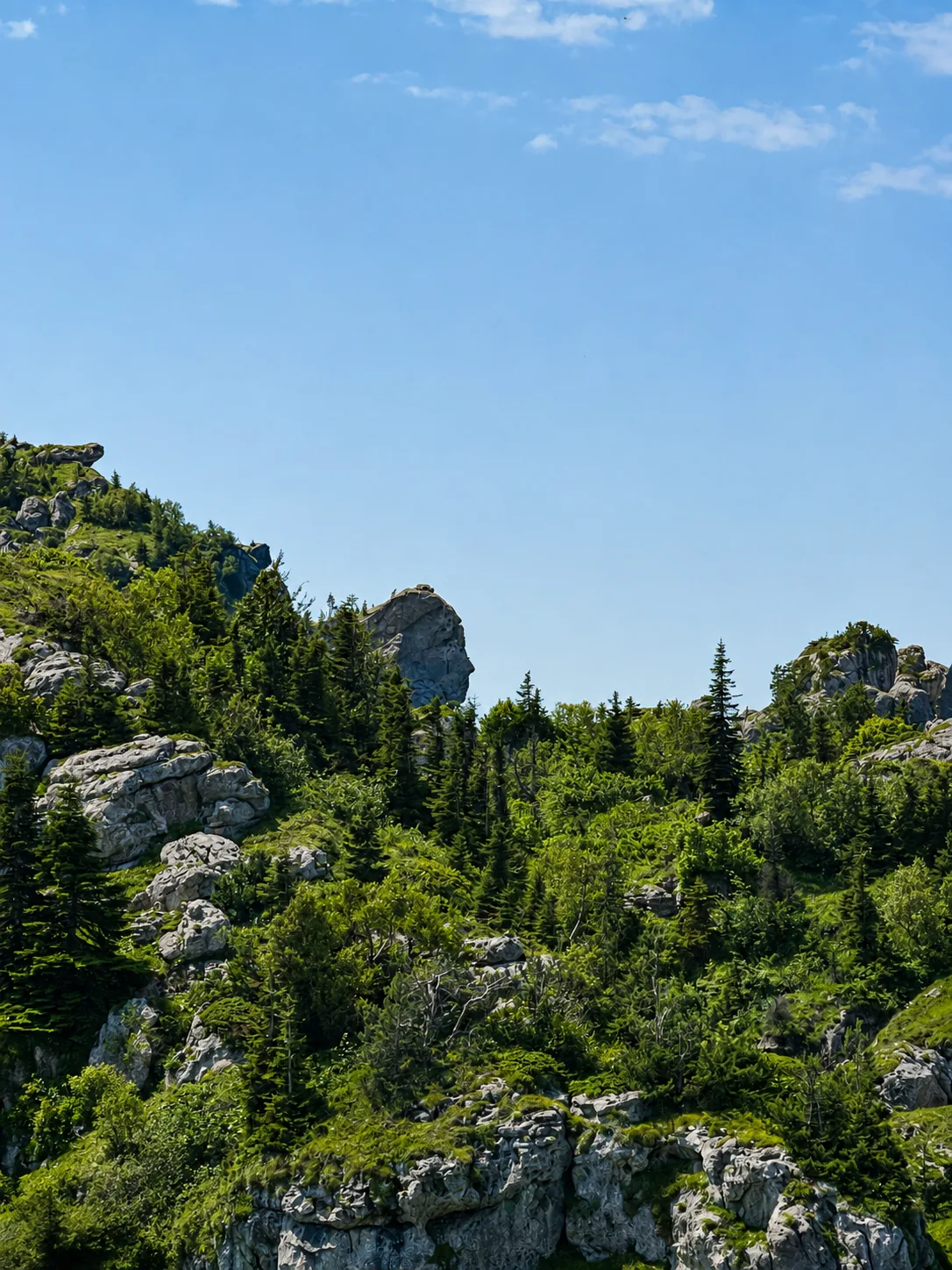
Khvamli is bound up with the legend of Amirani, the Georgian (and broader Caucasian) hero of the fire-bringer myth — the figure widely regarded as the Caucasian counterpart to the Greek Prometheus. In the story, a hero who gives fire or defies the gods is punished by being chained to a mountain in the Caucasus, a bird sent to torment him; Khvamli is one of the peaks traditionally identified with that imprisonment. The relationship between the Georgian Amirani tradition and the Greek Prometheus myth has long been discussed — the two are close parallels, and some see Amirani as an older or independent Caucasian root of the same ancient story — and Khvamli sits at the heart of this lore. The mountain also appears in the wider Greek mythological geography of the region, named among the places the Argonauts and Heracles were said to have traveled in the land of Colchis. Standing on the summit, over a landscape where these stories have been told for millennia, gives the mountain a presence that purely scenic places, however striking, rarely match.
The legends of treasure
Alongside the Prometheus association runs Khvamli's most famous Georgian legend: that the treasures of the Georgian kings were hidden in its caves, concealed during invasions — above all the Mongol invasions of the 13th century — to keep them from capture. The tradition is old and documented: Khvamli appears in the medieval Georgian Chronicles, and one of its caves carries the name Kvab-Sakhizari — roughly, the cave "impregnable to enemies, full of the treasures of kings." The story has drawn treasure-seekers for centuries. In one well-known episode from the Soviet era, Stalin is said to have sent the famous Georgian mountaineer Aliosha Japaridze to climb Khvamli in search of the legendary hoard — he reportedly came back empty-handed. Other layers of folklore have gathered here too: sacred springs, weather-divining traditions (the mountain as the seat of a thunder-and-weather power, watched by locals to read the coming weather), and the sense of a place to be approached with respect — the natural accumulation of meaning around an isolated, imposing, geologically unusual massif.
The caves
The caves running through Khvamli's limestone are the physical anchor for these stories. Tekenteri is the most singular: a karst shaft about 16 meters deep, entered through the hollow of a venerable beech tree, connecting to a horizontal tunnel with a spring at the bottom — old baskets found inside attest to its long human use. The Boga ice cave holds year-round sub-freezing conditions in its interior, where the air-circulation dynamics of the cave preserve ice formations alongside the rock. Several of the caves contain medieval paintings in red pigment, dating to the High Middle Ages, evidence of religious or ritual use beyond simple shelter — one more reason Khvamli has long felt, to the communities around it, like a place where ordinary rules don't quite apply.
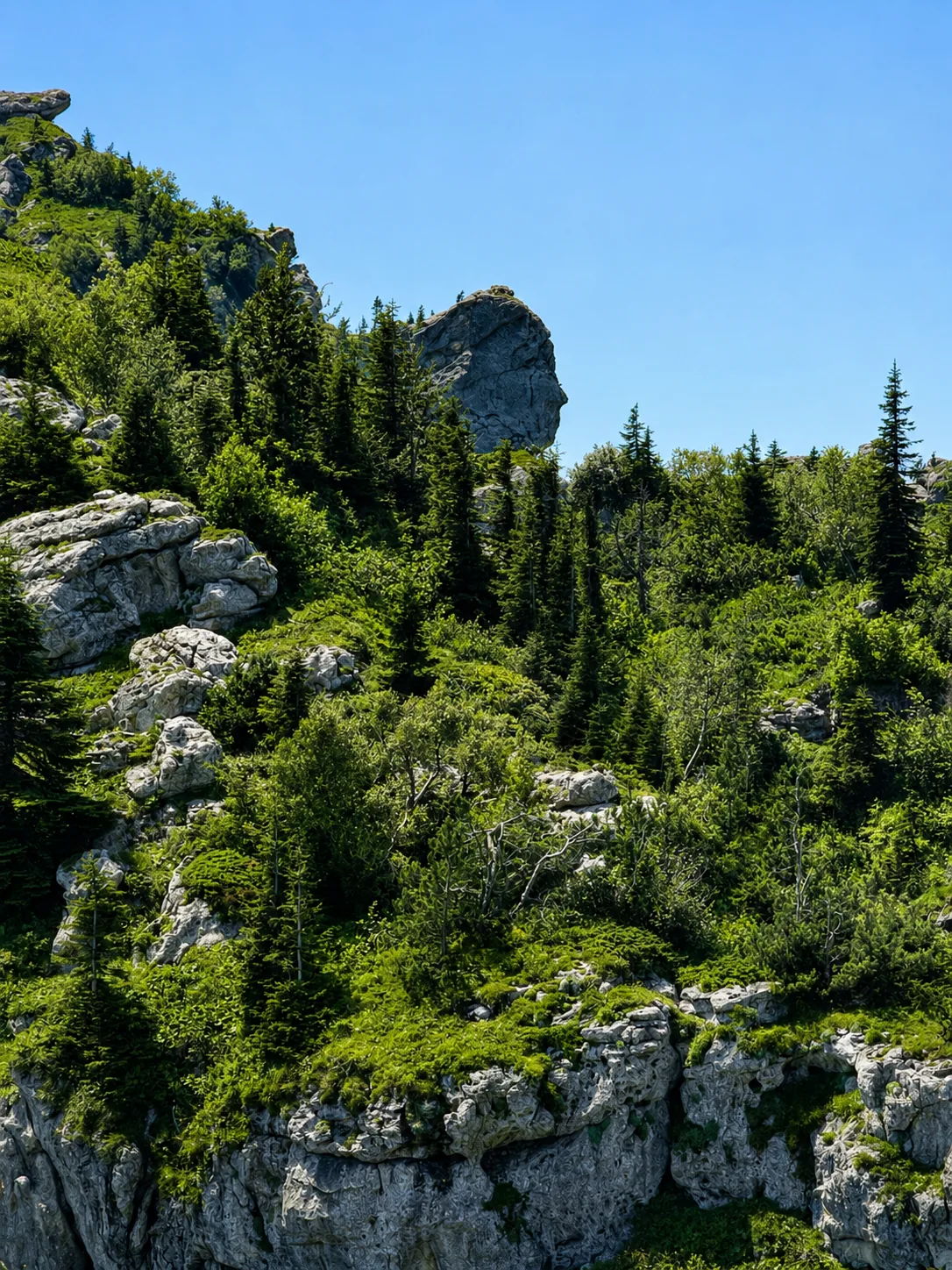
A note of caution: the caves are wild monuments, not developed show-caves (unlike the nearby Prometheus Cave near Tskaltubo). Tekenteri's shaft and the karst terrain generally are genuinely hazardous without proper equipment and knowledge — the caves are best appreciated for their stories and settings rather than entered casually.
The hike and the summit
The approach climbs from the valley by a mountain road through the forested lower slopes, gaining height through mixed woodland toward the subalpine zone. Road conditions vary with season and weather, and a vehicle with reasonable ground clearance is advisable — especially after rain, when the unpaved sections turn muddy and loose. The road cuts the hiking distance substantially: most visitors drive to the upper road terminus, then walk one to three hours depending on the viewpoints and features they want to reach.
The St. George church near the summit is the principal built structure and a useful landmark on the upper terrain. It is the focus of Khvamloba, the annual festival held on the eighth Saturday after Orthodox Easter (in early summer), when people from the surrounding communities gather on the mountain for religious observance, communal celebration, and the upkeep of the traditions tied to the site. Attending Khvamloba offers a direct encounter with the living relationship between the Lechkhumi communities and their mountain that an ordinary hiking visit can't provide.
The views
The panoramas from Khvamli's upper sections are among the most expansive accessible anywhere in the western Caucasus. The summit elevation, combined with the open karst ridges that give unobstructed sightlines in every direction, lends the views a completeness that enclosed or forested viewpoints can't match. On especially clear days the city of Kutaisi is visible in the Rioni lowlands to the south — the distance from a mountain summit to a regional capital laid out plainly across the land, a direct read on the geography linking the Lechkhumi highlands to western Georgia's urban center below.
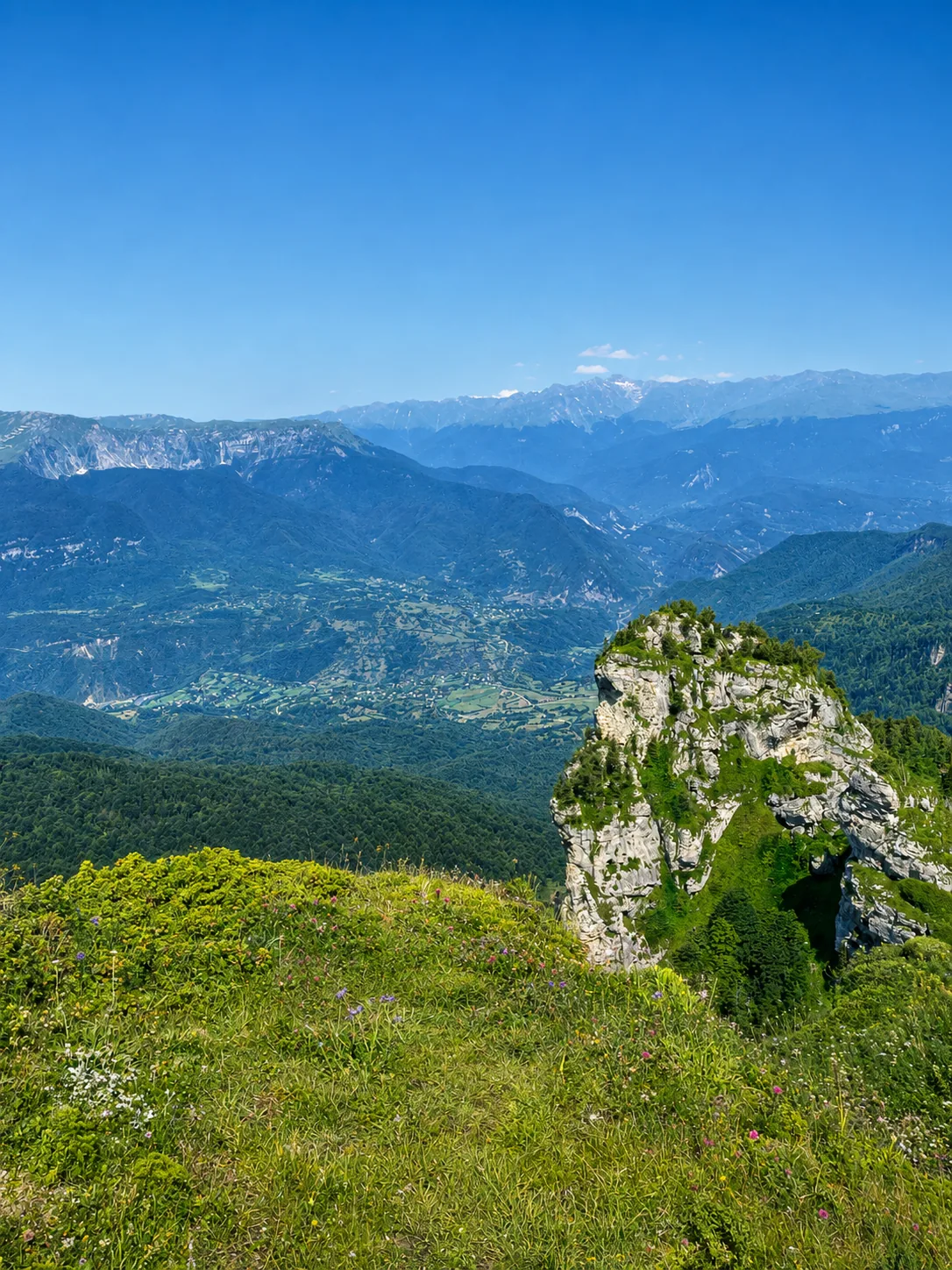
The light at sunset is especially rewarding — the limestone faces catching the low western sun and warming against the darkening forest below — and the combination of the mythology, the commanding position, and the evening light makes a sunset visit one of the more memorable moments of a western Georgia trip for many who experience it.
Practical considerations and safety
The mountain weather changes fast and can be severe: the exposed limestone terrain catches the weather systems moving through the western Caucasus, and clear conditions can deteriorate quickly. Carry warm and waterproof layers regardless of the starting weather, and be ready to descend if visibility drops or rain sets in. The karst terrain of the upper mountain includes sinkholes and cave openings that demand attention — stay on established paths and don't explore cave entrances without proper equipment and knowledge.
Practical information
- Location: Lechkhumi highlands, on the Tsageri–Tskaltubo municipal border, Racha-Lechkhumi and Kvemo Svaneti region, western Georgia. Accessible from Tsageri, or from Kutaisi/Tskaltubo (~55 km / ~75 min to the trailhead area, then ~30–40 min ascent by road).
- Altitude: ~2,002 m at the summit.
- Getting there: By car to the upper road terminus, then on foot to the summit area and viewpoints. The mountain road needs a vehicle with good ground clearance, especially when wet; public transport is limited, so a car or hired driver/taxi is the practical option. Check current road conditions before setting out.
- Duration: Half-day to full day depending on route and time at the summit.
- Best season: May–October — summer for the clearest conditions, autumn for the most atmospheric light; the Khvamloba festival falls on the eighth Saturday after Orthodox Easter.
- Admission: Free.
Caucasus Travel FAQ
Khvamli (also called Khomli) is a 2,002-meter limestone massif in the Lechkhumi region of western Georgia, on the border of the Tsageri and Tskaltubo municipalities, about 55 km from Kutaisi. It's known for its sweeping summit views over western Georgia, its caves (including Tekenteri, entered through a hollow beech tree, and the Boga ice cave, some with medieval paintings), and its rich mythology — it's one of the mountains linked to the Prometheus/Amirani fire-bringer legend and to the famous tradition that the treasures of the Georgian kings were hidden in its caves. A St. George church near the summit hosts the annual Khvamloba pilgrimage.
Khvamli is one of the Caucasus peaks traditionally identified with the fire-bringer myth — the story of a hero chained to a mountain as punishment for giving fire to humanity. In Georgian tradition this hero is Amirani, widely regarded as the Caucasian counterpart to the Greek Prometheus; the two myths are close parallels, and the relationship between them has long been discussed, with some viewing Amirani as an older or independent Caucasian root of the same ancient story. Khvamli also appears in Greek mythological geography as a place linked to the Argonauts and Heracles in the land of Colchis, giving it a deep mythological resonance.
It's one of Georgia's most enduring legends. Tradition — recorded as far back as the medieval Georgian Chronicles — holds that the treasures of the Georgian kings were hidden in Khvamli's caves during invasions, especially the Mongol invasions of the 13th century; one cave is even named Kvab-Sakhizari, the cave "impregnable to enemies, full of the treasures of kings." The story has drawn treasure-seekers for centuries. In one famous Soviet-era episode, Stalin is said to have sent the celebrated mountaineer Aliosha Japaridze to search the mountain for the hoard — he reportedly returned empty-handed. Whether any treasure was ever really there remains, fittingly, a mystery.
The caves are wild natural monuments, not developed show-caves like the nearby Prometheus Cave near Tskaltubo. Tekenteri is a roughly 16-meter karst shaft entered through the hollow of a beech tree, with a spring at the bottom; the Boga cave holds ice year-round. Some caves contain medieval red-pigment paintings. But the shafts and karst terrain are genuinely hazardous without proper caving equipment and experience, so the caves are best appreciated for their stories and settings rather than entered casually — and the upper mountain's sinkholes and cave openings mean you should stay on established paths.
Khvamli is reached most practically by car: from Kutaisi it's about 55 km (around 75 minutes) to the trailhead area via Tskaltubo and Tsageri, then a 30–40-minute drive up the mountain road to a parking area, from where it's a 1–3-hour walk to the summit viewpoints. The mountain road needs a vehicle with good ground clearance, especially when wet, and public transport is limited, so a car or hired driver is best. The season is May–October — summer for the clearest views, autumn for the best light; the Khvamloba festival falls on the eighth Saturday after Orthodox Easter. Bring warm, waterproof layers, as the weather changes fast.