Yes, seven days is enough for a rewarding first look at Azerbaijan, as long as you build the week around a few bases rather than chasing everything. The country is compact but varied: a fast-changing capital on the Caspian, a dry landscape of rock carvings and mud volcanoes to the south, and green mountain foothills in the west where old Silk Road towns still keep their crafts. The best one-week loop starts and ends in Baku and takes in all three.
Two of the seven days carry a lot of driving, and this guide says where, so you can plan around them. It follows the same route as our private 7-Day Azerbaijan Tour, but works just as well as a plan for travelling on your own.
Azerbaijan in 7 days at a glance
| Day | Route | Night |
|---|---|---|
| 1 | Arrival in Baku | Baku |
| 2 | Baku city day | Baku |
| 3 | Gobustan, mud volcanoes, Ateshgah and Ramana Fortress | Baku |
| 4 | Shamakhi, Lahij and the drive to Sheki | Sheki |
| 5 | Sheki, then on to Gabala | Gabala |
| 6 | Tufandag cable car and the drive back to Baku | Baku |
| 7 | Departure | — |
That makes four nights in Baku, one in Sheki and one in Gabala. Because you sleep in Baku on the last night, the departure day is short and you never have to rush for the airport.
Prefer to have the route arranged for you?
Hikasus Travel's private 7-Day Azerbaijan Tour follows this route, with hotels, private transport with an English-speaking guide and the services listed on the tour page. View the 7-Day Azerbaijan Tour
Day 1: Arrival in Baku
Keep the first day light. Baku is about half an hour from Heydar Aliyev International Airport, so there is no long transfer to recover from. Hotel check-in is usually from 14:00; if you land early, leave your bags and walk.
The seafront is the easiest place to get your bearings. Stroll along the Caspian, look back at the glass towers on the hill, and have an early dinner. Save the main sights for tomorrow.
Day 2: A full day in Baku
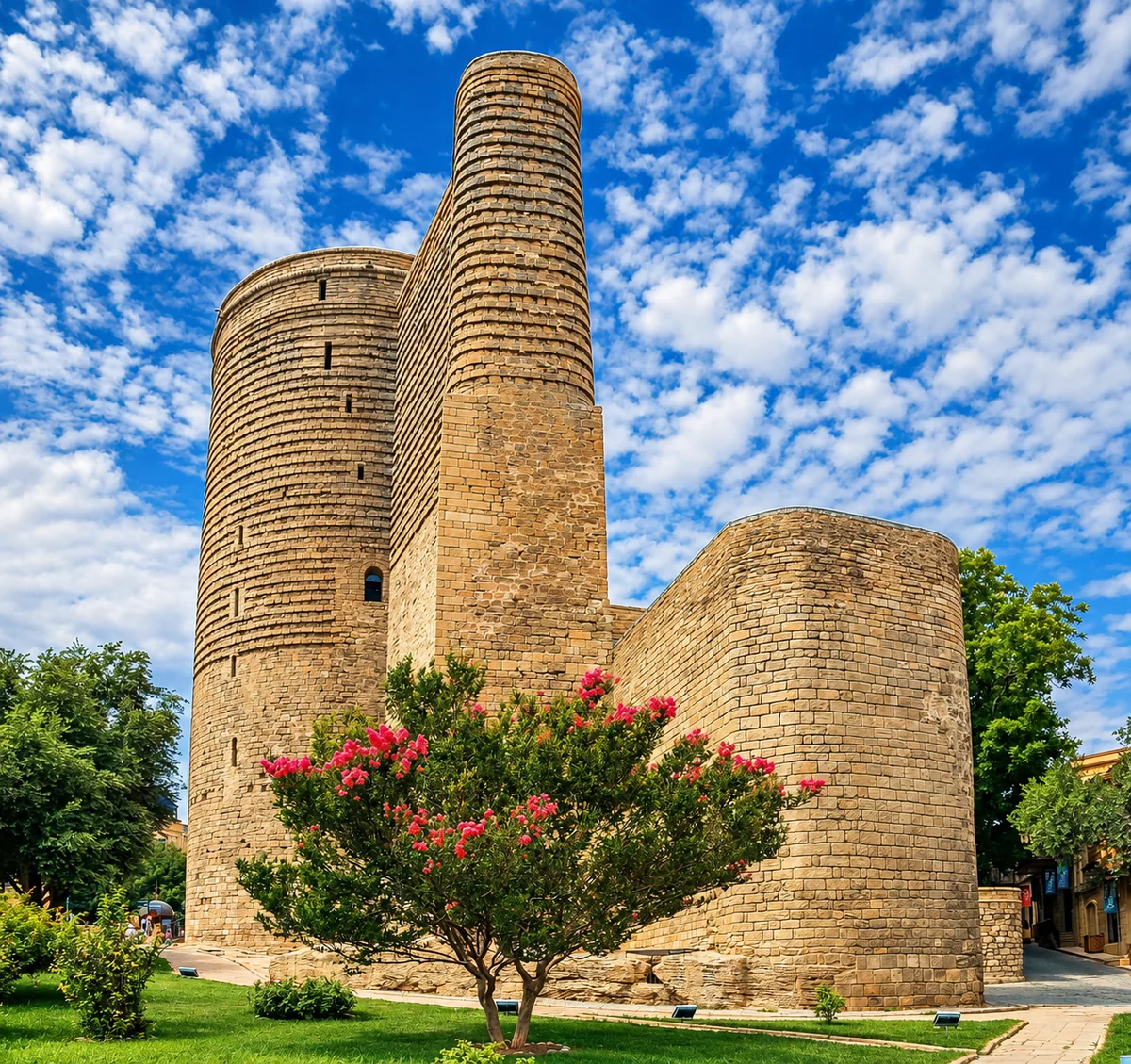
One day is enough to see the core of the capital if you take it in a sensible order. Start in Icherisheher, the walled Old City and a UNESCO site, while the lanes are still quiet. The Maiden Tower rises above the rooftops, and the Shirvanshahs' Palace was the seat of the region's medieval rulers.
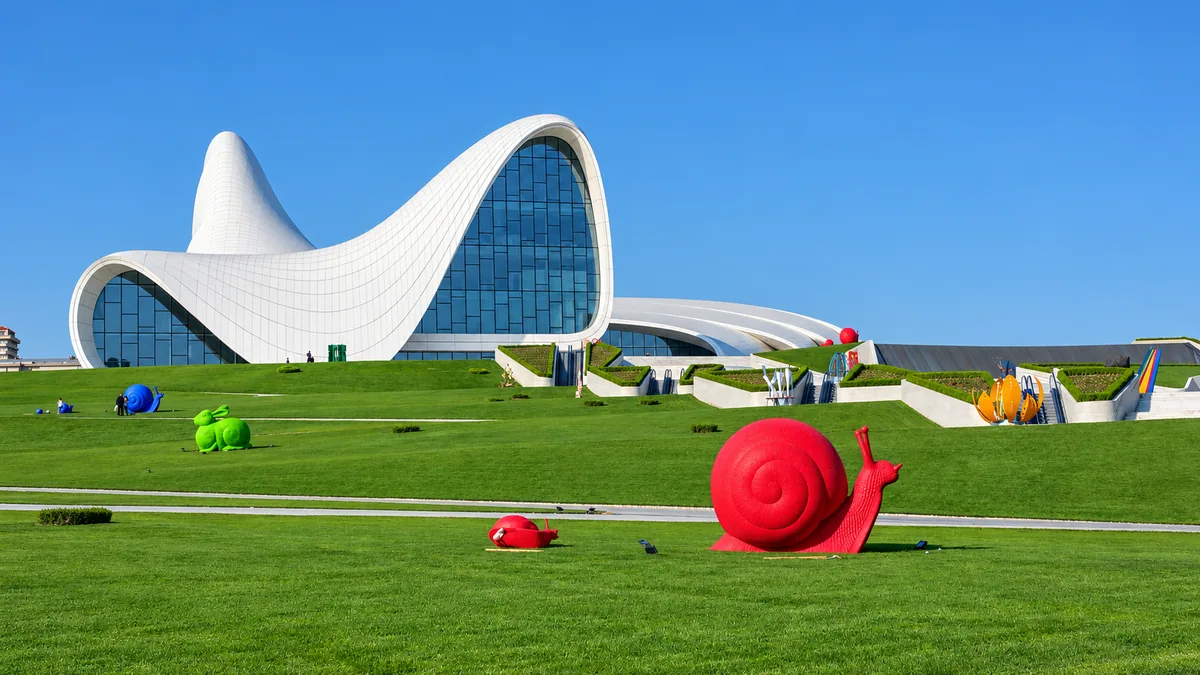
From there, drive out to the Heydar Aliyev Center, a flowing white building by the architect Zaha Hadid and one of the best-known modern landmarks in the Caucasus.
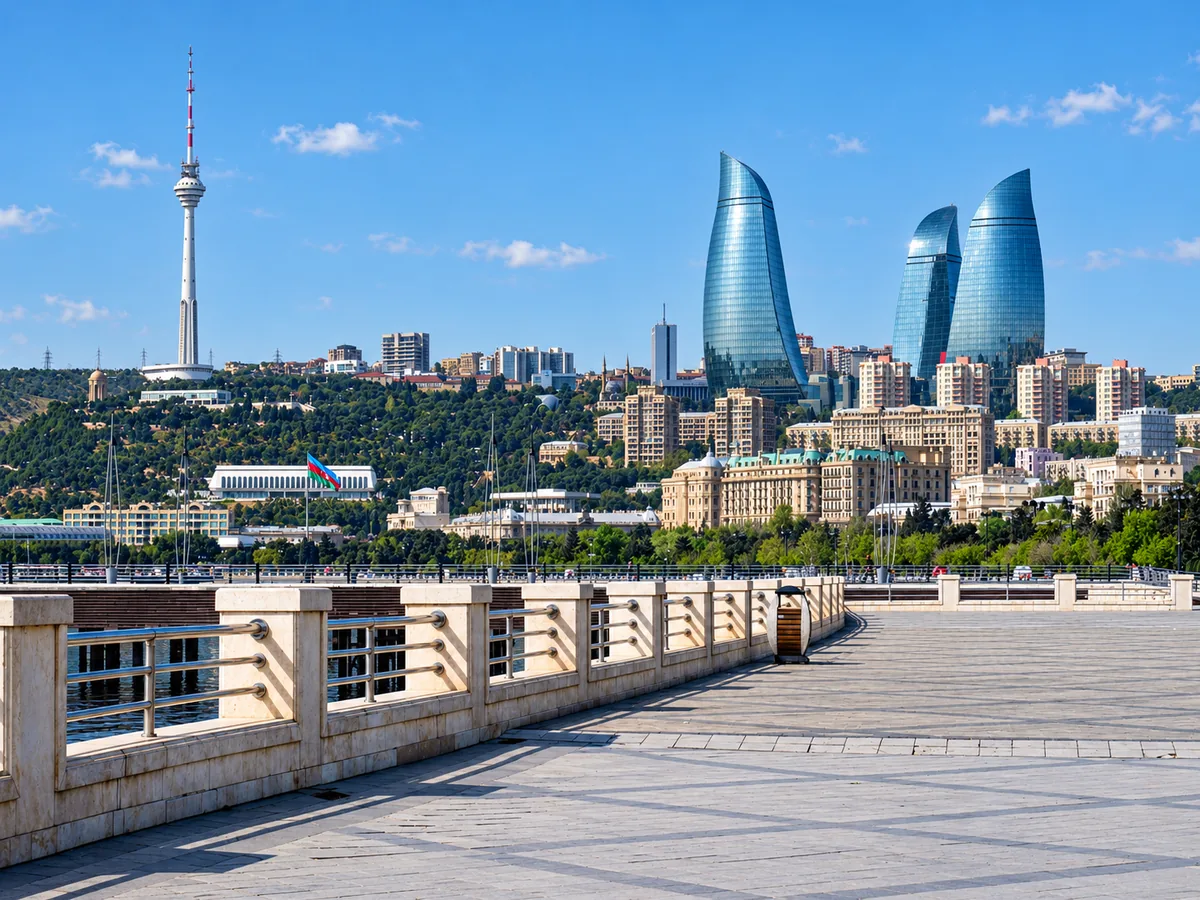
Then return to the centre to walk the newer city: Fountains Square, the seafront Baku Boulevard and the view up to the three glass Flame Towers that define the skyline. Allow six to seven hours and finish with a dinner of Azerbaijani food in the Old City.
Day 3: Gobustan, mud volcanoes, Ateshgah and Ramana
This is the strangest and most ancient day of the week, and it stays close to the capital. The whole day takes seven to eight hours with stops, about three of them in the vehicle.
The first stop is Gobustan National Park, a UNESCO site where thousands of rock carvings, some going back around 40,000 years, are scratched into a hillside of bare stone. Close by are the mud volcanoes, small cones that bubble and hiss with cold grey mud rather than lava.
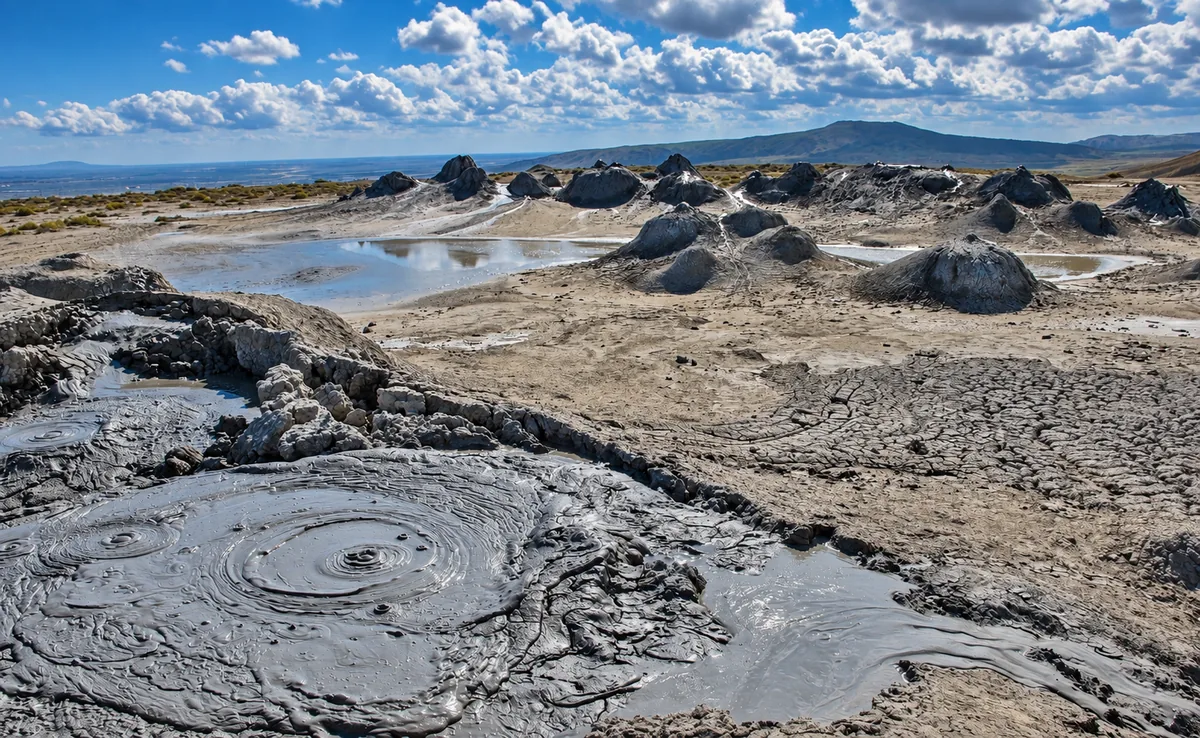
There are two ways to see them. The new Mud Volcanoes Complex has a safe, comfortable road but fewer volcanoes. The traditional site has more volcanoes and more dramatic scenery, but you reach it by a dusty, bumpy ride in a Soviet-era Niva vehicle. Pick the one that suits your group.
In the afternoon you visit the Ateshgah fire temple, a walled temple built around a natural gas flame that has drawn Zoroastrian, Hindu and Sikh pilgrims for centuries, and Ramana Fortress, a medieval fortress among the stone houses of a village on the Absheron peninsula. Then it is back to Baku for the night.
Day 4: Shamakhi, Lahij and the road to Sheki
This is the first long driving day, with five to six hours behind the wheel and eight to nine hours in all. You head west into the foothills of the Greater Caucasus, and the landscape changes from dry plain to green hills.
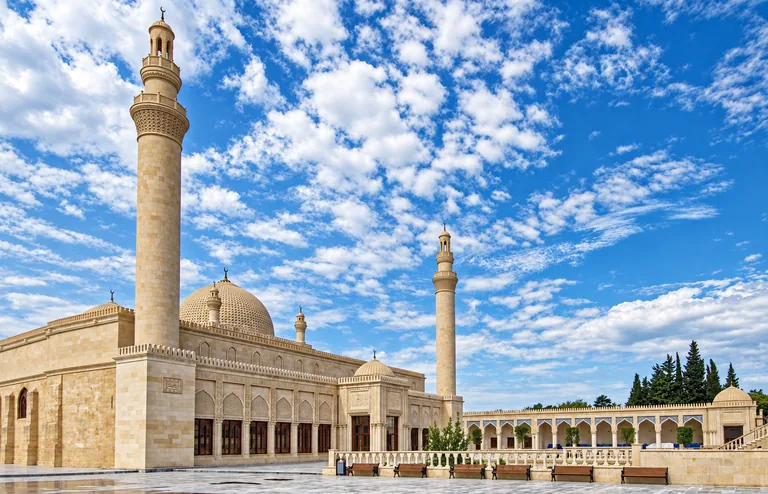
The first stop is Shamakhi, once the capital of a medieval khanate, for the Juma Mosque. The road then climbs to Lahij, a village of cobbled streets built almost entirely around copper. For centuries its smiths supplied cookware and tools across the region, and their workshops still line the main street.
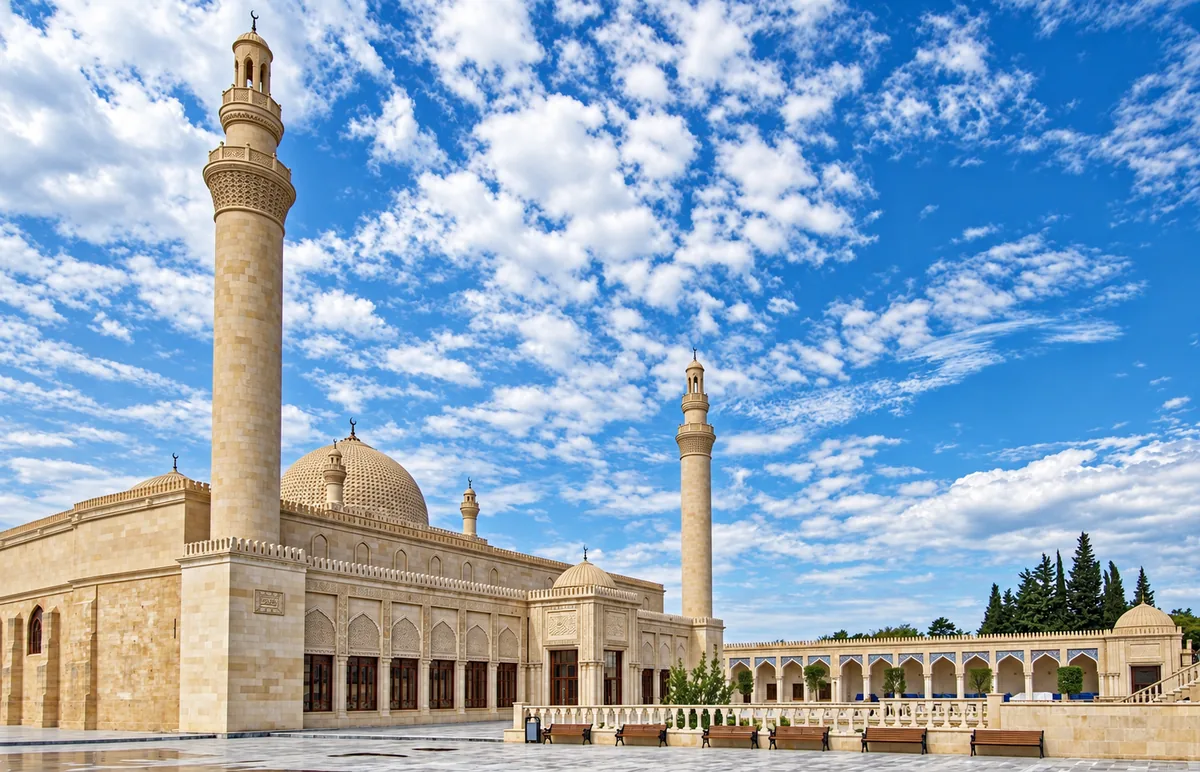
From Lahij the road continues to Sheki, a town of caravanserais and craftsmen tucked into the hills, where you settle in for the night.
Day 5: Sheki and Gabala
Spend the morning in Sheki before moving on. The Palace of the Sheki Khans is a small 18th-century summer residence with stained-glass windows and painted walls, built without nails and added to the UNESCO list in 2019. A caravanserai, one of the old stone inns that sheltered Silk Road traders, shows what the town was for, and Sheki Bazaar is the place for fresh produce, spices and traditional sweets.
In the afternoon you drive about two hours to Gabala, once the capital of Caucasian Albania and now a green resort town at the foot of the mountains.
Day 6: Tufandag cable car and back to Baku
Start with a morning in the hills. The Tufandag cable car climbs out of Gabala into the mountains for a wide view over the forests and the plain below. After that comes the second long drive of the trip, four to four and a half hours back across the country to Baku for your final night. Plan nothing ambitious for the evening.
Day 7: Departure from Baku
On the private tour, hotel check-out is by 12:00 and you are taken to Heydar Aliyev International Airport when it is time for your flight. No extra sightseeing is part of the tour on this day. If you are travelling independently and fly in the evening, it is a good chance to revisit a corner of Baku you liked on Day 2.
Is 7 days enough for Azerbaijan?
It is enough for a strong introduction, and not enough for the whole country. This route gives you the capital, two UNESCO sites near it, a fire temple, a medieval fortress, a Silk Road town and a mountain resort. It does not include Quba and Khinalig in the north, Ganja, Lankaran or Nakhchivan. If the north appeals, our 8-Day Azerbaijan Tour adds Quba and Khinalig.
Why this route works
The loop balances what people usually come for: modern architecture in Baku, prehistoric rock art and strange landscapes at Gobustan, crafts and architecture in Lahij and Sheki, and mountain air in Gabala. Four nights in Baku mean a single hotel for most of the trip, and the two long drives are separated by a day of short distances in Sheki.
Best time for a 7-day Azerbaijan trip
- April to June: green foothills, mild weather and comfortable sightseeing in Baku. A good all-round choice.
- July and August: hot, especially on the Absheron peninsula and in Gobustan. Gabala and the hills are cooler.
- September and October: settled weather and good light, and for many travelers the most balanced season for this route.
- November to March: quieter and cheaper. Baku is cool and can be windy, and rain or snow can slow the mountain roads, so allow extra time on Days 4 and 6.
Getting around: private tour, rental car or public transport
- A private tour or driver is the easiest way to manage Day 3 and the two long drives on Days 4 and 6. You do not have to navigate, park or deal with the Niva ride at the mud volcanoes yourself.
- A rental car gives freedom, but city traffic in Baku and mountain roads take getting used to, and you will drive about ten hours across Days 4 and 6.
- Public transport works for single legs, such as buses between Baku and Sheki. It does not connect Gobustan, Ateshgah or Lahij efficiently, so this exact route would take far more than seven days.
Where to stay
In Baku, choose a base in or near the Old City so you can walk to dinner and to most of the Day 2 sights. In Sheki, a hotel in or near the old town is worth it for the single night, and in Gabala a resort or hillside hotel makes a good contrast to the city. On the private tour, hotels come in three categories, so you can match the stay to your budget.
What to pack
- Comfortable walking shoes for the cobbled lanes of Icherisheher, Lahij and Sheki.
- A windproof layer for Baku, which is often windy.
- Sun protection and sturdy shoes for the open ground at Gobustan.
- Shoes you do not mind getting dusty if you choose the Niva ride to the mud volcanoes.
- Modest clothing for mosques: shoulders and knees covered, and a scarf for women.
Explore Azerbaijan in 7 days with Hikasus Travel
Our private 7-Day Azerbaijan Tour is built for travelers who want to see Baku, Gobustan, Sheki and Gabala without arranging every transfer and hotel themselves. It includes accommodation in double or twin rooms with breakfast, transfers as per the itinerary, an English-speaking guide throughout, entrance fees, a dinner in Baku on Day 2 and still water. Other lunches and dinners, visa fees where applicable, additional hotel expenses and travel insurance are not included. The tour is private, so the stops and the pace can be adjusted to you. View the 7-Day Azerbaijan Tour
Before you book flights, check the Azerbaijan entry requirements, and for more background see our Ultimate Guide to Traveling to Azerbaijan.