
Things to Do in Ushguli, Georgia: Svan Towers, Shkhara, and Svaneti
Ushguli is one of the most remote and distinctive destinations in Georgia — the country in the South Caucasus. High in the Svaneti region, it isn't a place with a long list of attractions but one where the experience comes from the landscape, the architecture, and the sense of isolation. The village is part of a UNESCO World Heritage Site, recognized for its preserved medieval towers and its setting at the foot of some of the highest peaks in the Caucasus. Spending time here is less about moving from one site to another and more about slowly exploring the area and taking in its environment.
What is there to do in Ushguli?
The main things to do in Ushguli are walking the four UNESCO-listed villages and their medieval Svan towers, visiting the hilltop Lamaria Church, and hiking up the Enguri valley toward Mount Shkhara and its glacier. Beyond that, the experience is the place itself — the open high-mountain landscape, the isolation, and staying in a local family guesthouse. It suits travelers who want dramatic scenery and living medieval architecture together, at a slow pace. One important note: Ushguli is a genuinely inhabited community, so it should be explored with respect for the residents whose homes these towers and houses are.
Walk through the Ushguli villages (UNESCO)
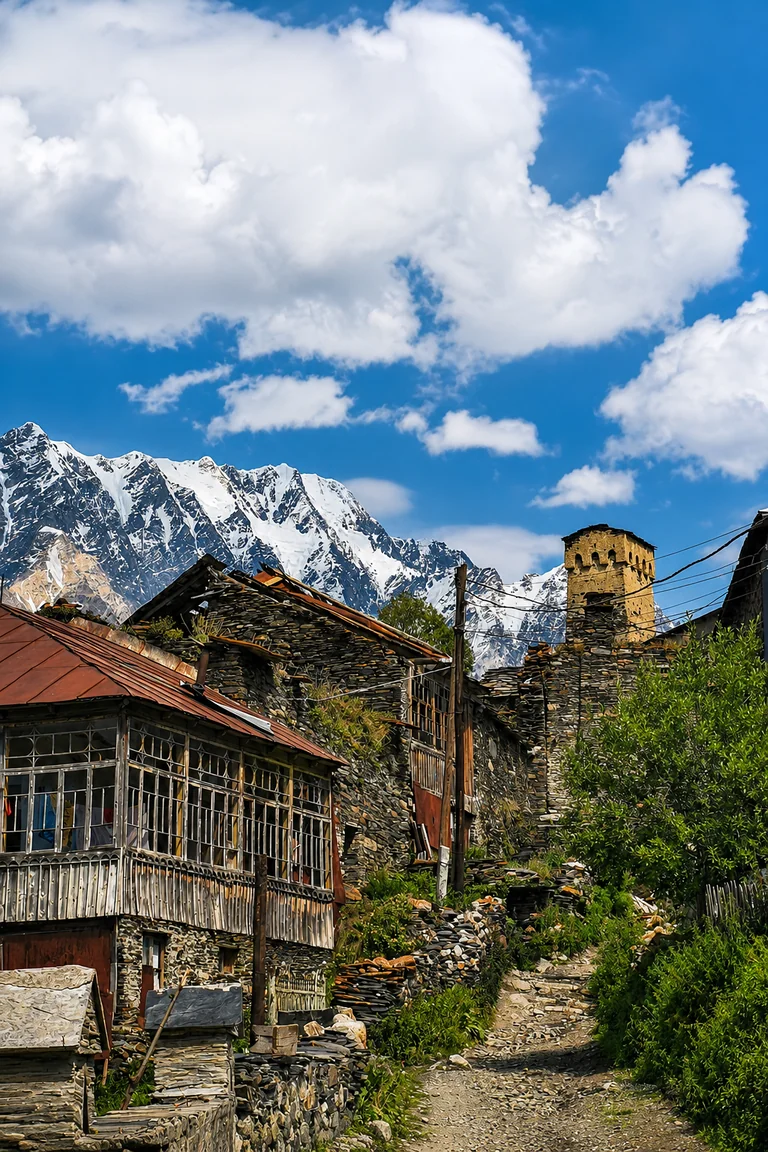
Ushguli is made up of four small villages, including Chazhashi, the core of the UNESCO World Heritage listing. Walking through them is one of the main activities: the paths are unstructured and often unpaved, passing between traditional houses and Svan towers that have stood for centuries. There's nothing guided or formal about it — you move at your own pace, noticing small details like stone walls, wooden balconies, and the way the buildings sit within the landscape. Because the area is still very much inhabited, it matters to stay respectful and aware that this is a living community, not an open-air museum.
Explore the Svan towers
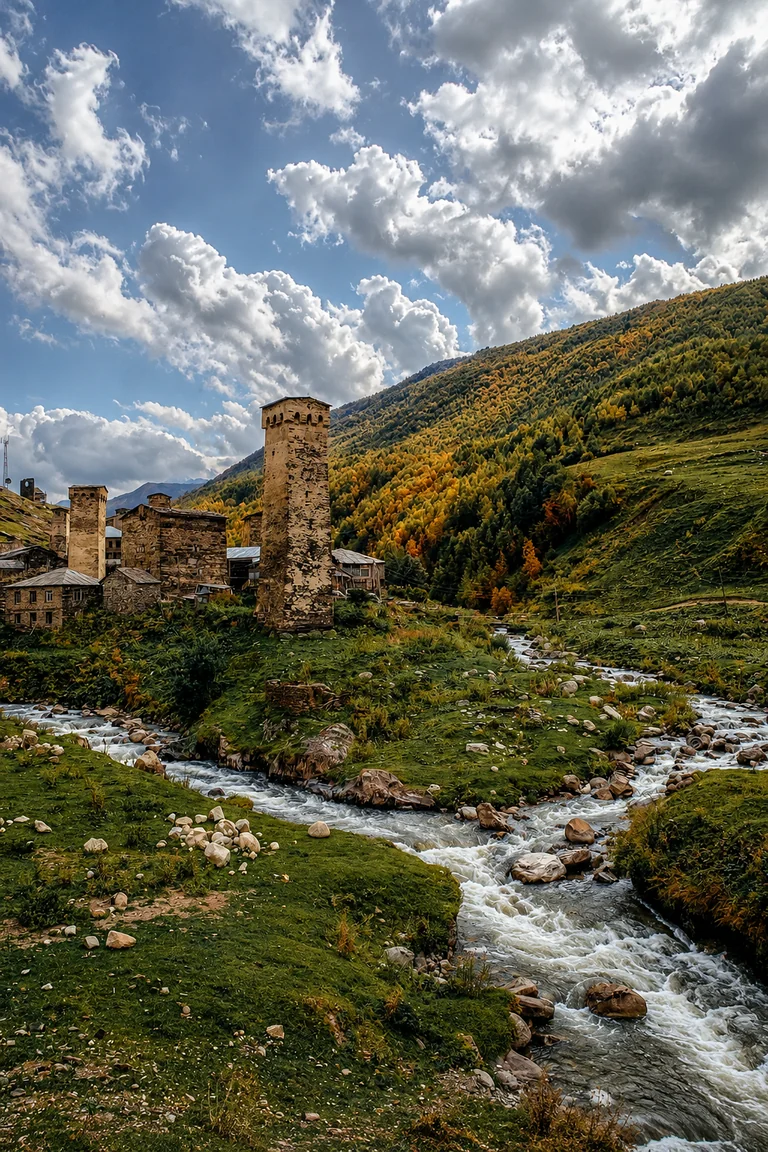
The Svan towers are the defining architectural feature of Ushguli. Built for defense between roughly the 9th and 13th centuries and closely integrated into the village structure, they survive here in greater numbers than anywhere else in Svaneti, forming one of the most complete examples of this architecture. Some towers can be entered, letting you see how they were built and used; inside, the space is simple and functional, reflecting the practical needs of the time.
Visit Lamaria Church
Lamaria Church is one of the most important religious sites in Ushguli. Set slightly above the village, it offers views over the surrounding area, and it dates to the medieval period, associated with local traditions and legends. Inside you may find old frescoes and religious elements that reflect the long history of Christianity in the region. As an active chapel, access depends on the key holder — a matter of asking locally rather than fixed hours — and modest dress is expected.
Hike toward Mount Shkhara
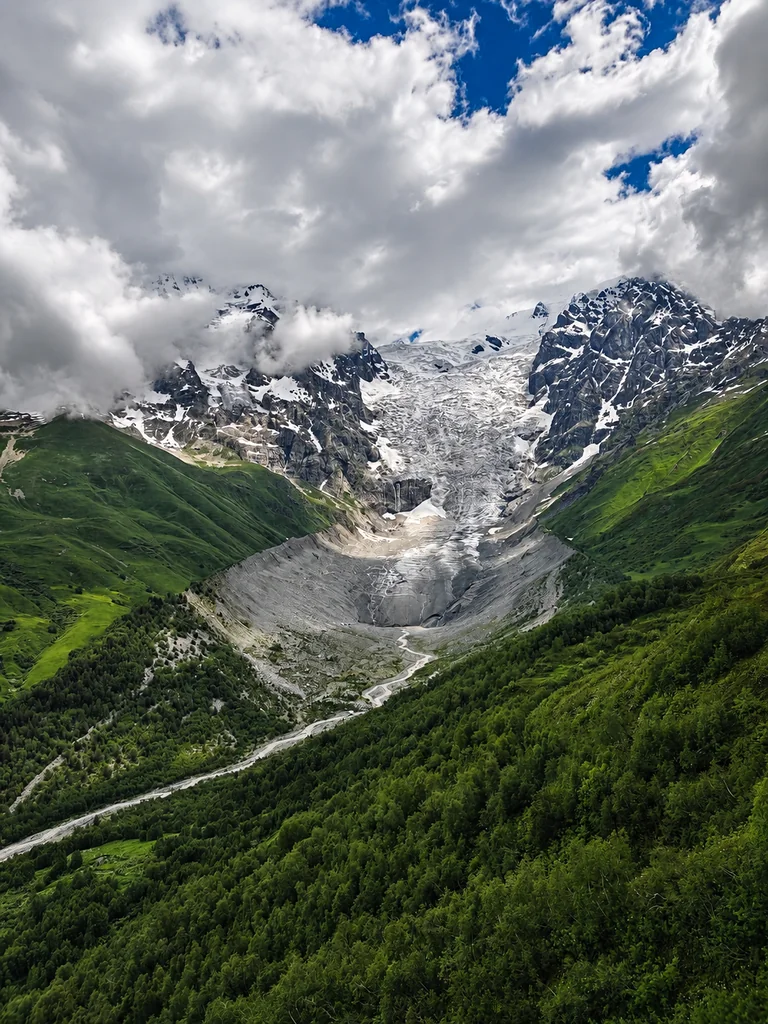
One of the most rewarding hikes from Ushguli leads up the Enguri River valley toward Mount Shkhara, gradually opening toward the glacier at the base of the mountain. It's a moderate walk that needs no technical skills and gives close views of the highest peak entirely within Georgia (5,193 m). It's commonly done as a there-and-back day walk from the village; allow most of a day and carry water, layers, and sun protection, since the terrain is open with little shelter. Check the weather before setting out, as conditions at this altitude change quickly.
Experience the landscape and isolation
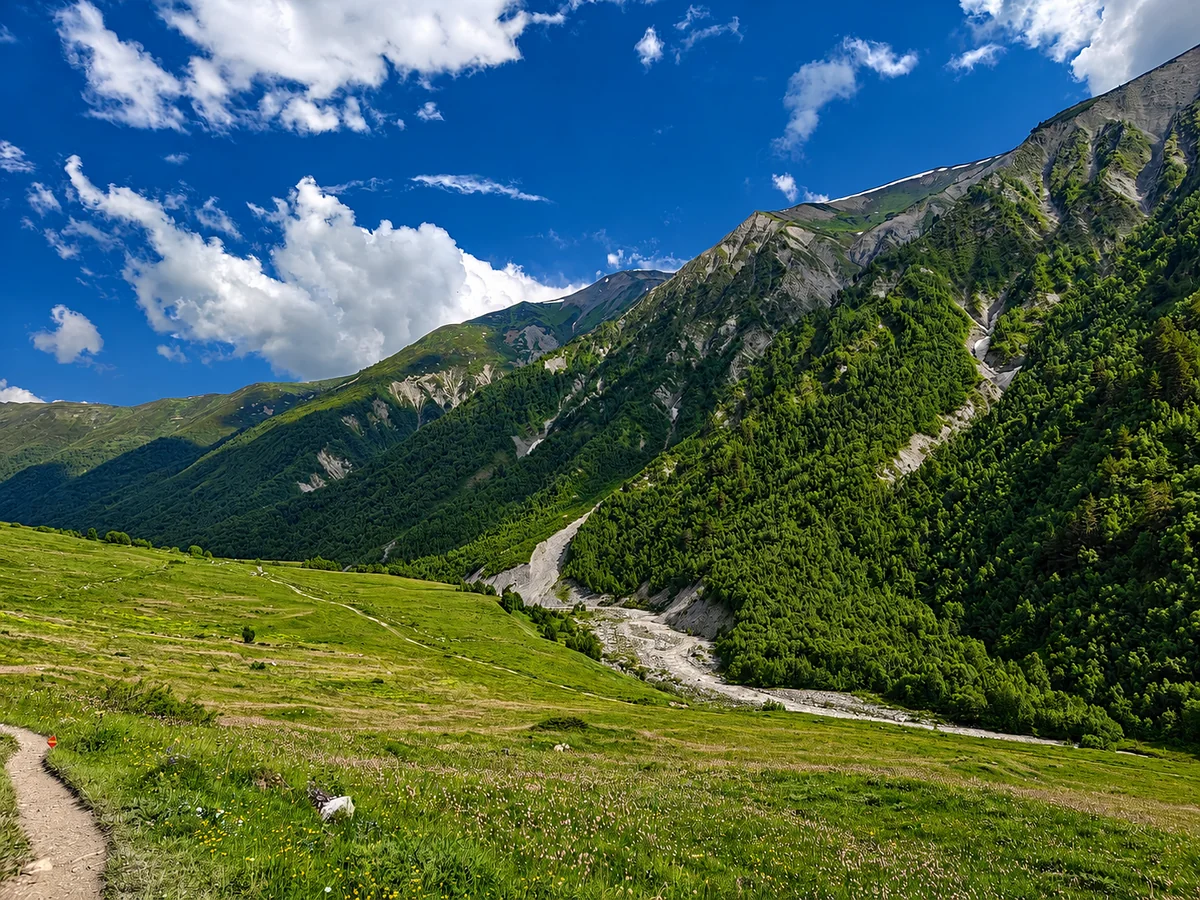
One of the main reasons to visit Ushguli is simply to be in its environment. The landscape is open and wide, with few trees and direct exposure to the mountains, and the altitude and isolation create a real sense of distance from the rest of the country. Spending time here often means walking, sitting, and observing rather than actively moving between attractions — which, for the right traveler, is exactly the appeal.
Stay in a local guesthouse
Staying in a local guesthouse is an important part of the Ushguli experience. Accommodation is simple but welcoming, usually run by local families, and meals are homemade — bread baked in the household, dairy from the family's animals, and dishes that reflect regional traditions. It gives a more personal connection to the place and a window into daily life in a remote mountain community. Infrastructure is basic overall (limited shop, less reliable electricity and connectivity than the lower valley), so it's worth arriving prepared rather than expecting the amenities of a developed destination.
Best time to visit Ushguli
The best time to visit is June to September, when the road from Mestia is accessible and weather conditions are most stable, with July and August the most reliable and September excellent for thinner crowds and clear autumn light. Winter visits are possible but access is often limited or blocked by snow, requiring a four-wheel-drive vehicle, local guidance, and flexible timing.
Why Ushguli is one of Georgia's most unique destinations
Ushguli offers a rare combination: a UNESCO-protected cultural landscape, a high-mountain setting beneath Mount Shkhara, traditional Svan architecture, and a living, remote community. It's a place experienced slowly rather than explored quickly — best for travelers who want the scenery and the medieval towers together and are happy to let the pace of a remote mountain village set the rhythm of the visit.
FAQ o cestování po Kavkaze
Walk the four UNESCO-listed villages and their medieval Svan towers, visit the hilltop Lamaria Church, and hike up the Enguri valley toward Mount Shkhara and its glacier. Beyond the sights, the experience is the place itself — the open high-mountain landscape, the isolation, and staying in a local family guesthouse.
Some of them, yes. Ushguli has the highest concentration of well-preserved Svan towers in Svaneti, and a number can be entered to see the simple, functional interiors and how they were built and used for defense. Access to specific towers is usually arranged locally, often through a guesthouse or the owning family.
It's a moderate walk up the Enguri valley toward the glacier at the base of the mountain, needing no technical skills, and it gives close views of Georgia's highest peak (5,193 m). Carry water, layers, and sun protection, and check the weather first, since the terrain is open and conditions change quickly at altitude.
Staying in a local guesthouse is one of the best parts of the experience — simple, family-run accommodation with homemade meals and a real connection to daily life in a remote mountain village. An overnight also greatly improves your chance of catching Mount Shkhara clear, as its summit is often hidden in cloud.
June to September, when the road from Mestia is accessible and the weather is most stable; July and August are the most reliable, and September is excellent for thinner crowds and clear autumn light. Winter access is often limited or blocked by snow.